
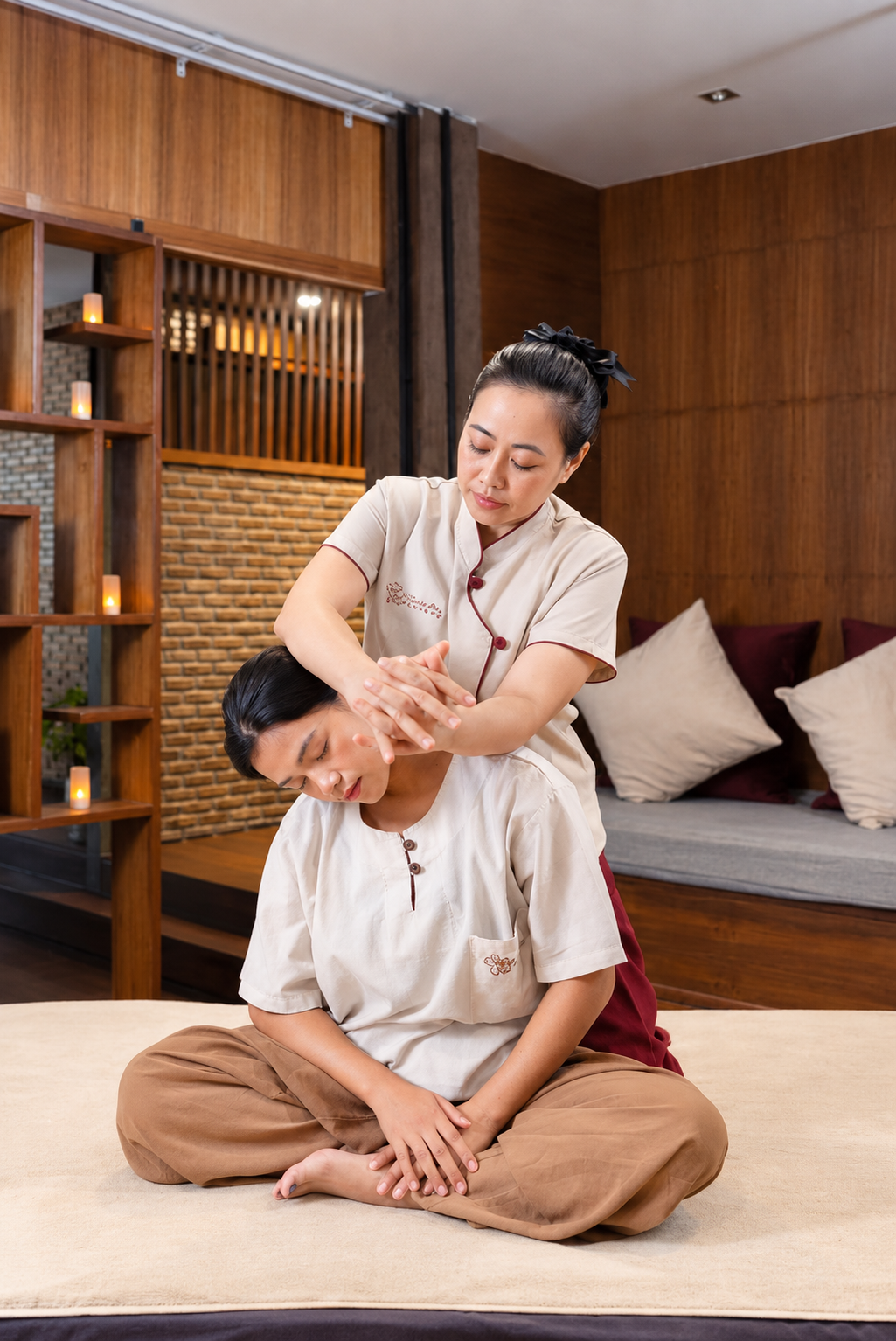
A Thai massage in Chiang Mai costs about the same as two coffees and will do more for you than almost anything else you book here. The problem is the choosing. The sign outside says "Thai massage", the menu inside lists nine things in English that has been translated twice, and you have about forty seconds before someone hands you a pair of cotton trousers. So: what each type does to your body, what it should cost, and how to spot a licensed place.
Why Chiang Mai, and not just anywhere in Thailand
Thai massage is not a spa invention. UNESCO added it to its list of intangible cultural heritage in 2019 under its Thai name, nuad thai, announced at Wat Pho in Bangkok, long the country's centre of learning for the craft. The Bangkok Post's report from that day has the official version.
What makes Chiang Mai different is the northern lineage. This was the Lanna kingdom, and its healing tradition developed separately from the Bangkok school. Northern practitioners work more slowly and hold stretches longer. The clearest example is tok sen (ตอกเส้น), where the therapist taps a wooden mallet against a wedge laid along a muscle, sending vibration into the tissue instead of pressure. It sounds alarming and feels oddly pleasant. It is a northern speciality, and this is where you will actually find it.
The one thing to understand before you book
Western massage is mostly about muscle. Thai massage is about lines.
Practitioners work along what the tradition calls sen, channels running through the body, using thumbs, palms, elbows, knees and feet, then move your limbs into assisted stretches. You stay clothed, on a firm floor mat rather than a table. There is no oil in the traditional version.
This is why people come out of their first one looking slightly stunned. It is closer to being folded by a very calm stranger than to being rubbed, and the good feeling arrives afterwards rather than during.
Does it hurt? Like stretching hurts. Pressure on a knotted muscle registers as pain your body recognises as useful. What should not happen is sharp or breath-catching pain. The phrase to learn is bao bao (เบา เบา), "lighter, lighter", and nak nak (หนัก หนัก) for harder. Say it the moment you need it. Therapists hear it constantly and are not remotely offended. The only real mistake is lying there politely in pain for an hour.
The six types, and what each one is for
1. Traditional Thai massage (nuad phaen thai boran)
The original. No oil, clothes on, floor mat, lots of stretching.
Thumb and palm pressure along the sen lines, then assisted stretches that open hips, shoulders and spine. The best choice after a flight, a day on a scooter or a trek, and the best introduction if you want to understand what Thai massage actually is.
An hour runs about ฿420 to ฿520 at a licensed venue. A well-run hour of it in the Old City at ฿515is a fair reference for what the real thing costs: private air-conditioned room, herbal foot wash first, certified therapists, Ministry of Public Health licence. Children from four are accepted, which is rarer than you would think.
Skip it if you have a recent injury, a slipped disc, uncontrolled high blood pressure, or you are pregnant. In the last case ask specifically for prenatal massage, a different and gentler protocol.
2. Thai oil massage (nuad nam man)
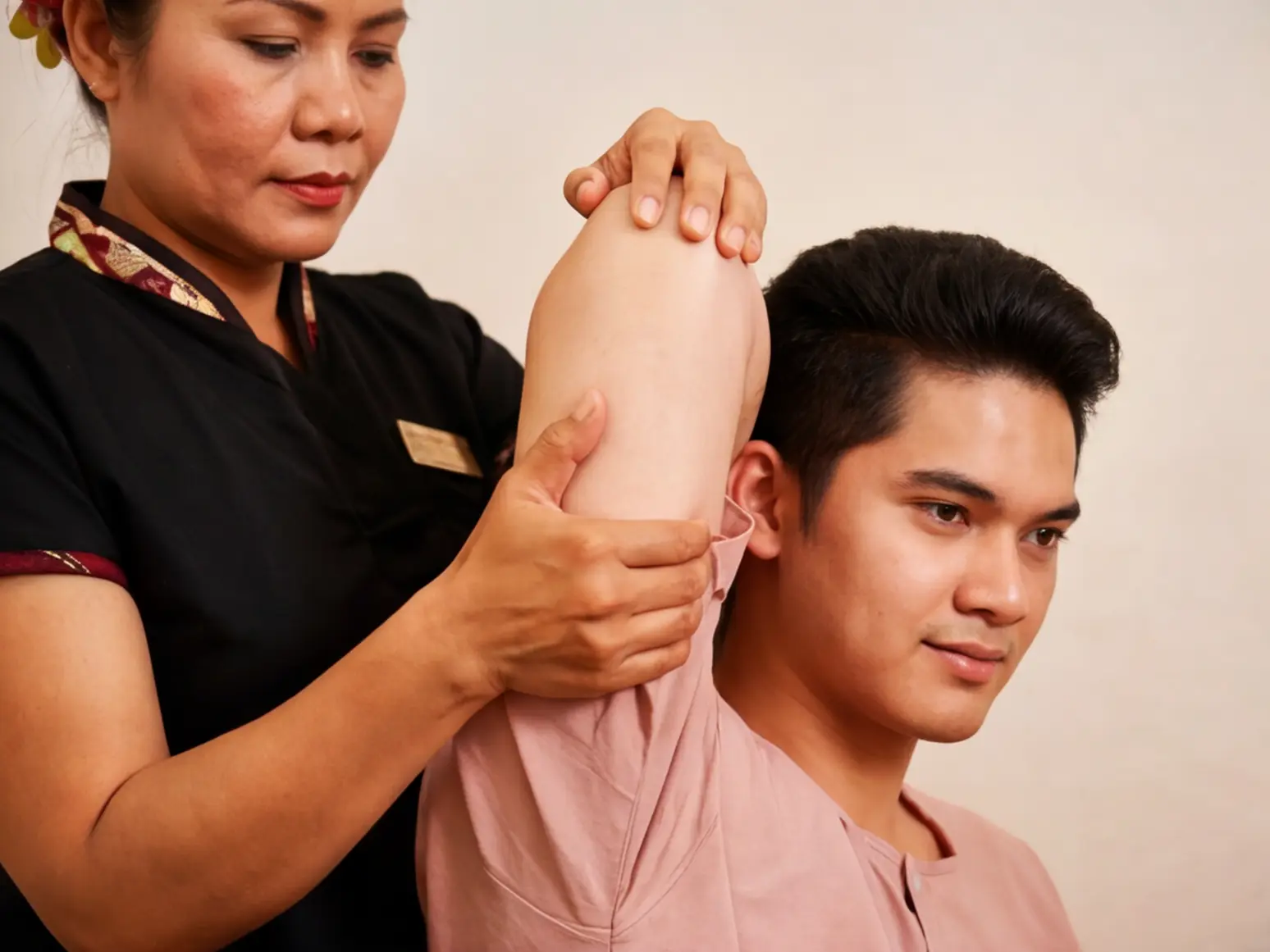
Thai technique with oil, so the pressure glides instead of digging.
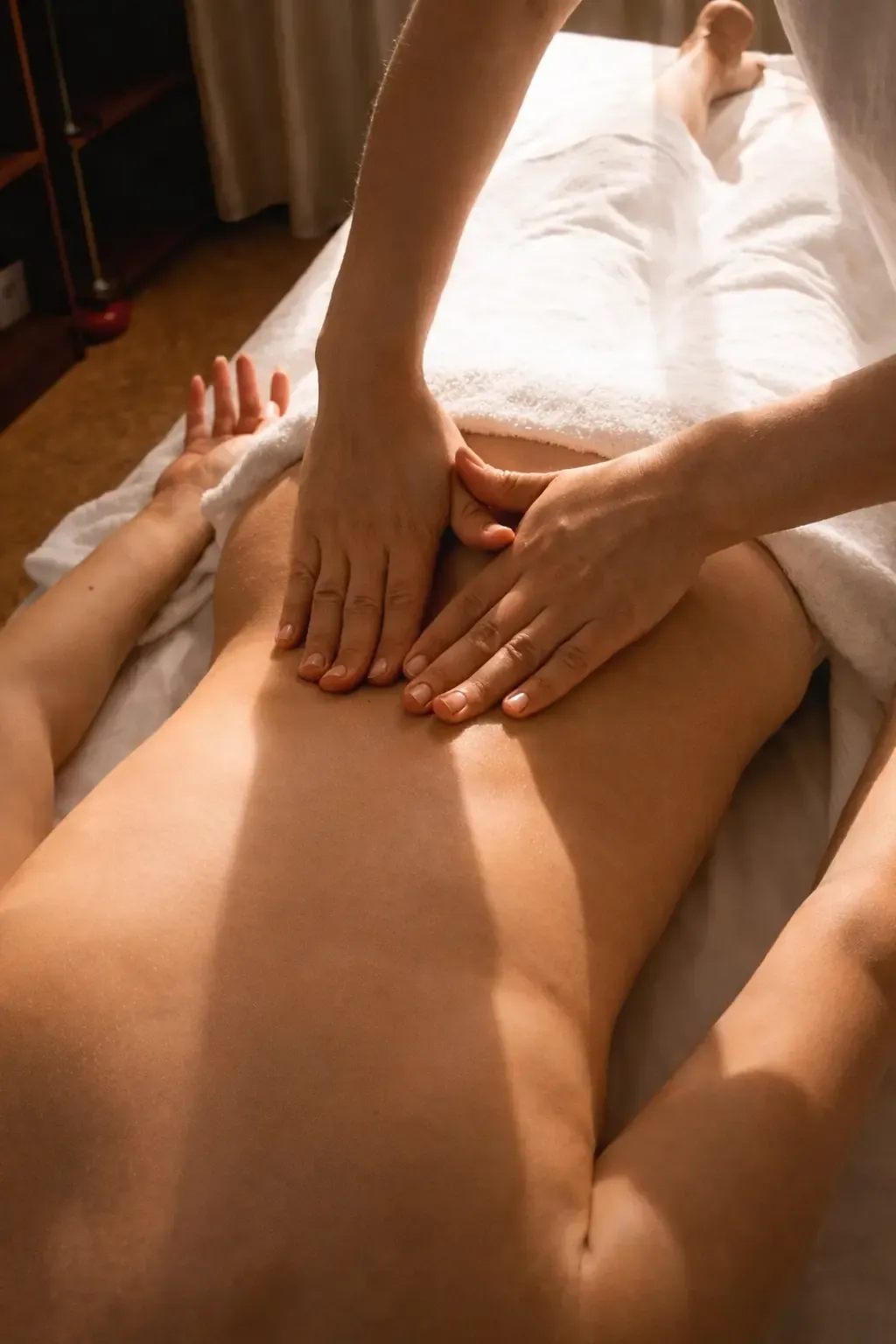
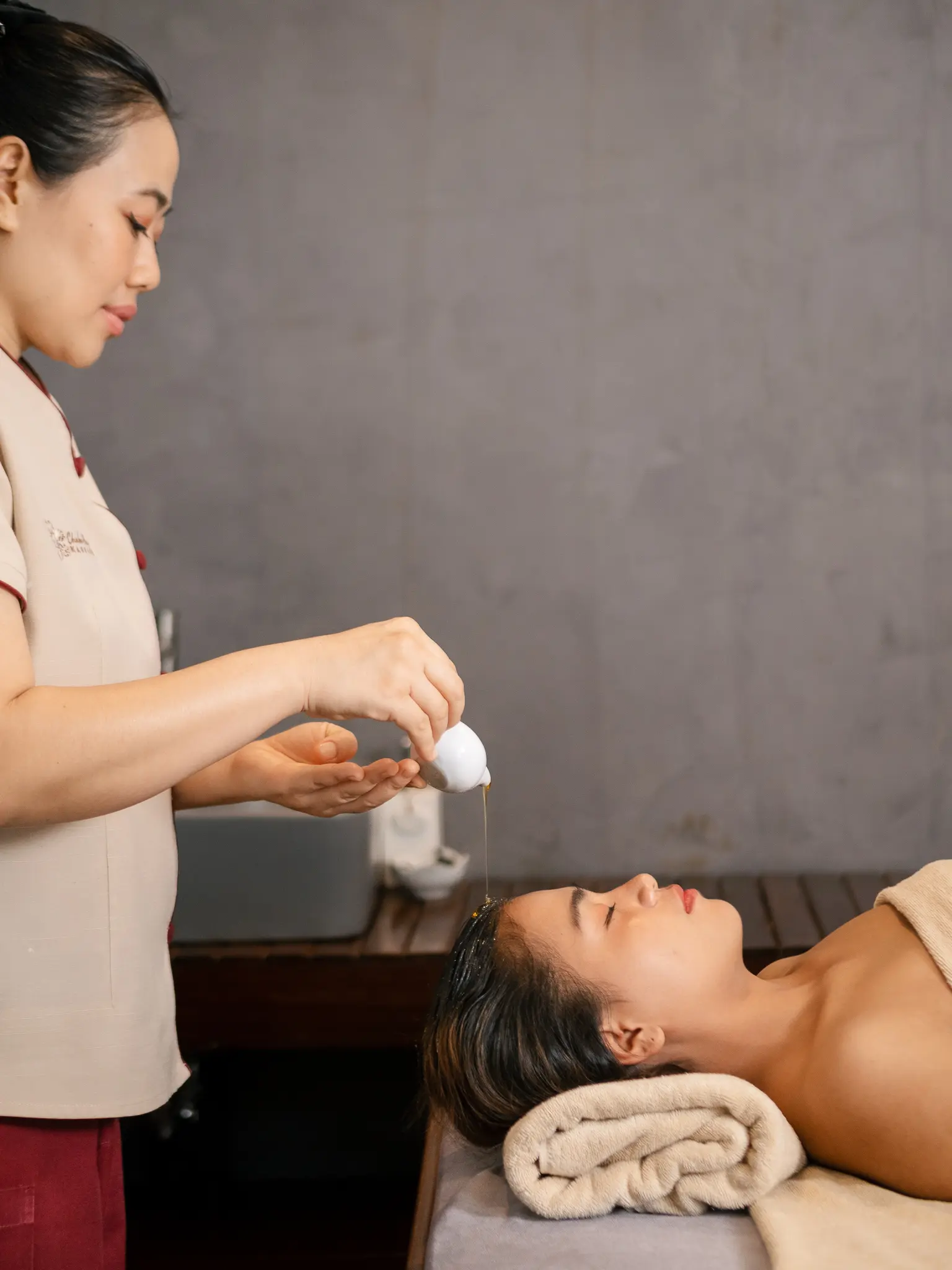
Same acupressure and stretching logic, with oil or herbal balm. The oil lets the therapist work continuously rather than point by point, which takes most of the sting out while keeping the benefit. The right answer for first-timers nervous about the dry version, and for anyone who wants to feel melted rather than rearranged. Around ฿540 an hour in Nimman. You leave slightly oily, so do not book it before dinner somewhere nice.
3. Thai massage with herbal compress (luk pra kob)
The one to book if you only book one.
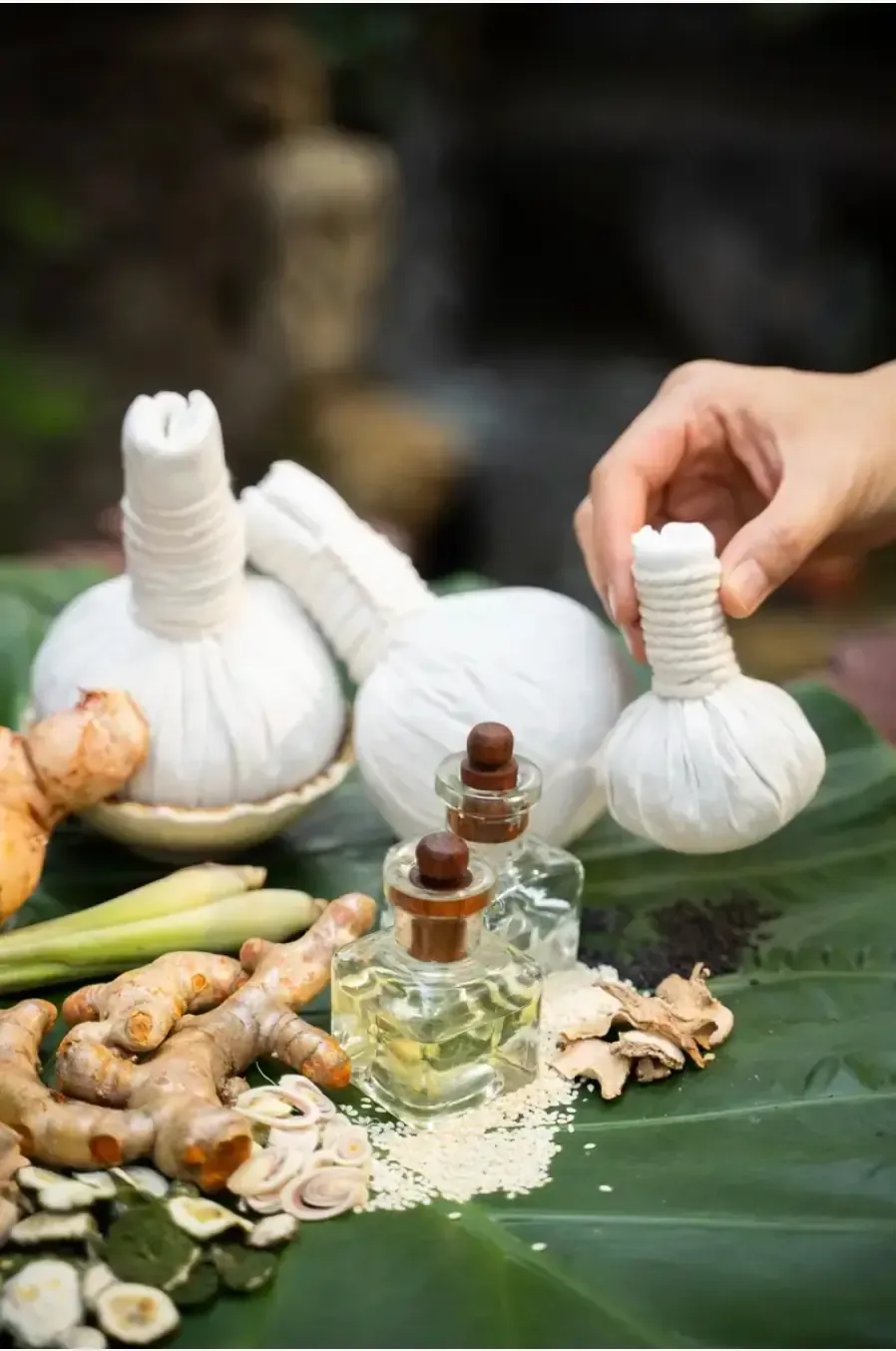
A cloth bundle packed with plai (a cousin of ginger), turmeric and lemongrass, steamed hot and pressed along the body between massage strokes. The heat goes deeper than hands do, the smell is extraordinary, and the effect on muscles stiff from walking is not subtle. A genuine traditional remedy rather than a spa add-on.
It costs more because the compress is steamed fresh for each guest: around ฿1,290 for ninety minutes. The Old City version pairs the compress with a full Thai massage in a private room, herbal tea afterwards. Worth it after a cold day on Doi Inthanon or three days of temples.
4. Foot massage (nuad thao)
The most underrated hour in Thailand.
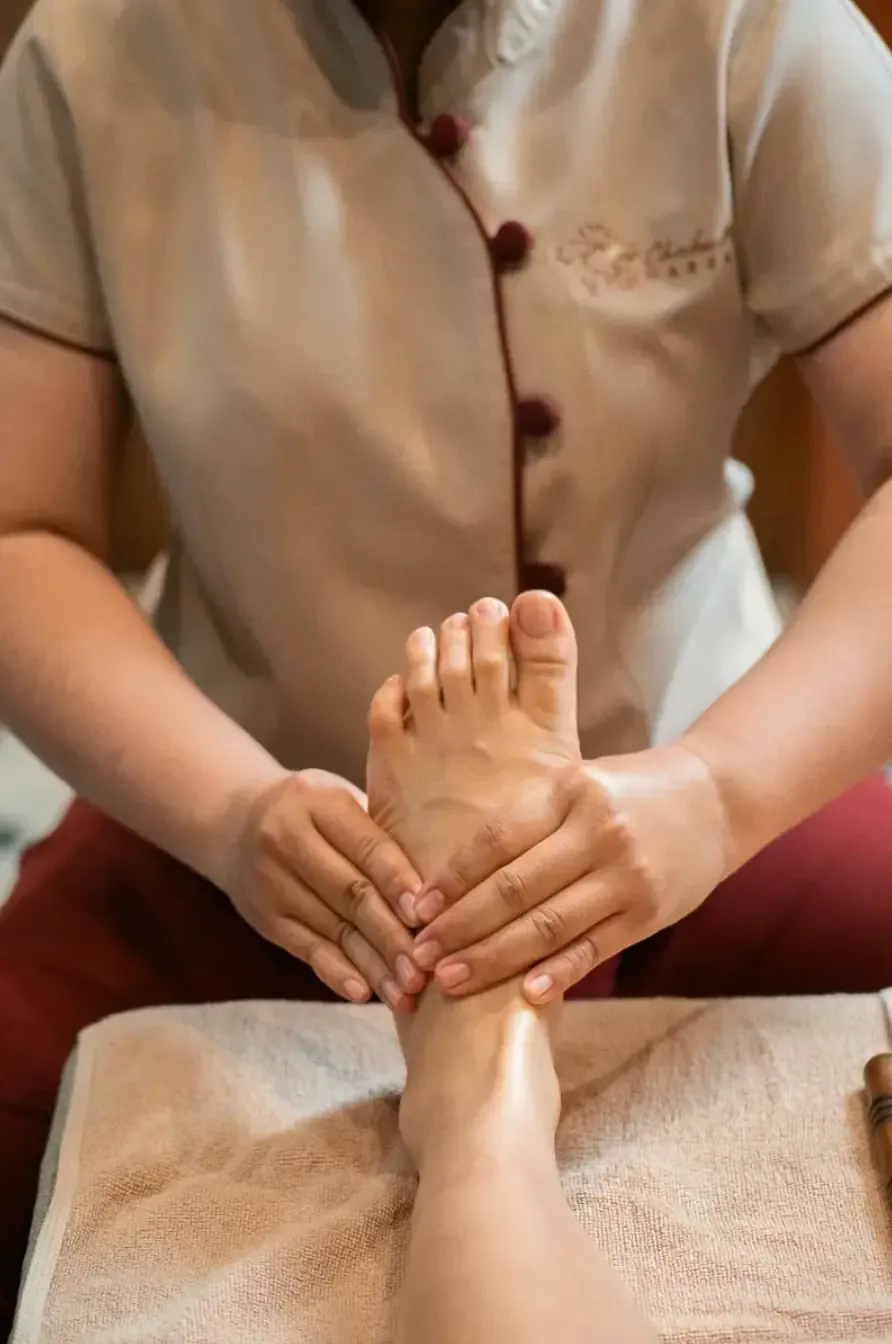
Reflexology-based work on toes, arch, heel and Achilles tendon, done in a chair with your clothes on. You will not understand why this is so good until you have walked a Chiang Mai day: old city in the morning, market in the afternoon, night bazaar after dark, a distance nobody plans for.
Cheapest and lowest commitment, from about ฿420. An hour of foot work in Nimman at ฿420 is where I would send a first-timer, partly because a chair and your own clothes remove every bit of the awkwardness people feel about the whole thing. The hot compress version runs about ฿900.
5. Thai sports massage and deep tissue
For people who did something strenuous and are now paying for it.
Deep targeted work on overused muscles, combining acupressure, deep tissue technique and longer stretching. The difference from a standard Thai massage is focus: the therapist spends the time on what you broke instead of covering everything evenly.
Book it the day after a climb, a long cycle, a muay thai session or a trek, not the morning of. Ninety minutes runs about ฿780, and the ninety-minute Thai sports version in Nimman is one-to-one, which is what you want when someone needs to actually listen to where it hurts.
6. Office syndrome massage
The one nobody tells visitors about, and the one half of them need.
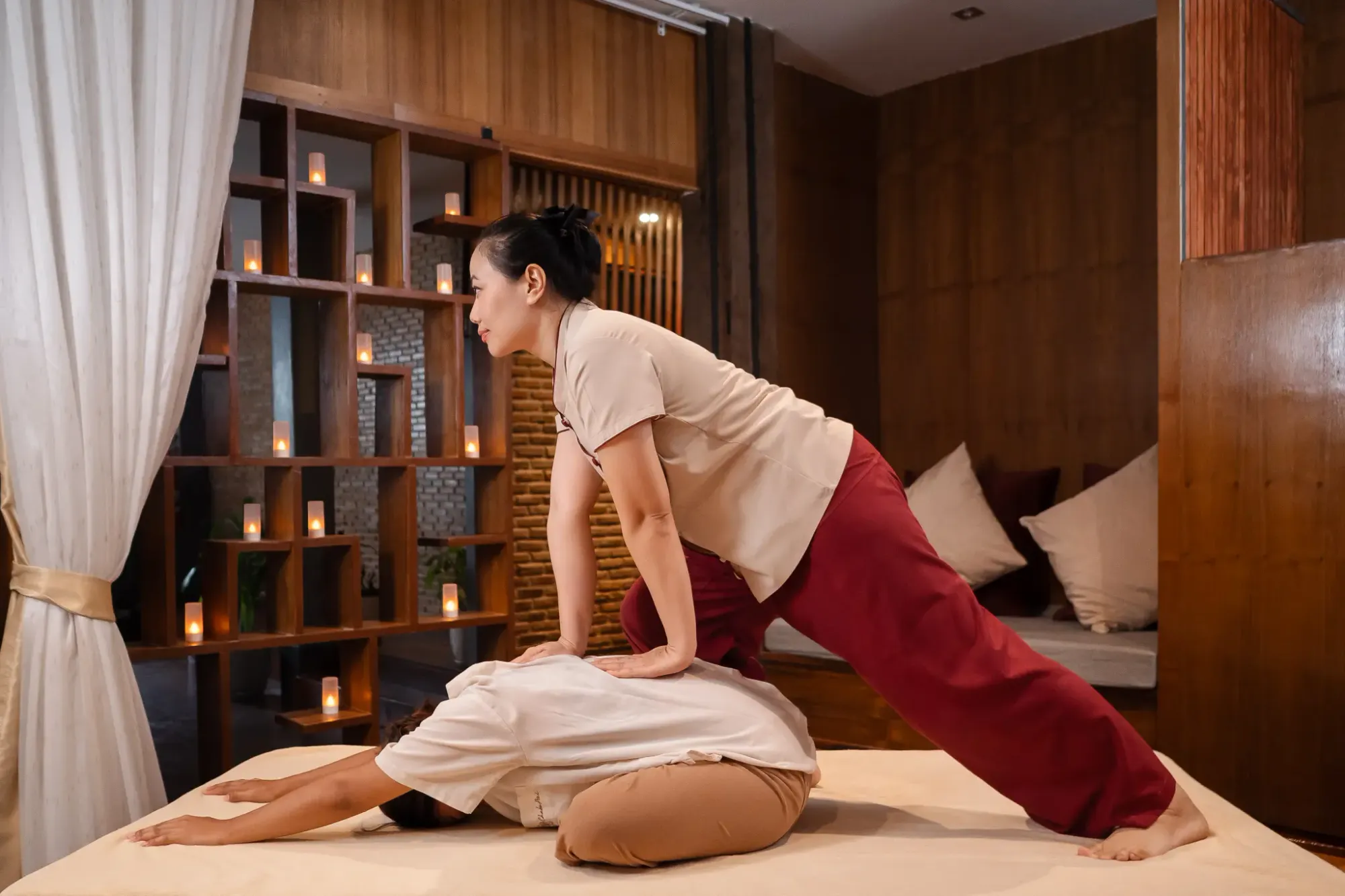
Thailand has a name for what a laptop does to a neck: office syndrome. Thai therapists treat it as a specific condition with its own protocol, aimed at the neck, shoulders, shoulder blades and upper back.
Chiang Mai has a very large population of people working from laptops in cafés, and this is their treatment. It is also the right pick after twelve hours in economy, which does the same thing in one night. Around ฿540, and an hour aimed squarely at neck, shoulders and upper back beats a general full-body massage if that is where you actually hurt.
Side by side
| Type | Oil? | Clothes | Typical length | From | Best after |
|---|---|---|---|---|---|
| Traditional Thai | No | On | 1 hour | ฿420 to ฿520 | Flights, treks, scooter days |
| Thai oil | Yes | Off, draped | 1 hour | ฿540 | A long hot day, dry skin |
| Herbal compress | Compress | On | 1.5 hours | ฿1,290 | Deep stiffness, cold weather |
| Foot and reflexology | Light | On | 1 hour | ฿420 | Walking, standing, markets |
| Sports and deep tissue | Either | Varies | 1.5 hours | ฿780 | Exercise, muay thai, climbing |
| Office syndrome | Either | On | 1 hour | ฿540 | Laptop weeks, economy flights |
Prices are per person at licensed venues and move with promotions, so read them as a reference rather than a quote.
What a massage should actually cost in Chiang Mai
The spread is wide, and the cheap end is not always the bad end.
- ฿200 to ฿300 an hour. Shophouse places, mats behind a curtain, fan rather than air conditioning. Many are staffed by genuinely skilled women who have done this for thirty years. Also the band where quality varies most.
- ฿420 to ฿800 an hour. Licensed venues, private or semi-private rooms, certified therapists, welcome drink, foot wash. The band that makes sense for most visitors, and the band everything in this article sits in.
- ฿1,200 and up. Longer treatments, compresses, spa packages, hotel spas. Fine if that is the day you want, but do not assume the massage is better than the band below. You are often paying for the room.
Tipping is not expected at the fixed-price end, but ฿50 to ฿100 for a genuinely good hour is normal and appreciated. Hand it to the therapist, not the counter.
How to tell a good place from a bad one
Thailand's own Ministry of Public Health is working on this problem. In 2025 it announced a push to raise standards, citing a shortage of roughly 50,000 qualified practitioners and the damage done by places using the words "nuad Thai" without earning them. Practitioners are now graded by training hours, from 60 at entry level to 500 and 800 for advanced, which the Bangkok Post covered when the plan was announced.
On the street that means:
- A licence on the wall. Legitimate places display their Ministry of Public Health registration, and many hold SHA certification too. Nothing displayed anywhere tells you something.
- Certificates with names and hours, not a generic plaque.
- A printed price list visible from outside. No menu, no price, no.
- Pink or red lighting, and someone calling to you from the doorway. Not that kind of massage shop. This is exactly what the ministry is trying to clean up, and it is easy to avoid once you know the signal.
- Questions before they start. "Where does it hurt? How much pressure? Any injuries?" is a trained therapist. Being pointed straight at a mat is not.
What to expect, so nothing surprises you
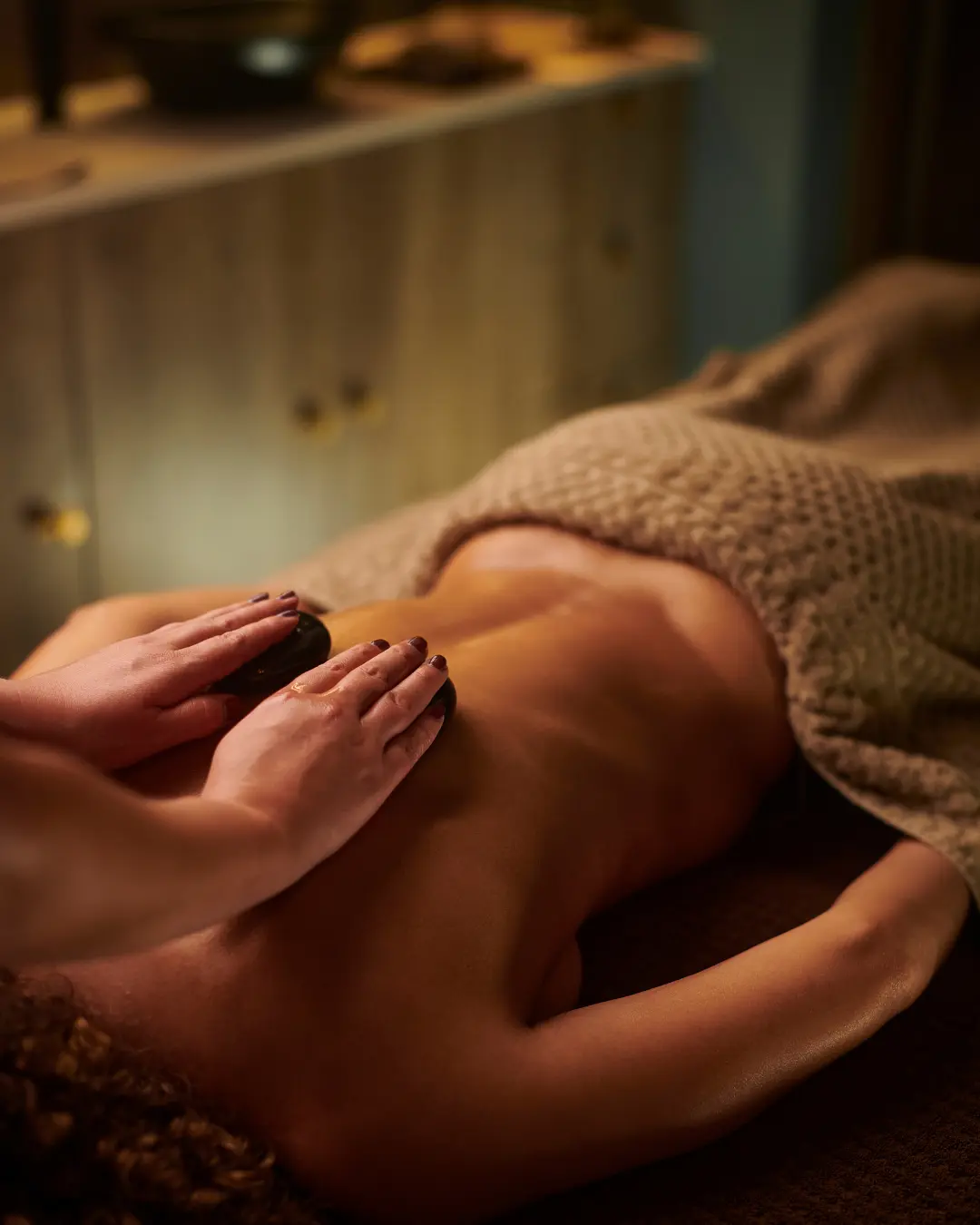
- Clothes are provided for traditional and compress massages: loose cotton top and trousers. Oil massages use a towel drape. Underwear stays on, in every type listed here.
- Your feet get washed first at most decent places. Not optional, not a judgement, just how it starts.
- Do not book straight after a big meal, and do not plan a temple tour for the hour afterwards.
- Drink water afterwards. Dehydration is what turns a good massage into a headache.
- Mild soreness the next day is normal after a first traditional or sports massage. It should feel like the day after exercise, which is also why two deep massages running is a worse idea than it sounds.
- Tell them everything: pregnancy, recent surgery, blood thinners, slipped discs, high blood pressure, varicose veins, a healing fracture, or if you bruise easily. A trained therapist adapts, but not to what they were never told.
If one massage turns into an interest
Some people leave wanting to understand how it works rather than just book another. Chiang Mai is unusually good for that, because the city's schools train Thai practitioners as well as visitors. A three-day, eighteen-hour foundation course with accommodation, capped at five students, runs around ฿4,500, roughly what three good massages cost. You will not come out a therapist. You will come out able to help the person you travel with.
Building a wider slow-down week? Our guide to wellness in Chiang Mai covers how yoga, massage and sound healing fit across a few days.
Frequently asked questions
Which Thai massage should I get first? Foot massage if you are nervous or short on time, traditional Thai if you want to understand the tradition, oil massage if you want the technique without the intensity. A full-body deep tissue is not a good first move.
Is Thai massage supposed to hurt? Intense, not painful. Firm pressure on tight muscle feels strong and is fine. Sharp pain is not, and bao bao stops it immediately.
How much should I pay for an hour? ฿200 to ฿300 at a basic shophouse, ฿420 to ฿800 at a licensed venue with private rooms and certified therapists. Above ฿1,200 you are buying length or luxury rather than skill.
Do I need to book ahead? Not for a walk-in shophouse. Yes for a specific treatment at a specific time, especially December to February, and especially for compress treatments, which have to be steamed fresh. Everywhere is busiest between 6pm and 9pm.
What if I am pregnant? Ask specifically for prenatal massage and say which trimester. Traditional Thai massage with full stretching and deep leg pressure is not appropriate during pregnancy, but a proper prenatal protocol exists and good venues offer it.
One hour, properly chosen
Most visitors to Chiang Mai get a massage. Rather fewer get the right one, because they pick off a laminated menu in forty seconds at the end of a long day. Compress after a cold day in the mountains, foot massage after the markets, office syndrome after the flight, traditional Thai when you want to know what the fuss is about.
Pick on what your body did today. That is the whole trick.
Sources: Bangkok Post, UNESCO listing of Nuad Thai (2019), Bangkok Post, Ministry of Public Health massage standards (2025)