
Reading time : 8 min | Updated : April 2026
Something happens to people in Chiang Mai that is difficult to explain without sounding like a wellness brochure. They arrive tired. They slow down. After a few days they stop checking their phones with the same urgency. By the end of the week, something in the posture has changed, something in the quality of attention, as if the city has recalibrated something that had been running too fast for too long.
Part of this is the pace of the city itself. Part of it is the mountains and the air and the fact that the temples mark time differently from offices. But part of it is also the specific wellness infrastructure that Chiang Mai has developed over decades: a genuine tradition of healing knowledge combined with a contemporary wellness scene that has attracted practitioners from across Southeast Asia and beyond.
This is not about luxury retreats for people with large budgets. It is about what is available to anyone who decides to take a morning, an afternoon, or a week seriously.
Thai Massage : The Real Thing
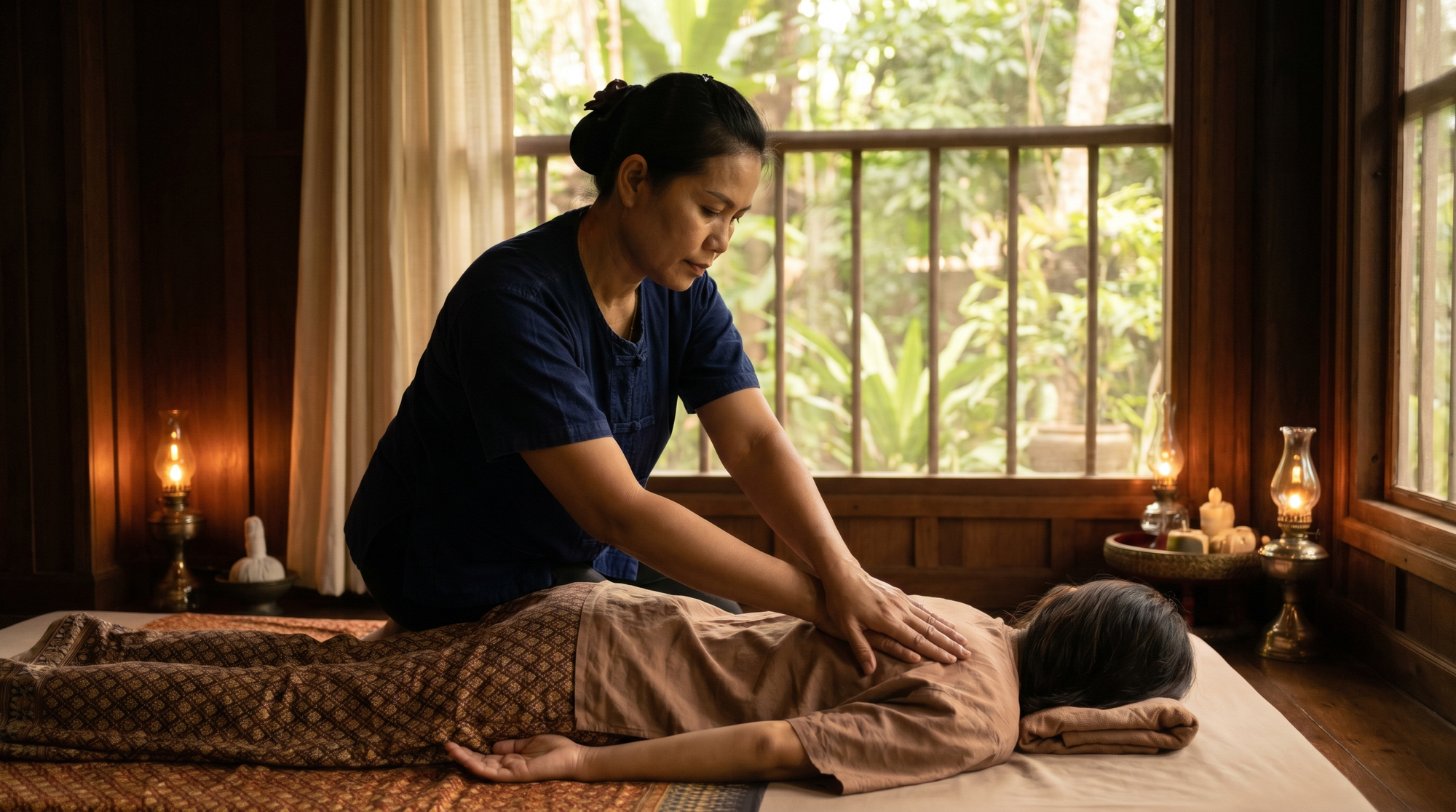
Thai massage has been practised in Thailand for over 2,500 years, originating in the Ayurvedic medical traditions of India and developing into a distinct northern Thai form through centuries of transmission between practitioners in the temples and communities of the north. What is offered in Chiang Mai, at its best, is not a commercial version of this tradition. It is the tradition.
The technique is unlike any other form of massage. The practitioner uses their hands, forearms, elbows, knees, and feet, moving the recipient through a sequence of assisted stretches and pressure point work along the body's energy lines, known as sen in Thai. A session typically lasts 90 minutes to two hours. The experience is active rather than passive: you are moved, stretched, folded, and pressed in ways that feel both therapeutic and occasionally astonishing.
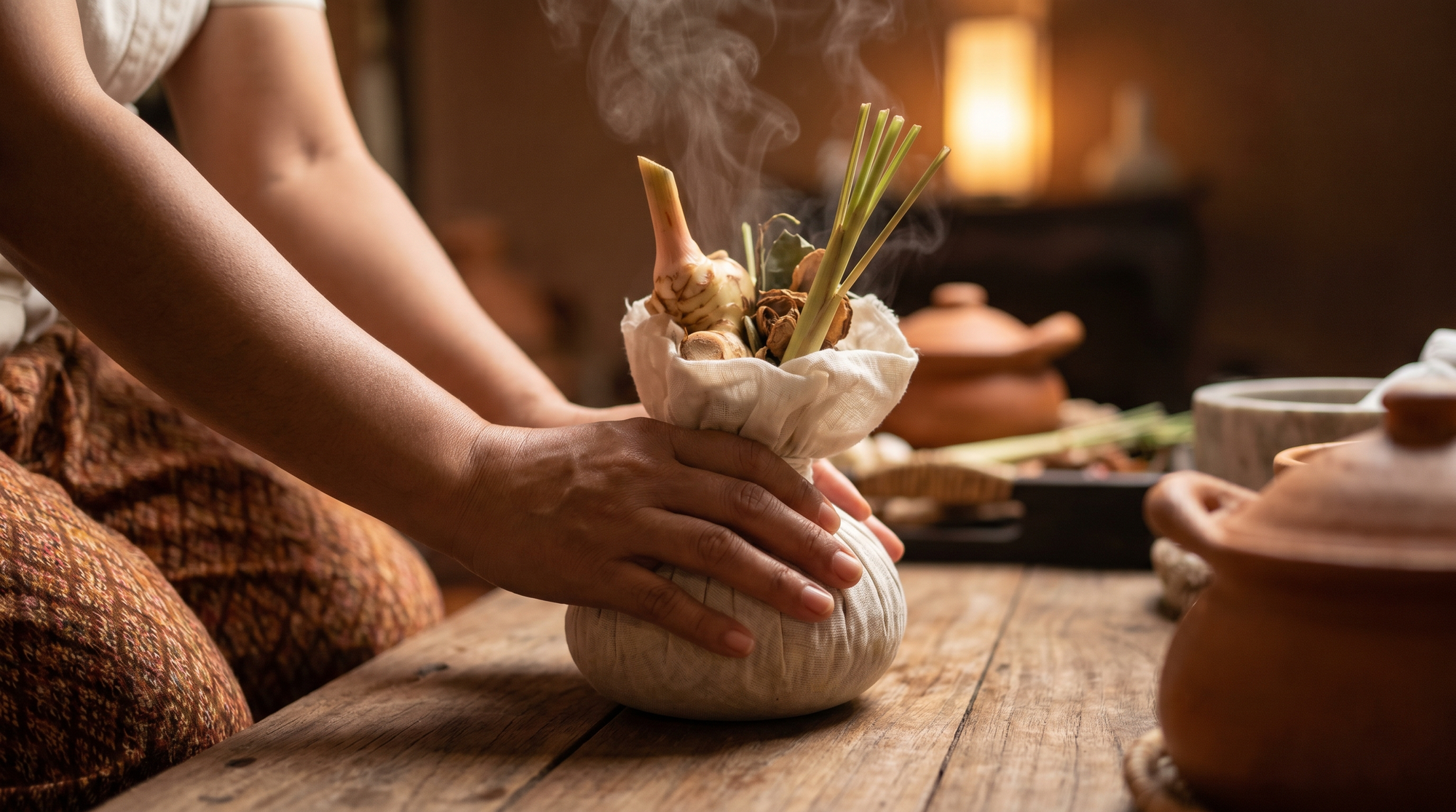
The range of quality in Chiang Mai is wide. The 200-baht walk-in shop on the corner of the old city does something recognisably related to the same tradition but compressed and often hurried. A trained practitioner at a serious school, working through a full session with proper time and attention, produces something genuinely different. The integrated herbal wellness workshop combines traditional herbal knowledge with the massage ball tradition, making your own compress and understanding what the herbs inside it do before using it. This adds a layer of knowledge to the physical experience.
For first-timers, the practical recommendation is to spend at least 90 minutes rather than 60, to choose a school with trained practitioners rather than the cheapest walk-in option, and to communicate clearly about pressure and areas to avoid. Thai massage should be intense but not painful. If it is painful, say so.
Yoga in the Mountains
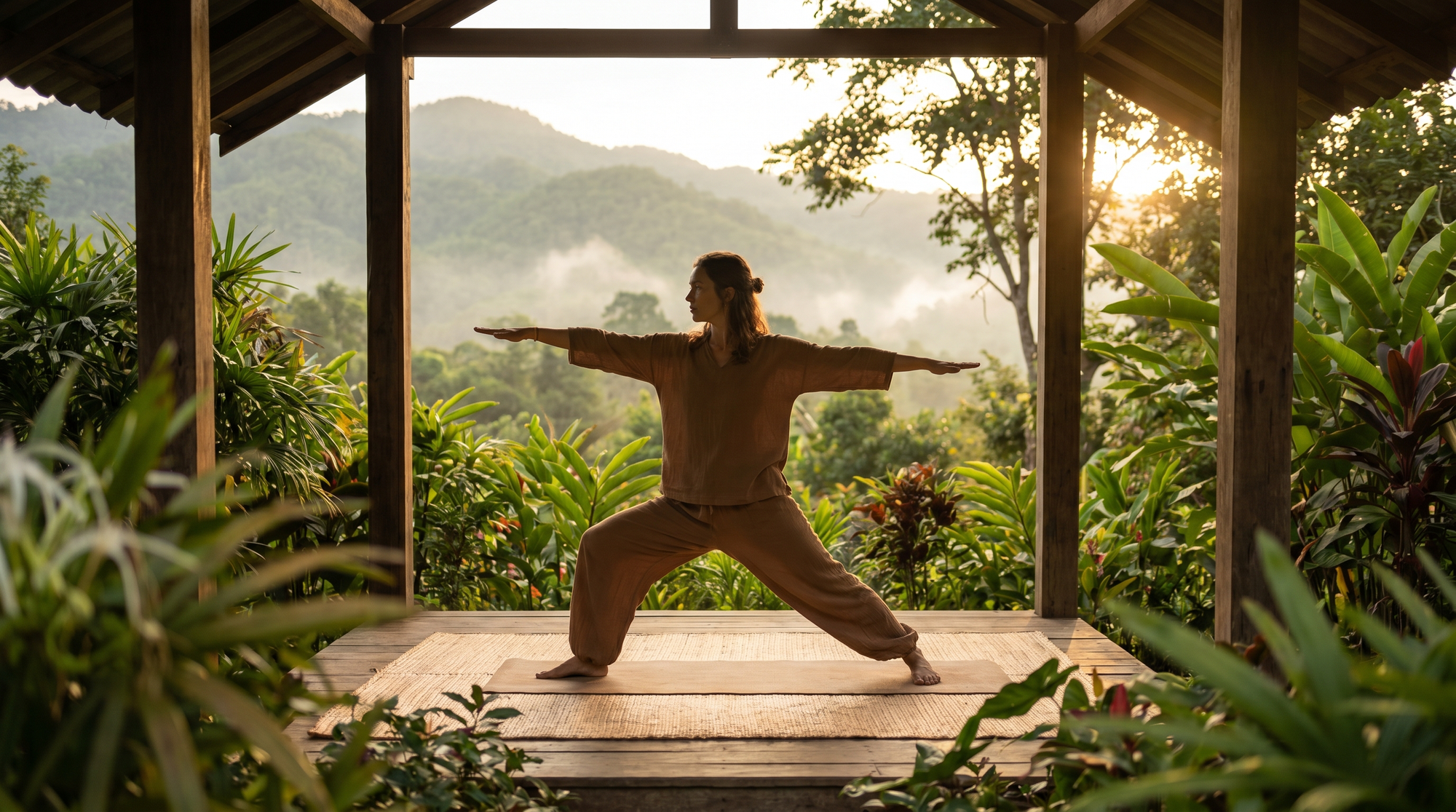
Chiang Mai has been a destination for yoga practitioners since the 1990s, when the first dedicated studios began to appear in the neighbourhood around Nimmanhaemin Road. What has grown since then is a genuine community of practice, with studios ranging from drop-in classes to multi-week intensives and teacher training programmes.
The specific character of yoga practice in Chiang Mai is shaped by its context. The mountains above the city, the temple bells in the morning, the slower rhythm of northern Thai life, these things find their way into the practice. Many studios are set in gardens or open-sided buildings where the outside air moves through the room and the sounds of the city are present but distant. This is a different kind of yoga class from what you find in a basement studio in a European winter.
The range of styles is extensive. Hatha, Vinyasa, Yin, Kundalini, restorative, and yoga nidra are all available in the city, often in the same studio. The quality of instruction is generally high because Chiang Mai attracts serious teachers from the international yoga community.
For those seeking more than a drop-in class, Chiang Mai offers multi-day yoga retreats in the valleys and hills surrounding the city, combining daily practice with meditation, plant-based meals, and guided time in nature. The Mae Rim area north of the city, with its green hills and botanical gardens, is particularly suited to this kind of retreat.
Sound Healing : What the Research Actually Says
Sound healing is the practice element of Chiang Mai's wellness scene most likely to produce scepticism in a first-time visitor. The image of Tibetan singing bowls placed on the body while gongs resonate through a dark room can seem, depending on your perspective, either deeply compelling or implausible.
The science is more interesting than either reaction suggests. Studies have shown that singing bowl sound meditation can produce physiological and psychological responses, reducing negative affect and increasing positive affect, as well as improving blood pressure and heart rate.
The reasons behind the positive effects are not fully understood. Possible explanations include alterations in brain waves, binaural beats, and the vibrations of singing bowls interacting with the energy field surrounding the human body. Singing bowl sound meditation is an ancient practice that has been used for centuries in Tibetan and Buddhist cultures as a form of healing and relaxation.
A 2025 systematic review published in a peer-reviewed health journal, examining 14 quantitative studies over 16 years, found that Tibetan singing bowl interventions showed consistent potential to reduce anxiety and depressive symptoms, regulate autonomic nervous system activity, and shift brainwave patterns toward the relaxed states associated with meditation and rest. The researchers noted the need for more robust study designs but concluded that the intervention shows genuine therapeutic potential as a complementary practice.
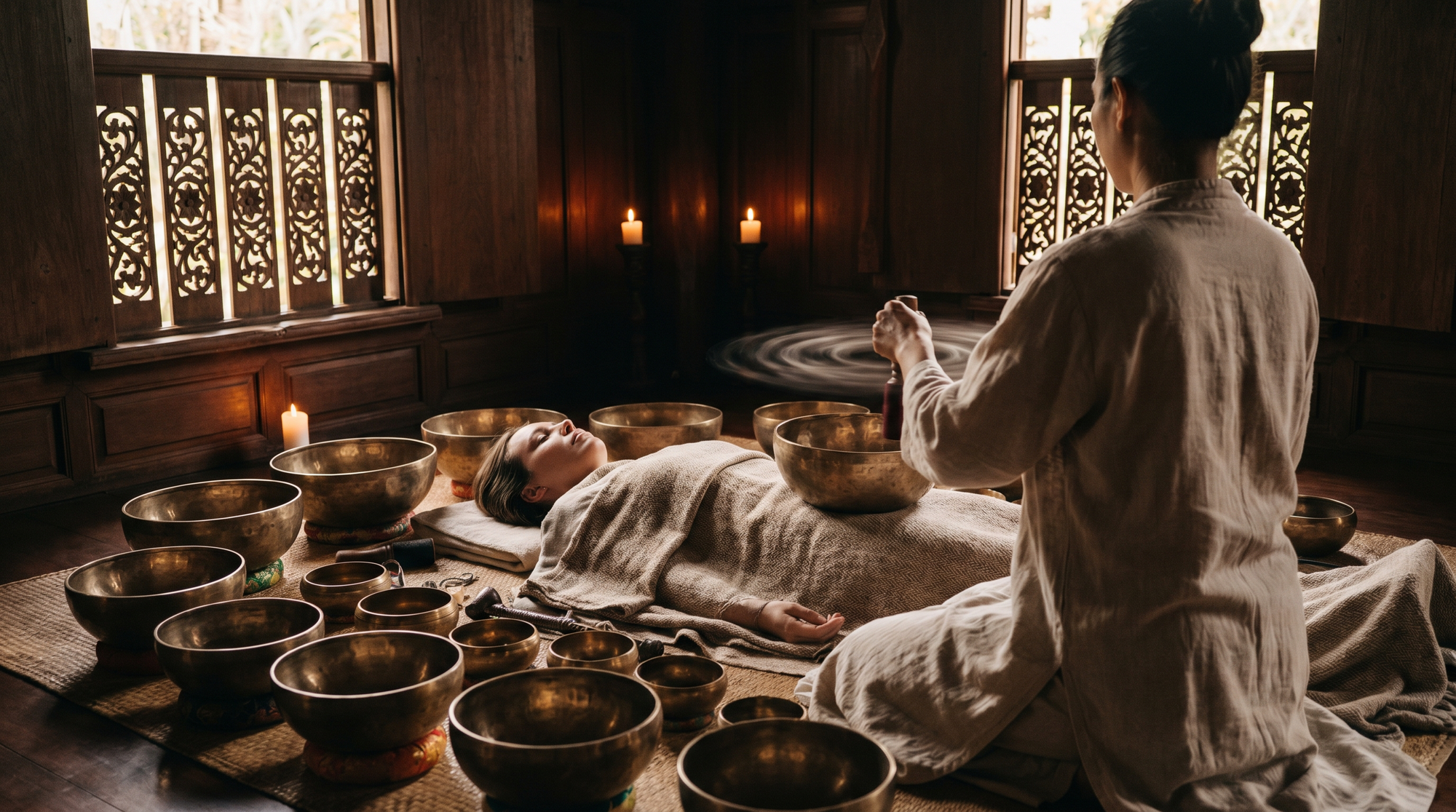
What happens in a sound healing session in Chiang Mai is this: you lie on a mat in a dark or dimly lit room. Bowls of varying sizes are placed around and sometimes on your body. The practitioner strikes and circles them in a sequence that creates a field of overlapping tones and resonances. The sound is immersive rather than simply auditory. You feel it in your chest, in your jaw, in places you did not expect to feel anything.
Most people fall into a state between waking and sleeping. Some fall fully asleep. Almost everyone reports feeling quieter after than before, in a way that lasts longer than the session itself.
Chiang Mai has multiple dedicated sound healing centres, many staffed by practitioners who have trained extensively in the Tibetan and Himalayan traditions that originated the practice. It is worth asking about a practitioner's training before booking: the difference between an experienced sound healer and someone who bought a bowl last month is audible.
Ice Baths and Cold Therapy
The newest addition to Chiang Mai's wellness landscape, cold therapy, has become increasingly present at serious wellness centres across the city. The sauna and ice bath recovery experience combines the heat of a traditional sauna with the shock of an ice bath in a protocol that has a substantial body of research behind it, supporting benefits to circulation, inflammation, and mood.
The combination of heat and cold, moving between extreme temperatures in a structured way, activates the body's adaptive systems in a manner that produces a specific feeling of aliveness. For people who live primarily in air-conditioned offices and temperature-controlled cars, the experience of deliberate physical intensity followed by the contrast of cold is genuinely shocking in the best sense.
This is wellness as challenge rather than indulgence, and it attracts a different kind of participant than the massage or yoga studio. It works better for some people than others. It is worth trying once to find out which kind of person you are.
Building Your Own Wellness Day
One of the more unusual things about Chiang Mai is that a genuinely comprehensive wellness day is available to anyone at a price that does not require a significant budget.
A morning structure that works: wake early and walk to a temple before the heat arrives, spending 30 minutes sitting quietly in a courtyard. A yoga class from 8 to 9.30am at one of the old city studios. A traditional Thai massage from 10.30 to 12.30. Lunch at a restaurant that uses northern Thai herbs and vegetables. An afternoon sound healing session from 3 to 4.30pm. A short walk in the evening.
That day costs, outside of food, somewhere between 1,000 and 2,000 baht depending on where you book each session. It produces a different quality of evening than a day spent sightseeing.
The herbal tradition adds another dimension. The Thai yadom inhaler workshop and the herbal tea blending sessionconnect the wellness experience to the botanical knowledge of the north, where the plants used in healing traditions have been growing in the surrounding mountains for centuries. Making something you will use every morning for the next few weeks changes the relationship with the practice from passive to active.
FAQ
Is Thai massage painful ? It is often intense, particularly in areas where the body holds significant tension. It should not be sharply or acutely painful. Communicate clearly with the practitioner throughout: Thai massage is a dialogue, not something done to a passive recipient.
Do I need yoga experience to join a class in Chiang Mai ? No. Most studios in Chiang Mai offer beginner and multi-level classes. Yin yoga and restorative yoga are particularly accessible for people with no prior experience and produce significant effects without requiring physical ability.
What is the difference between a sound healing session and a meditation class ? In a meditation class, you actively practise techniques for working with attention and thought. In a sound healing session, you are largely passive while the sound does something to your nervous system. Both produce states of quiet. The mechanisms and the experience are quite different.
Is sound healing scientifically validated ? There is a growing body of peer-reviewed research suggesting genuine physiological and psychological benefits, including reduced anxiety and improved heart rate variability. The mechanisms are not fully understood and more robust studies are needed, but the evidence is stronger than most people expect.
How long should I spend in Chiang Mai for a meaningful wellness experience ? Three days is enough to begin noticing a shift. Seven days allows a genuine reset. Two weeks allows something closer to a transformation in daily rhythm and practice. The city supports all three timescales.