
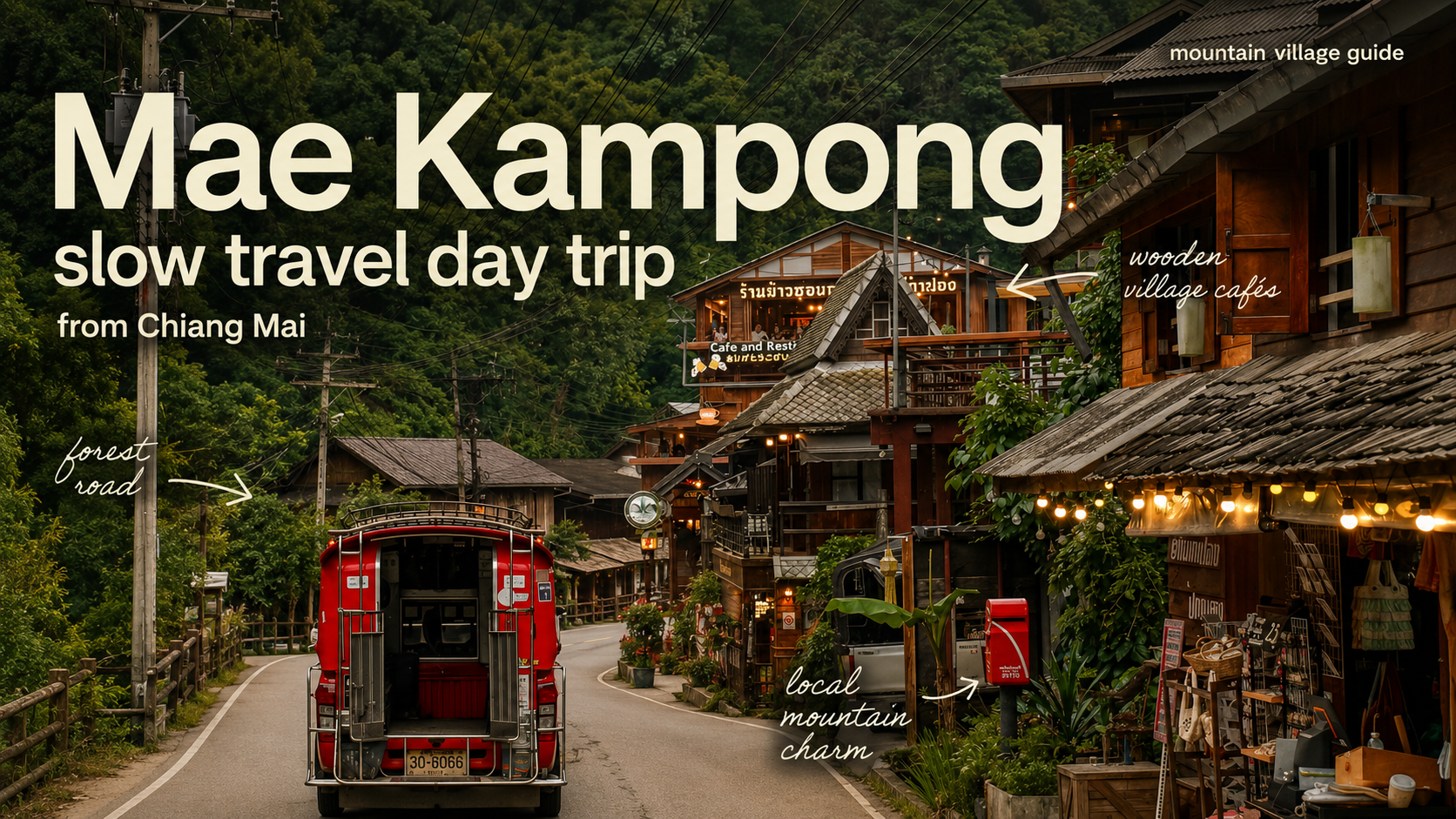
Day Trip 1 Hour From Chiang Mai (2026)
Most travelers to Chiang Mai spend their "mountain day" at Doi Inthanon. 90 km, 12 hours, four photo stops, exhausted on the way back. There's a quieter alternative that delivers everything Doi Inthanon promises (cool air, mountain views, real Northern Thai culture) without the van fatigue.
Mae Kampong is a small mountain village at 1,300m elevation, 1h30 northeast of Chiang Mai. No tour buses. No 30-minute photo stops. Just coffee plantations, traditional wooden houses, a waterfall hidden in the forest, and one of the most surprising cafés in Thailand built into a giant tree.
This guide covers everything you need: what to actually do up there, how to get there, when to go, and why we keep recommending Mae Kampong to clients who want one good mountain day in Northern Thailand.
Why Mae Kampong Beats Doi Inthanon for Slow Travelers
Doi Inthanon is impressive but operates at tour-bus pace. Mae Kampong operates at a human pace. The difference matters for the kind of traveler who reads this blog.
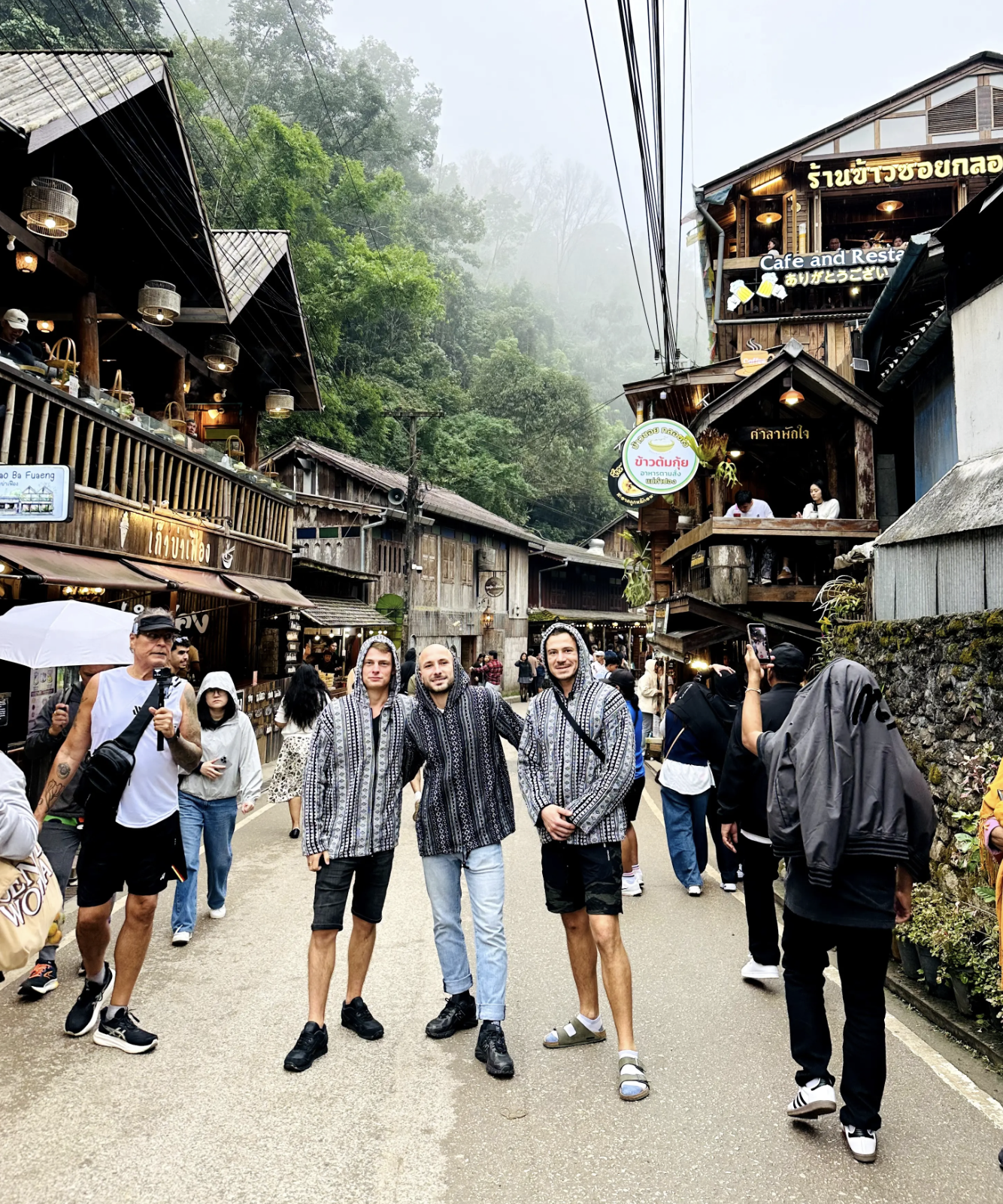
Mae Kampong is a real, working village, not a national park. Around 300 people live here, most working in coffee farming, herbal tea production, or homestays. The village won a OTOP gold award (Thailand's "One Tambon One Product" national recognition program) for its community-based tourism model. The income from visitors goes directly into the village, not into a corporate tour operator's pocket.
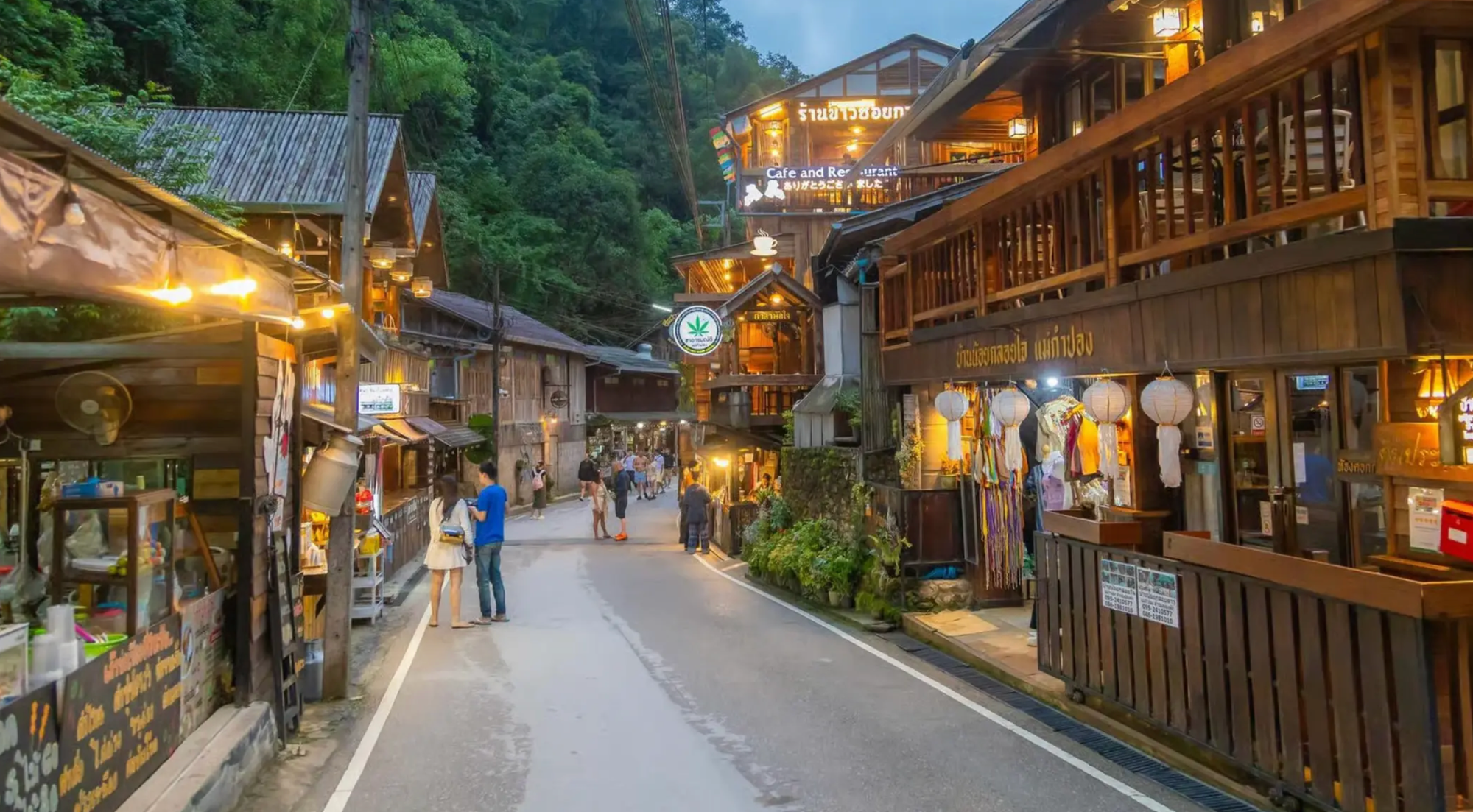
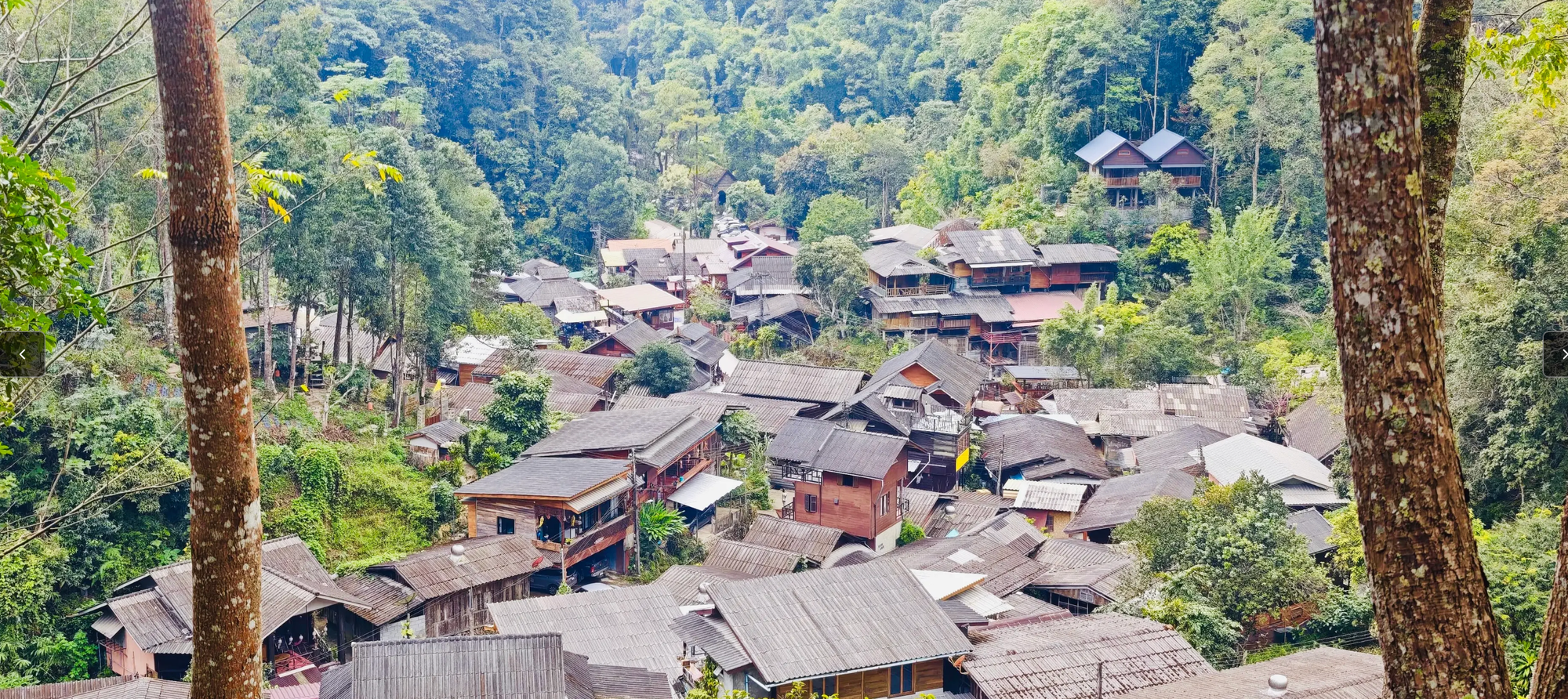
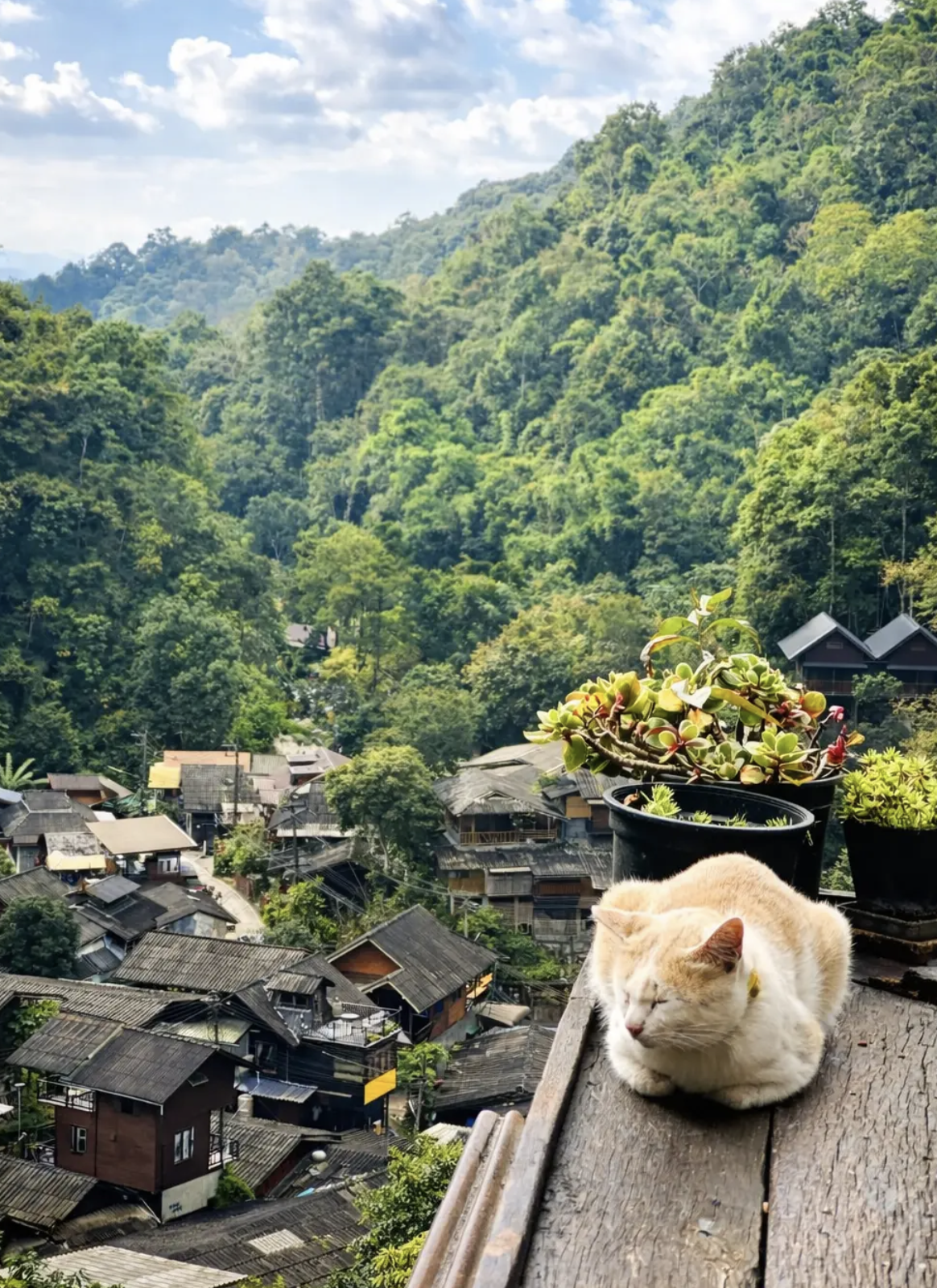
It's small enough to absorb visitors without changing. There are maybe 6 cafés, 2 small restaurants, a handful of homestays, and a few craft shops. You can walk the entire village in 20 minutes. You'll see traditional wooden houses with red tin roofs, banana trees in every yard, coffee being roasted in front of houses. No big concrete hotels, no souvenir chains.
The climate is genuinely different. At 1,300m elevation, Mae Kampong stays 5-8°C cooler than Chiang Mai year-round. In cool season (November-February), mornings can be 12-15°C with mist in the valley. After the heat of Chiang Mai city, the cool air alone is worth the trip.
Quick facts:
- Location: 50 km northeast of Chiang Mai (Mae On district)
- Elevation: 1,300 m
- Drive time: 1h30 from Chiang Mai (winding mountain road)
- Climate: cool year-round, 12-25°C
- Best season: November to February (cool, clear), good year-round except burning season
- Population: around 300 villagers
- Best for: slow travelers, couples, digital nomads, anyone tired of tour buses
What to Actually Do at Mae Kampong
Don't come expecting a packed itinerary. The point of Mae Kampong is to slow down. Here's what fills a comfortable day:
1. Walk Through the Village
Start by walking the main street of Mae Kampong slowly. The whole village is built along one road following a small stream. Wooden bridges connect the houses on either side. You'll pass coffee roasters working in front of their homes, women weaving, and grandmothers selling fresh fruit on small wooden tables.
Time needed: 30-45 minutes
Highlight: the stream itself is full of small fish and has tiny waterfalls every 50 meters. Sitting on a bench by the water is the closest thing to mountain meditation you'll get.
2. Visit Mae Kampong Waterfall
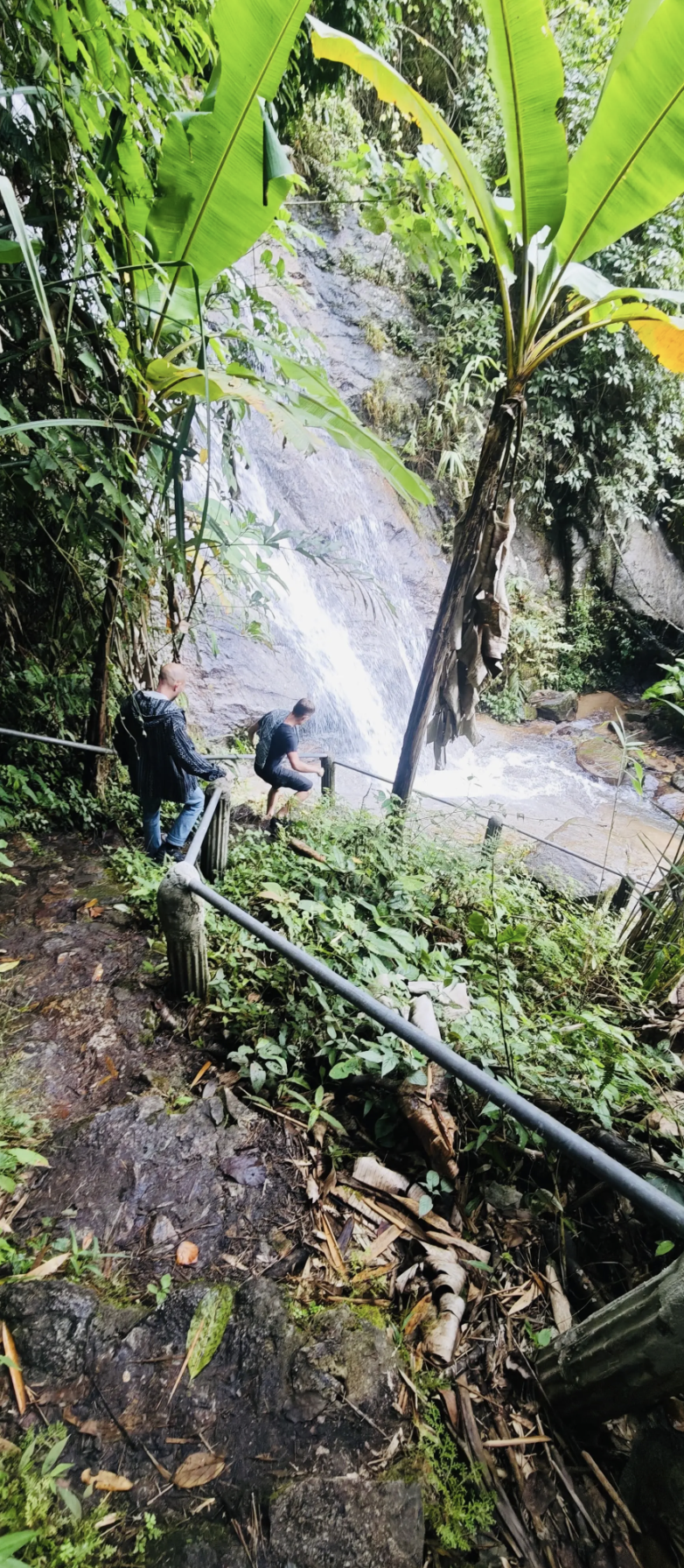
A 7-tier waterfall hidden in the forest above the village. The first level is accessible via a 15-minute forest walk from the village center. The upper levels require steeper hiking but are usually empty even when the village is busy.
Time needed: 1 hour (level 1 only) to 2 hours (multiple levels)
Bring: shoes with grip (paths can be wet), insect repellent
The waterfall is small compared to Doi Inthanon's Wachirathan, but the atmosphere is completely different. Dense forest, sounds of birds and insects, locals coming to wash vegetables or cool off. It feels like a place people actually use, not a tourist photo stop.
3. Coffee at a Mountain Café
Mae Kampong's identity is built around coffee. The village grows arabica beans at 1,300m elevation, which produces the cooler-climate flavor profile (notes of berry, light acidity). Most of the cafés serve their own roasted beans.
Where to drink: any of the cafés along the main street work. They're all small, family-run, with mountain views from their decks. Expect to pay 60-100 THB for a coffee (vs 80-120 THB in a Nimman specialty café). The quality is genuinely good, often surprisingly good for the price.
Order an americano or single-origin pour-over if you want to taste the bean. Avoid the cappuccino, the milk is usually long-life UHT.
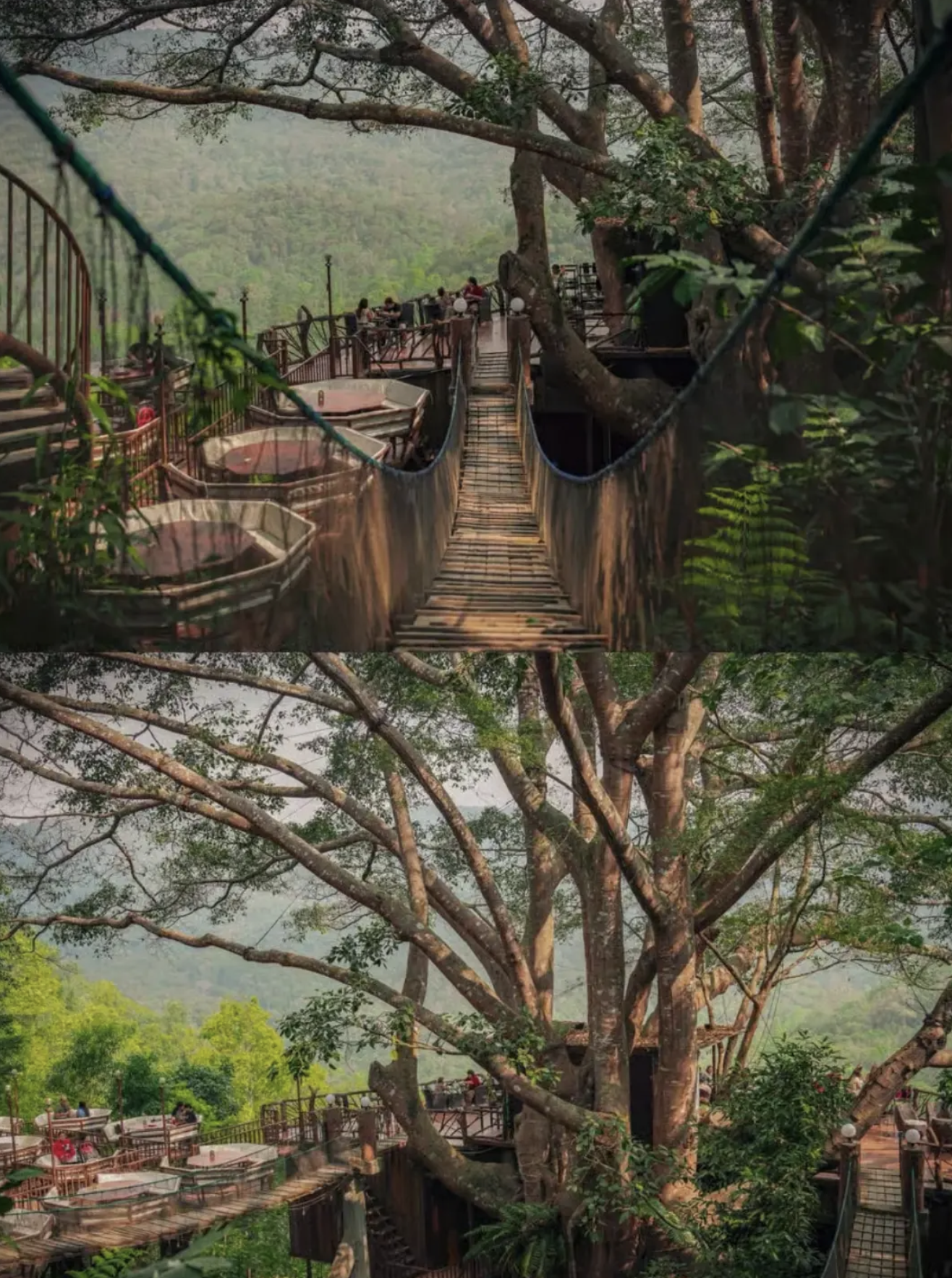
4. The Giant Chiang Mai Café (Treehouse Café)
This is the unexpected wonder of Mae Kampong. About 10 minutes by car from the village, the Giant Chiang Mai Café is built into and around a massive 100+ year-old tree, with suspended wooden walkways through the jungle canopy. You can sit on a platform 15 meters above the ground while drinking coffee.
Entry: small entrance fee (around 30-50 THB per person, includes a drink credit at the café)
Best time: late afternoon (golden hour through the canopy)
Worth visiting?: yes, even if you're not into "treehouse experiences" generally. The construction is impressive, the views are real, and it's photogenic without being a fake tourist trap.
The café itself serves decent coffee and basic Thai food. It's not the food that makes it worth going, it's the setting. Plan an hour minimum.
5. Try the Local Herbal Tea
Mae Kampong is also known for organic herbal teas: lemongrass, butterfly pea, chrysanthemum, mulberry leaf. Several small shops in the village sell loose-leaf teas grown and dried locally. 100-200 THB for a 50g bag of quality tea.
This is the best souvenir to bring back from a Mae Kampong visit. Better than coffee (which doesn't always travel well) and authentic to the village.
6. Stay Overnight in a Homestay (Optional)
If you really want the slow travel experience, don't do Mae Kampong as a day trip. Stay 1-2 nights in a village homestay. Around 800-1,500 THB per night for a basic but clean room in a traditional wooden house, often with dinner and breakfast included.
The homestays are run by village families directly. You sleep on a futon, eat homemade Northern Thai food with the family, wake up to mist over the valley. It's the closest thing to authentic rural Northern Thailand you'll get without learning the language.
This is the experience we recommend most strongly to repeat Chiang Mai visitors or slow travelers with 7+ days in town.
How to Get to Mae Kampong (3 Options)
Option 1: Organized Day Tour (Easiest, Recommended)
A guided day tour handles the 1h30 each way drive, includes the Giant Treehouse Café visit, lunch at a local restaurant, and the waterfall. Around 3,000 THB per person for a small group format (max 10), 8 hours total.
Why we recommend this for first-timers: the road to Mae Kampong has a tricky final stretch (steep, winding, with patches that require local knowledge), the Giant Treehouse Café isn't well-signposted, and the village waterfall paths can be hard to find. A guide solves all of this and adds context (history, culture, coffee farming).
Bookable on Guidestination: Mae Kampong Village, Waterfall and Giant Treehouse Café day tour.
Best for: first-time visitors, couples, families, anyone who wants zero logistics stress.
Option 2: DIY by Rental Car or Grab
The road from Chiang Mai is fully paved and accessible by car. Drive time is about 1h30 to Mae Kampong village, plus another 10-15 minutes to the Giant Treehouse Café.
Rental car: 800-1,500 THB per day plus gas. Easy if you're a confident driver.
Grab/private driver: around 2,000-2,500 THB round trip for the day (negotiate ahead). Have your driver wait for you in the village.
Don't take a scooter unless you're an experienced rider on mountain roads. The final 15 km has steep grades and tight turns. Accidents happen here regularly with travelers underestimating the climb.
Best for: confident drivers, return visitors who know the route, photographers wanting flexibility.
Option 3: Public Transport (Difficult, Not Recommended)
Songthaews to Mae Kampong from Chiang Mai are rare and unreliable. You'd need to take a songthaew to Mae On district (1h, around 100-150 THB), then negotiate a local transport for the final stretch (another 30-45 min, another 200-300 THB). Total: 2 hours minimum, complex logistics, and you'd still need to figure out the Giant Treehouse Café separately.
Best for: nobody, really. Skip this option.
When to Visit Mae Kampong
Best season: November to February
Cool season is transformative for Mae Kampong. Mornings can be 12-15°C with mist filling the valley below, clearing slowly as the sun rises. Afternoons stay 22-25°C, comfortable for walking. The air is clear, the photos are beautiful, the coffee is consumed near a fire pit.
Good season: June to October (rainy season)
The mountain comes alive in rainy season. Lush green everywhere, waterfalls at maximum power, low cloud cover that makes the village feel mysterious. Expect afternoon showers (usually 1-2 hours, then clearing). The road can be slippery but generally manageable.
Avoid: March to May (burning season)
Northern Thailand's burning season affects Mae Kampong less than the city (it's higher elevation, partially shielded by mountains), but you still get hazy views and lower air quality. Skip Mae Kampong in March-April if you have respiratory sensitivity. May can sometimes recover before the rains start.
Time of day matters
- Arrive by 9-10 AM: maximum daylight, good coffee shop options, time to do everything without rushing
- Avoid weekends: Thai families come up from Chiang Mai on Saturdays/Sundays, the village gets crowded around the Giant Treehouse Café
- Stay for sunset if possible: the views from the village viewpoint at 6 PM are exceptional in cool season
What to Skip
A few things tourists do at Mae Kampong that aren't worth it:
The zipline operations: some commercial zipline parks have opened on the road to Mae Kampong. They're not part of the village experience and they break the slow travel atmosphere. Skip them unless ziplining is specifically what you came for (and even then, the better Chiang Mai zipline operations are elsewhere).
Rushing through the village: if your tour gives you 30 minutes at Mae Kampong, that's not enough. Either negotiate more time or skip this destination. Mae Kampong's value is time spent slowly, not photo opportunities.
Buying "Karen Long Neck" souvenirs: some shops in the area sell items labeled this way. These are ethically problematic (the Kayan people are largely refugees in difficult legal status). Buy the local Northern Thai handicrafts (textiles, herbal teas, coffee) instead.
The "ATV adventure" tours: some operators offer ATV rides through the forest near Mae Kampong. They're loud, polluting, and disturb the village atmosphere. The whole point of Mae Kampong is the opposite of this.
How Mae Kampong Fits Into Your Itinerary
For travelers planning a Chiang Mai visit:
3-day visit: Mae Kampong is the day-trip we recommend instead of Doi Inthanon for slow travelers. Less driving, more depth. Detailed in our 3 Days in Chiang Mai itinerary.
5-day visit: do both Mae Kampong AND Doi Inthanon, on different days. They complement each other perfectly: Doi Inthanon for scale and views, Mae Kampong for community and atmosphere.
7+ day visit: stay overnight at a Mae Kampong homestay. This is when the slow travel approach really pays off.
Combined with Doi Suthep: not a great combo. They're in opposite directions from Chiang Mai (Doi Suthep west, Mae Kampong northeast). If you want a mountain temple AND a mountain village, dedicate separate days. We covered Doi Suthep in detail in our complete Doi Suthep guide.
According to the Tourism Authority of Thailand (tourismthailand.org), Mae Kampong is officially recognized as one of Thailand's OTOP gold-level Community-Based Tourism villages, which means the village itself meets specific quality and sustainability criteria for visitor experiences. This designation matters: it's why the village stays small, authentic, and not overrun by mass tourism.
FAQ: Mae Kampong
Is Mae Kampong worth visiting?
Yes, especially if you've already done Doi Suthep and want a different mountain experience. The slow pace, the climate, and the genuine village atmosphere make it stand out from the typical Chiang Mai tourist circuit. Not worth it if you're only in Chiang Mai for 2 days and haven't done the temples yet.
How long do I need at Mae Kampong?
Minimum 4 hours in the village itself (more is better). Add 3 hours of round-trip driving. So plan a full day if you're doing it as a day trip. Half-day visits don't really make sense given the drive time.
Can I stay overnight at Mae Kampong?
Yes, and we recommend it for slow travelers. Homestays cost around 800-1,500 THB per night including dinner and breakfast. Book directly through the village tourism office or through Guidestination if you want help organizing. The overnight experience is the real Mae Kampong.
Is Mae Kampong good for families with kids?
Yes, especially kids 6+. The Giant Treehouse Café is a hit with children, the village waterfall is shallow enough for paddling, the walking distances are short. Avoid the homestay option with very young kids (basic facilities, no AC, can be cold at night in cool season).
What's the difference between Mae Kampong and Pai?
Both are mountain destinations. Pai is bigger (a small town with bars, hostels, hippie cafés, 130 km from Chiang Mai), Mae Kampong is smaller (a real village, 50 km from Chiang Mai). Pai is more party/backpacker focused. Mae Kampong is more authentic Thai village focused. Different vibes, both worth visiting.
Is there an ATM at Mae Kampong?
No. Bring cash. The village runs on cash (coffee shops, restaurants, small craft purchases). Budget around 800-1,500 THB cash per person for a day visit.
Final Word: Why Mae Kampong Beats the Famous Day Trips
Mae Kampong won't appear in most "top 10 Chiang Mai" lists. It's not famous, it's not photogenic in a TikTok way, and it doesn't have a single iconic monument to anchor a visit.
That's exactly why we recommend it. The famous day trips are famous because they're easy to market. Mae Kampong isn't easy to market, which is why it stays good. You arrive at the village, you walk slowly, you drink coffee in a wooden café overlooking a valley, you watch mist clear from the mountains across the way. Three hours later, you realize you haven't checked your phone once.
If that sounds like what you came to Chiang Mai for, Mae Kampong is your day. If you came for Instagram content and bucket-list checkboxes, Doi Inthanon is your better fit.
If you want help organizing the visit (timing, homestay, combining with other slow travel days), drop us a comment. We'll respond with specifics based on your dates.
Team note: article updated May 2026. Prices and details reflect what was observed at the time of writing and may vary. Always check current information at the activity page when booking.