

Doi Suthep is the temple every Chiang Mai visitor sees at least once. It's the symbol of the city, the most photographed site in northern Thailand, and the place locals point to when they're proud of where they come from. It's also, in our experience, the most commonly disappointing visit when poorly planned.
Get there at 11am by tour bus with 80 other tourists, you'll spend more time queueing for selfies than feeling anything. Get there at 6:30am with mist still hanging in the valley, just a few locals praying in silence, you'll understand why this place has been sacred for 640 years.
This guide is for travelers who want the second version of Doi Suthep. We'll cover everything: how to get there, when to go, what to see, what to skip, and the lesser-known temples on the same mountain that complete the experience.
Why Doi Suthep Matters (And Why You'll Probably Visit Twice)
Wat Phra That Doi Suthep sits at 1,073 meters on the eastern slope of Doi Suthep mountain, 15km west of Chiang Mai. The temple was founded in 1383 when King Geu Na of the Lanna Kingdom placed a sacred Buddha relic on the back of a white elephant. According to legend, the elephant climbed the mountain, trumpeted three times, and died on the exact spot where the temple now stands. The relic was enshrined in the golden chedi that still anchors the temple complex today.
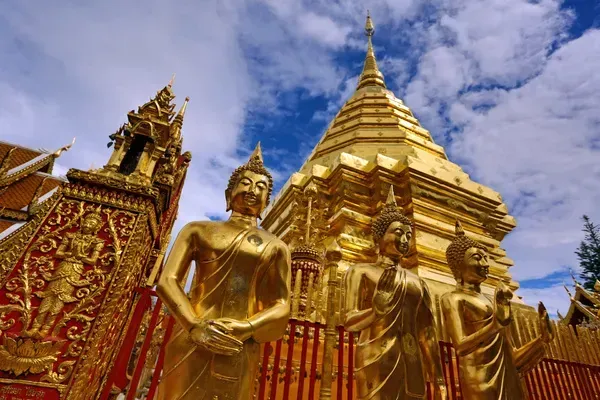
Beyond the legend, Doi Suthep is functionally the spiritual heart of Northern Thailand. It's a working monastery where novice monks live and study, a pilgrimage site for Thai Buddhists, and the most important religious building of the former Lanna Kingdom. Every Thai person from the north has been here at least once. Many come back regularly.
For visitors, the appeal is layered: an iconic golden chedi, panoramic views over Chiang Mai from the temple terrace, a striking 309-step naga staircase ascent, and a tangible sense of being at a place that matters. Religious or not, the atmosphere lands.
Quick facts before we get into details:
- Distance from Chiang Mai: 15 km west (30-45 min by road)
- Elevation: 1,073 m above sea level
- Entry fee: 50 THB for foreigners (free for Thai citizens)
- Cable car: 50 THB optional (alternative to the 309 steps)
- Opening hours: 6:00 AM to 6:00 PM (main complex), terrace accessible later
- Best time to visit: before 8:00 AM (we'll explain why below)
- Dress code: shoulders and knees covered, mandatory
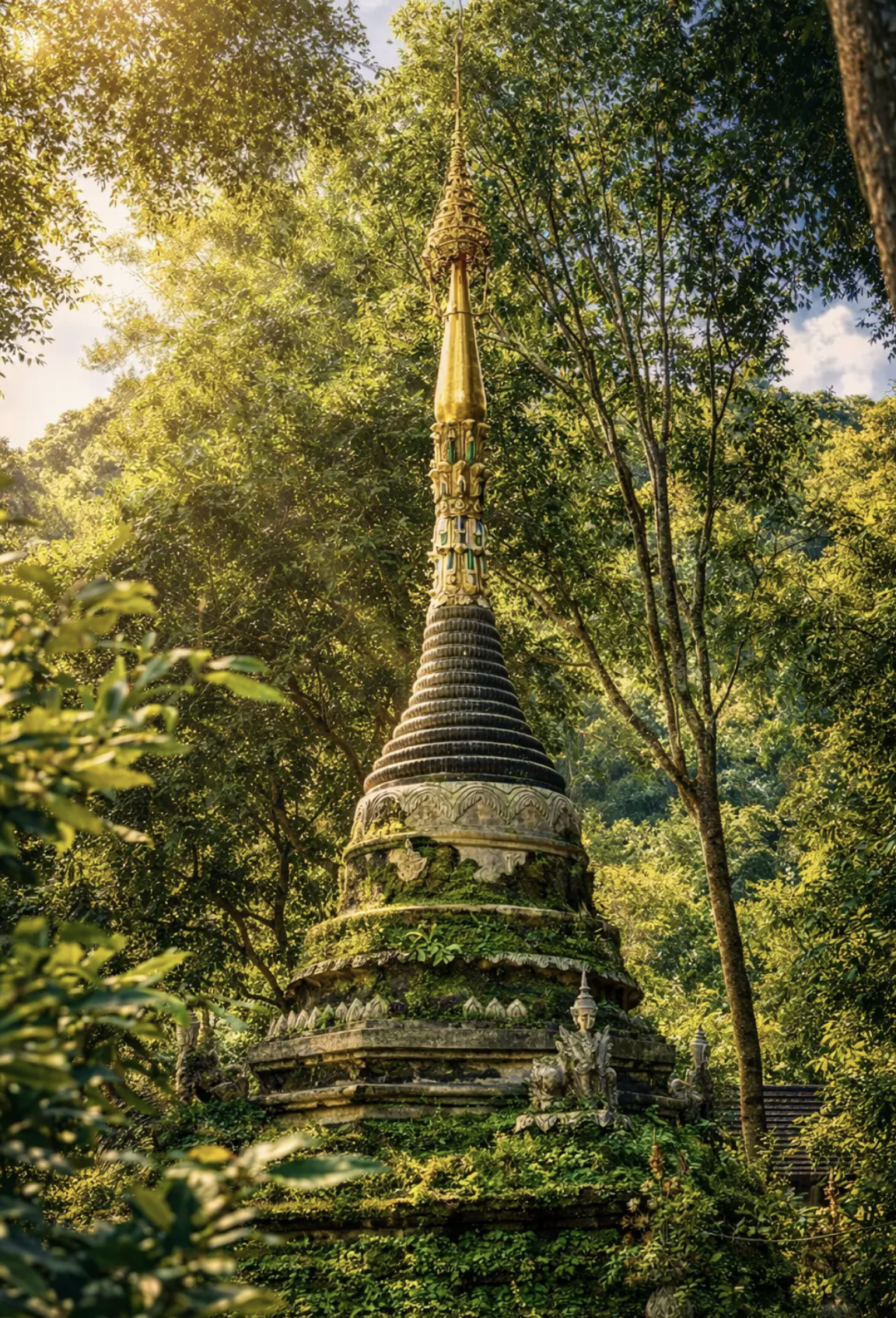
Wat Phra That Doi Suthep complete guide visual for first-time visitors
How to Get to Doi Suthep (4 Real Options)
There are four practical ways to reach Doi Suthep, ranked here from cheapest to most premium. The right choice depends on your budget, comfort tolerance for winding roads, and how much you want a guided experience.
Option 1: Rent a Scooter, 200-300 THB Per Day + Petrol
If you're comfortable on a scooter, this gives you maximum flexibility. The road from Chiang Mai to Doi Suthep is paved, well-maintained, but steep and winding. Plan 45 minutes one way at a safe pace.
Critical warning: many travelers crash on this road, especially in the rain. The descent has tight turns and steep grades. Wear a helmet (legally required and life-saving). Make sure you have an international driving permit + motorcycle endorsement. Without it, your insurance is void.
Best for: Experienced scooter riders, travelers staying 5+ days in Chiang Mai who want full mobility.
Option 2: Organized Tour, 850 to 5,100 THB
A guided tour bundles transport, ticket, and often additional stops that make the day richer than just the temple alone. There's a wide range of options:
- Budget group tour (around 850 THB): joins a group of 10+ people, covers Doi Suthep + Wat Pha Lat + Baan Kang Wat artisan village in 5 hours. Good value if you don't mind being part of a bigger group.
- Private half-day (around 1,800 THB): a private vehicle with driver, covering Doi Suthep + Wat Pha Lat + Doi Pui Hmong village in 5h30. Flexible pace, no group, perfect for families or couples. Bookable on Guidestination: Doi Suthep and Doi Pui Village Experience.
- Sunrise + sanctuary combo (around 2,700 THB): pickup at 5:00 AM for sunrise at Doi Suthep with traditional alms ceremony, then to Joy Elephant Sanctuary for ethical observation. Full day (11 hours), one of the most complete northern Thailand experiences we offer. Bookable on Guidestination: Sunrise at Doi Suthep + Elephant Sanctuary.
- Premium full day (around 5,100 THB): private vehicle covering Doi Suthep, Wat Pha Lat (the hidden temple), and Wiang Kum Kam archaeological site in the south. The most thorough option but requires a real interest in temple culture.
Best for: Travelers who want context (history, legends, etiquette), couples who want a private experience, anyone short on time who wants to maximize the day.
The 309-Step Naga Staircase (Or the Cable Car)
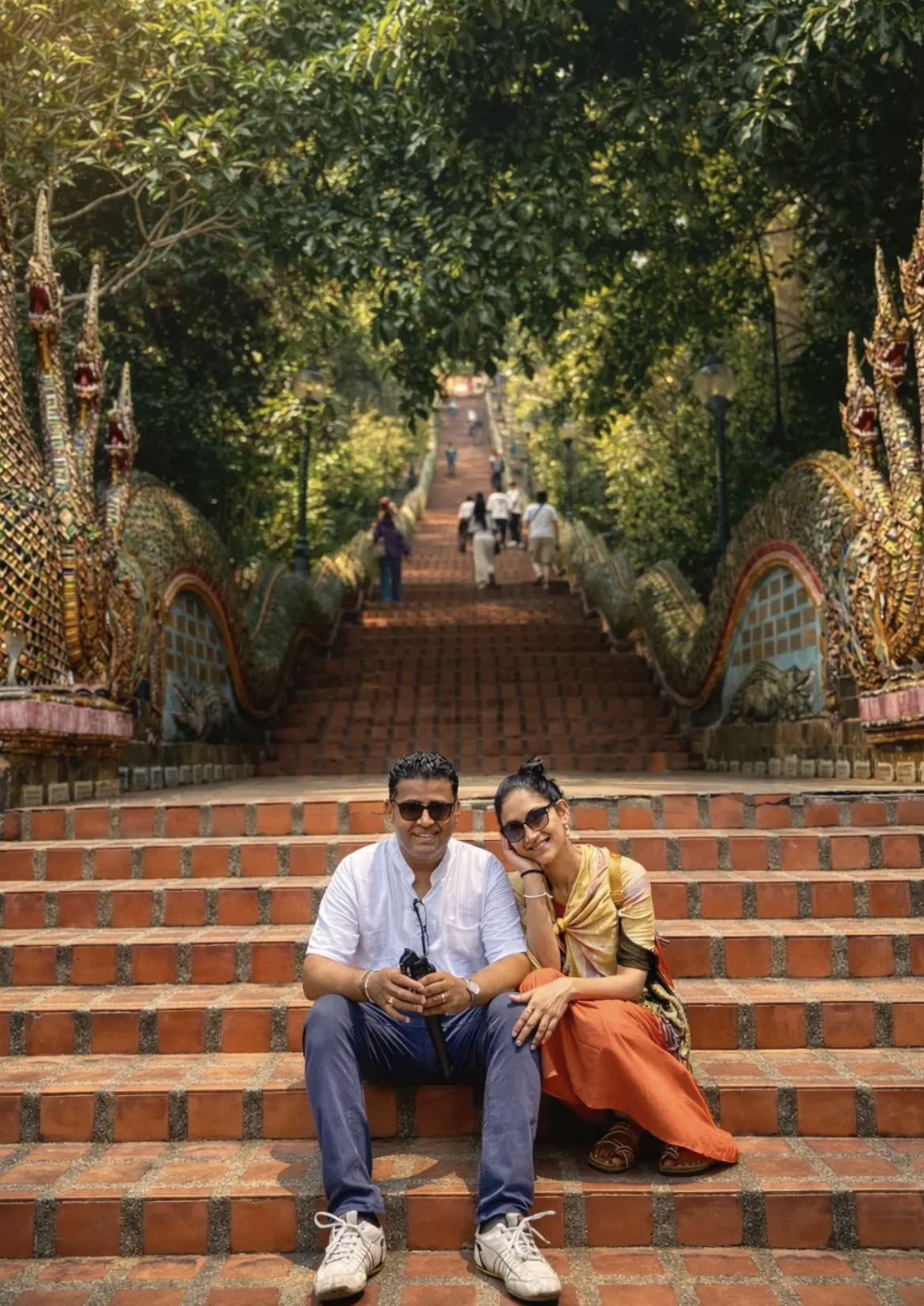
Once you arrive at the temple parking area, you face the iconic challenge: the 309-step naga staircase. Two giant snake-headed dragons (nagas) flank the steps, their scaled bodies descending the entire length. It's one of the most photographed entrances in Thailand.
Climbing the steps:
- Takes 5 to 10 minutes at a relaxed pace
- The first 100 are the steepest
- Plenty of stopping points to catch your breath and take photos
- Locals descend by walking down with their hands behind their backs (sign of respect)
The cable car alternative (50 THB): if mobility is an issue, or you've already done a lot of walking that day, the cable car (actually an inclined elevator) takes you up in 1 minute. The view from the staircase is better than from the cable car, but the energy you save matters if you're combining Doi Suthep with other activities.
Our recommendation: climb up, cable car down if you're tired. Or vice versa if your knees are an issue. The descent on the steps can be hard on knees if it's hot and you're rushing.
What to See Once You're Up There
The temple complex is smaller than you expect but layered. Plan 45 to 90 minutes to see everything without rushing. Here's what matters:
The Golden Chedi
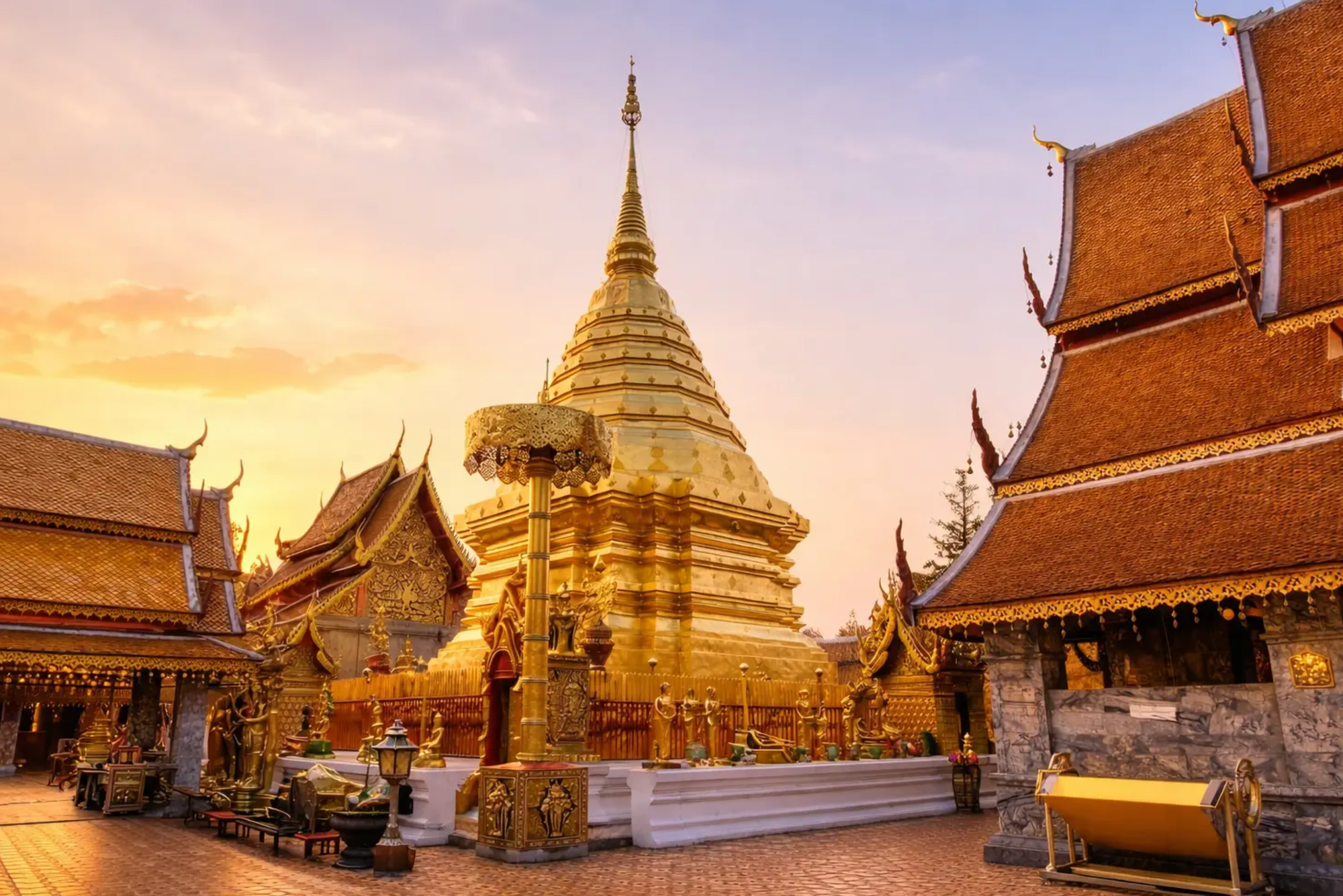
The central chedi is the entire reason this temple exists. A 24-meter golden bell-shaped stupa, said to contain a Buddha relic, surrounded by smaller statues, bells, and offering stands. The gold is real gold leaf, applied over centuries by pilgrims. Walking around the chedi clockwise three times is the traditional act of respect (and a calming ritual even if you're not Buddhist).
The chedi is most photogenic in morning light (8-10 AM) and late afternoon (4-5 PM). Avoid midday: harsh shadows, washed-out colors.
The Viharn (Main Worship Hall)
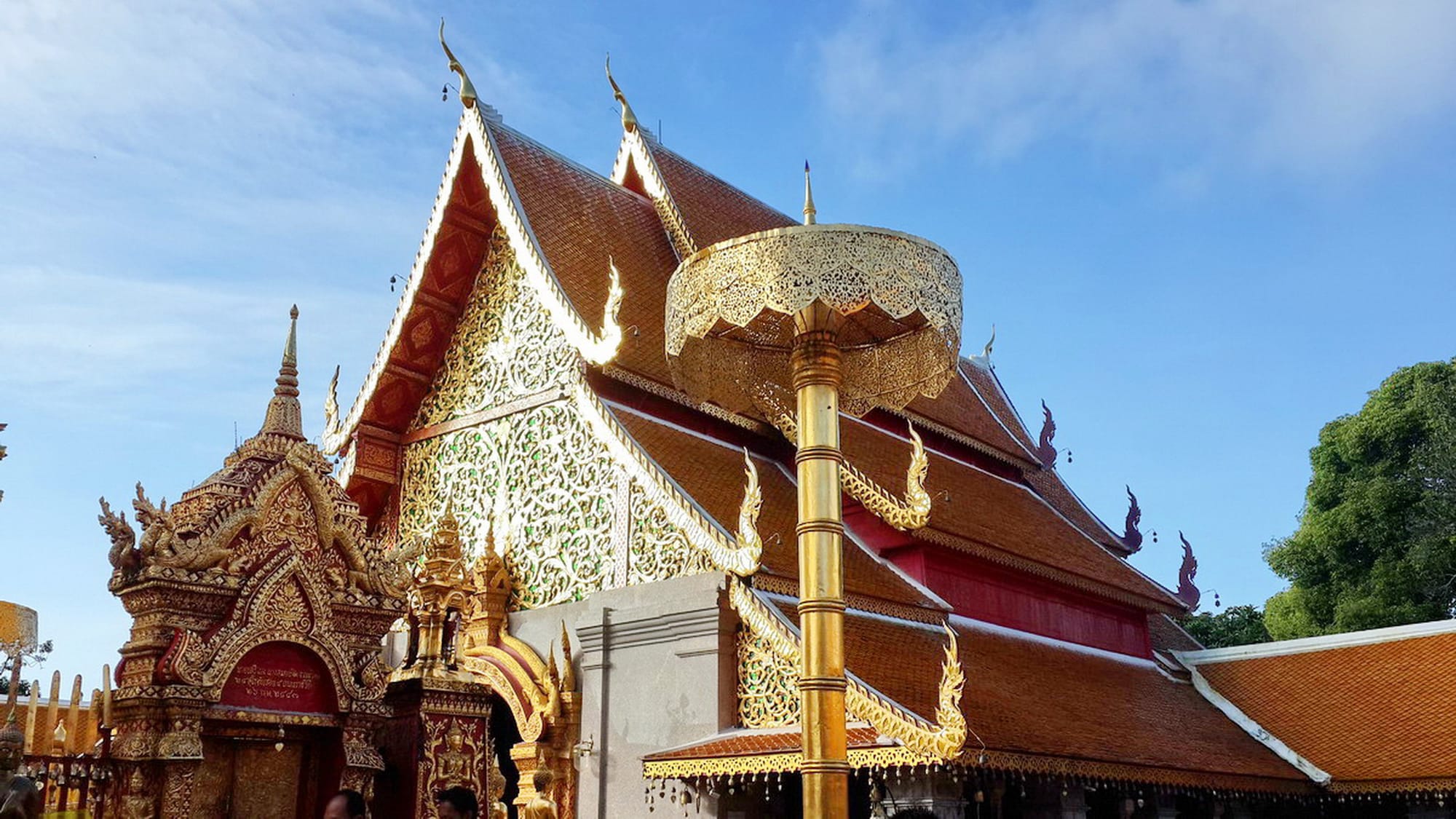
Inside the viharn (worship hall), you'll find seated Buddha statues, ornate Lanna-style murals, and (usually) monks chanting or visitors praying. Take your shoes off before entering, sit on the floor if you want to spend time inside, never point your feet at the Buddha.
You can quietly observe a prayer session if one is happening. It's a respectful gesture, not an intrusion, as long as you stay at the back, silent, and don't take flash photos.
The Temple Terrace (Best Views)
Walk around the chedi to the outer terrace on the eastern side. From here, you see Chiang Mai laid out below, with the mountains in the distance and (in cool season) sometimes a sea of mist filling the valley. The best photos of Doi Suthep aren't of the chedi, they're from this terrace.
Sunrise from the terrace is transformative. Sunset is more crowded but still beautiful. Midday views are decent but hazy, especially during burning season (March-May).
The Bell Pavilion
A row of dozens of bronze bells lines the chedi area. Visitors traditionally ring them as a sign of merit-making (good karma). Each bell has a different tone. Walk through and ring them gently as you pass. It's also one of the most photogenic spots for a quiet shot.
The Buddha Footprint Shrine
A small shrine houses a stone Buddha footprint replica. It's a minor stop but interesting for context: footprint shrines are common across Theravada Buddhist Asia and symbolize the Buddha's physical presence.
When to Visit: Why Early Morning Beats Everything
We say this on every Chiang Mai guide we write, but it's especially true for Doi Suthep: go before 8 AM.
Why early morning
- No tour buses yet: most organized tours arrive between 9:30 and 11:00. Before 8 AM, you'll share the temple with a handful of pilgrims, not 200 tourists
- Better light: morning sun hits the chedi at a flattering angle, photos look 10x better
- Cool air: temperatures are pleasant (around 20°C in cool season, vs 32°C by midday)
- Mist in the valley: in cool season, the valley below is sometimes filled with mist that clears around 9 AM. Magic to witness.
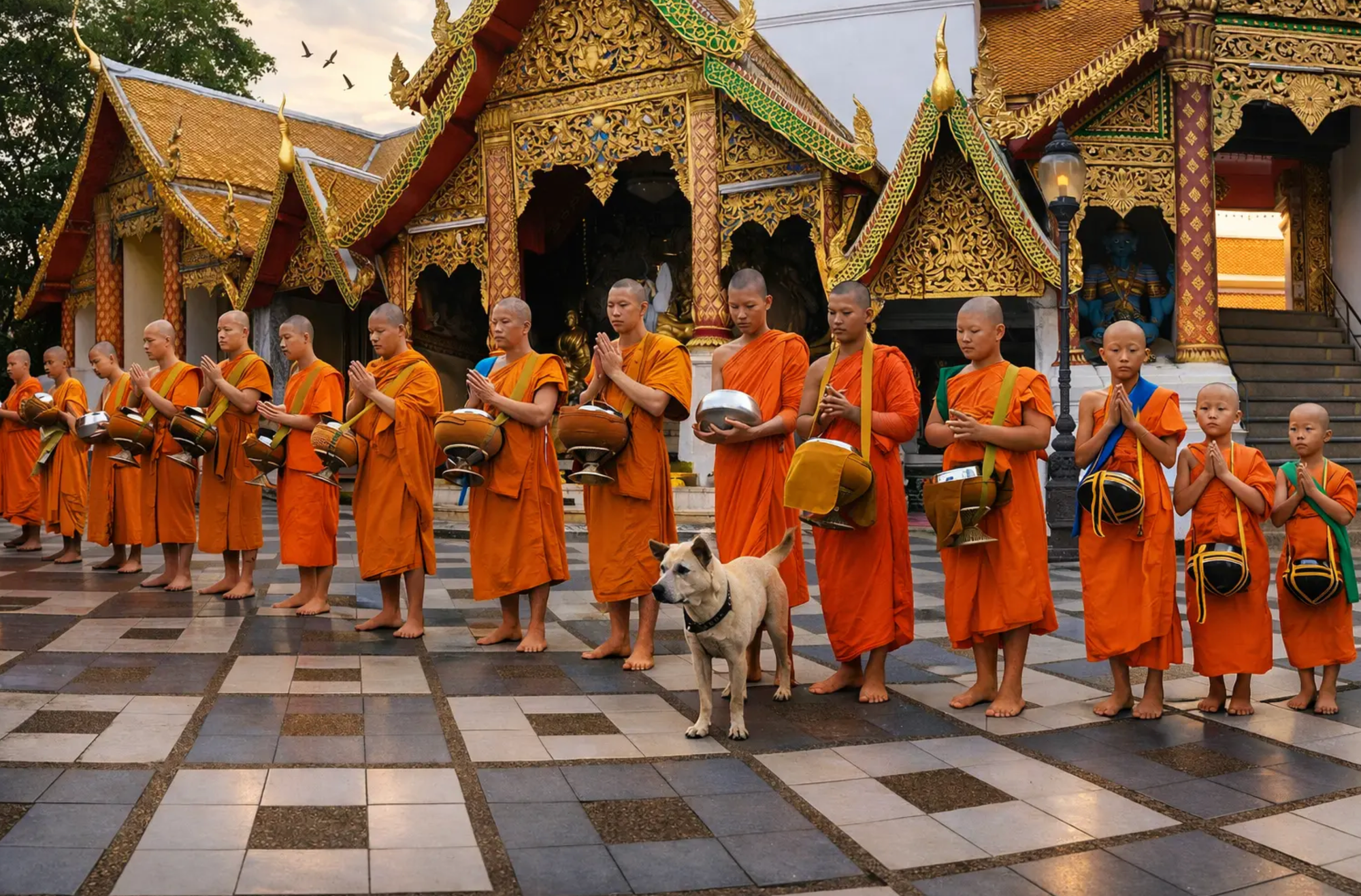
- You'll see monks: morning prayers happen between 6:00 and 7:30 AM. Watching this respectfully (from a distance) is one of the highlights.
Sunset alternative
If early morning is impossible (you arrived late the night before, you're not a morning person), sunset is the second best option. Around 5:00-5:30 PM in cool season. Many tour groups have left by then, the golden hour light is beautiful, and you can stay on the terrace until the temple closes.
What to avoid
- 10 AM to 2 PM: peak tour bus hours, harsh midday light, hottest temperatures
- Sunday morning: locally busy (Thai families come for weekly prayers)
- Buddhist holidays: extremely crowded, sometimes restricted access for non-Buddhists
For sunrise specifically, the early 5 AM logistics with a songthaew can be a headache. An organized sunrise tour handles the transport and adds context (alms ceremony with monks). We cover that option above in the "How to get there" section.
The Two Hidden Temples Nearby (Don't Miss These)
Most visitors do Doi Suthep and head straight back to Chiang Mai. They miss the two best parts of the mountain. Both are 5-10 minutes from the main temple.
Wat Pha Lat (The Hidden Forest Temple)
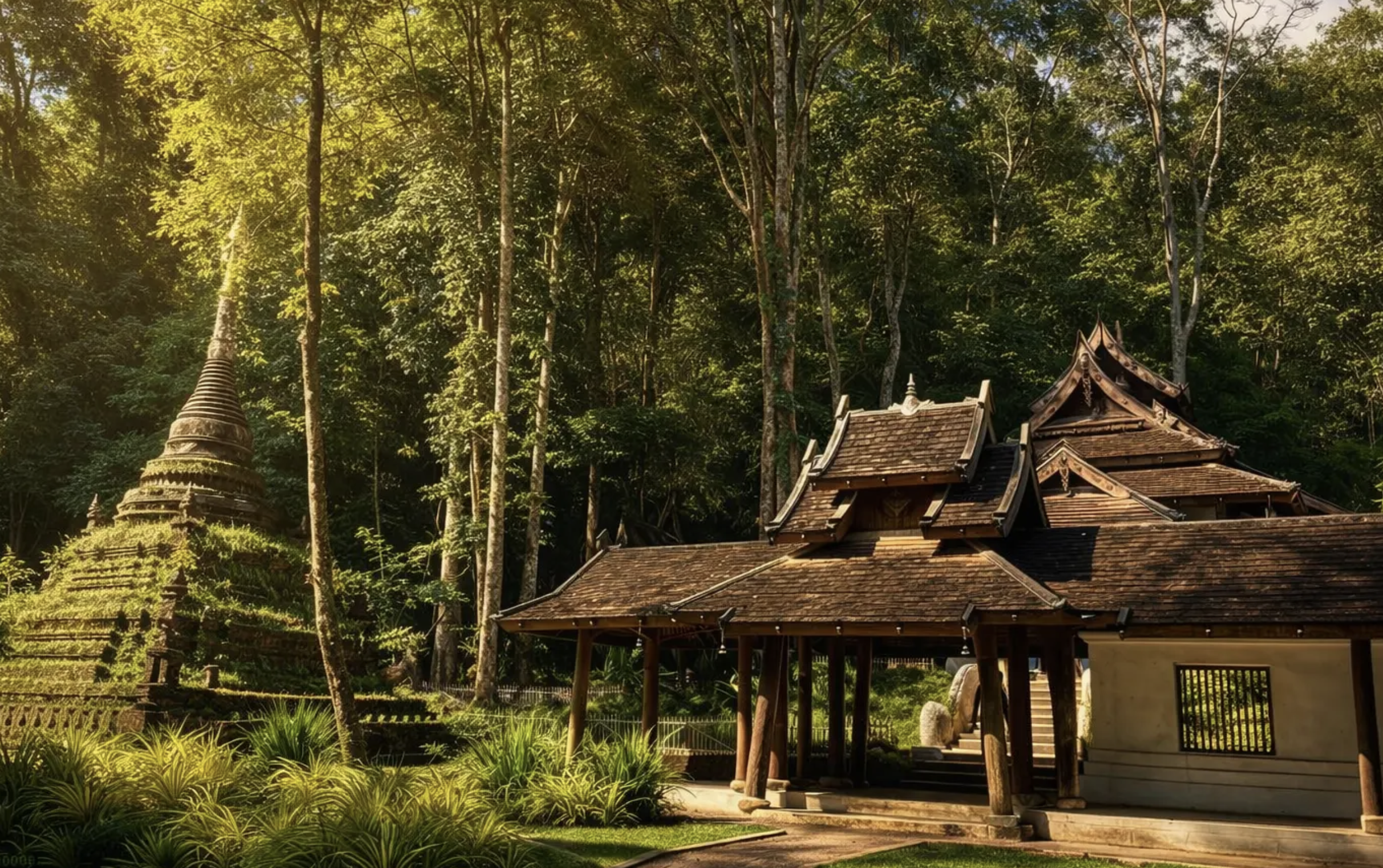
Wat Pha Lat ("temple of the slanting rock") sits halfway up Doi Suthep mountain, 5 km below the main temple, hidden in the jungle. It's one of the most underrated places in Northern Thailand and absurdly few tourists visit it.
What's special: mossy stone Buddha statues, a small waterfall behind the prayer hall, ornate carved nagas, and a community of monks who actually live and meditate here in retreat. The atmosphere is the opposite of Doi Suthep's grandeur: small, quiet, intimate.
Two ways to reach Wat Pha Lat:
- Drive directly: your Grab or songthaew driver can stop here on the way up or down from Doi Suthep. 10-minute side trip.
- The Monk's Trail: a one-hour forest hike from kilometer 5 of the Doi Suthep road up to Wat Pha Lat. Marked with orange monk robes tied to trees (the monks created this trail). Bring water, decent shoes, and start before 9 AM to avoid the heat.
Our recommendation: do Doi Suthep first (early morning), then Wat Pha Lat on the way back down. The contrast between the iconic golden temple above and this jungle-hidden one below is the entire point.
Doi Pui Hmong Village
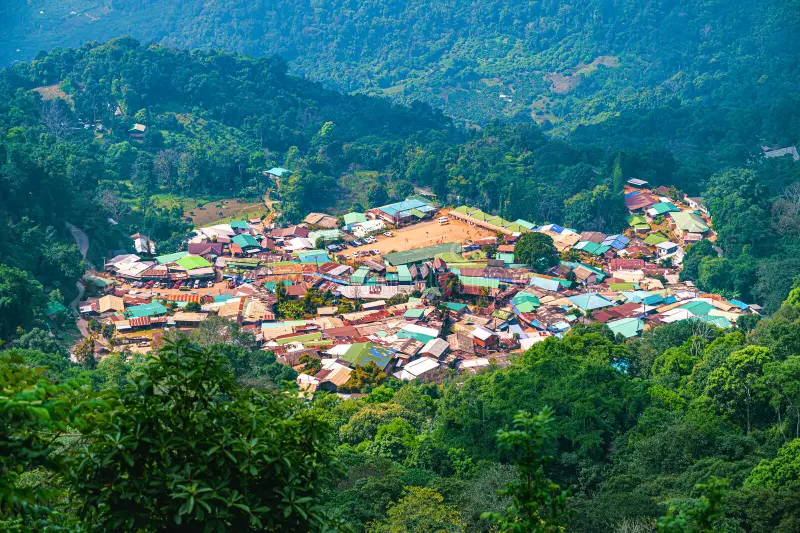
Continue 3 km past Doi Suthep and you reach Doi Pui, a Hmong ethnic village perched at 1,400 m elevation. The village is famous for its flower gardens, traditional Hmong handicrafts (embroidered textiles, silver jewelry), and small cafés with mountain views.
It's touristy (yes, with souvenir shops), but in a charming way that's still authentic. The cafés are run by locals, the prices are fair, the coffee is decent. Plan 45 minutes to 1 hour here.
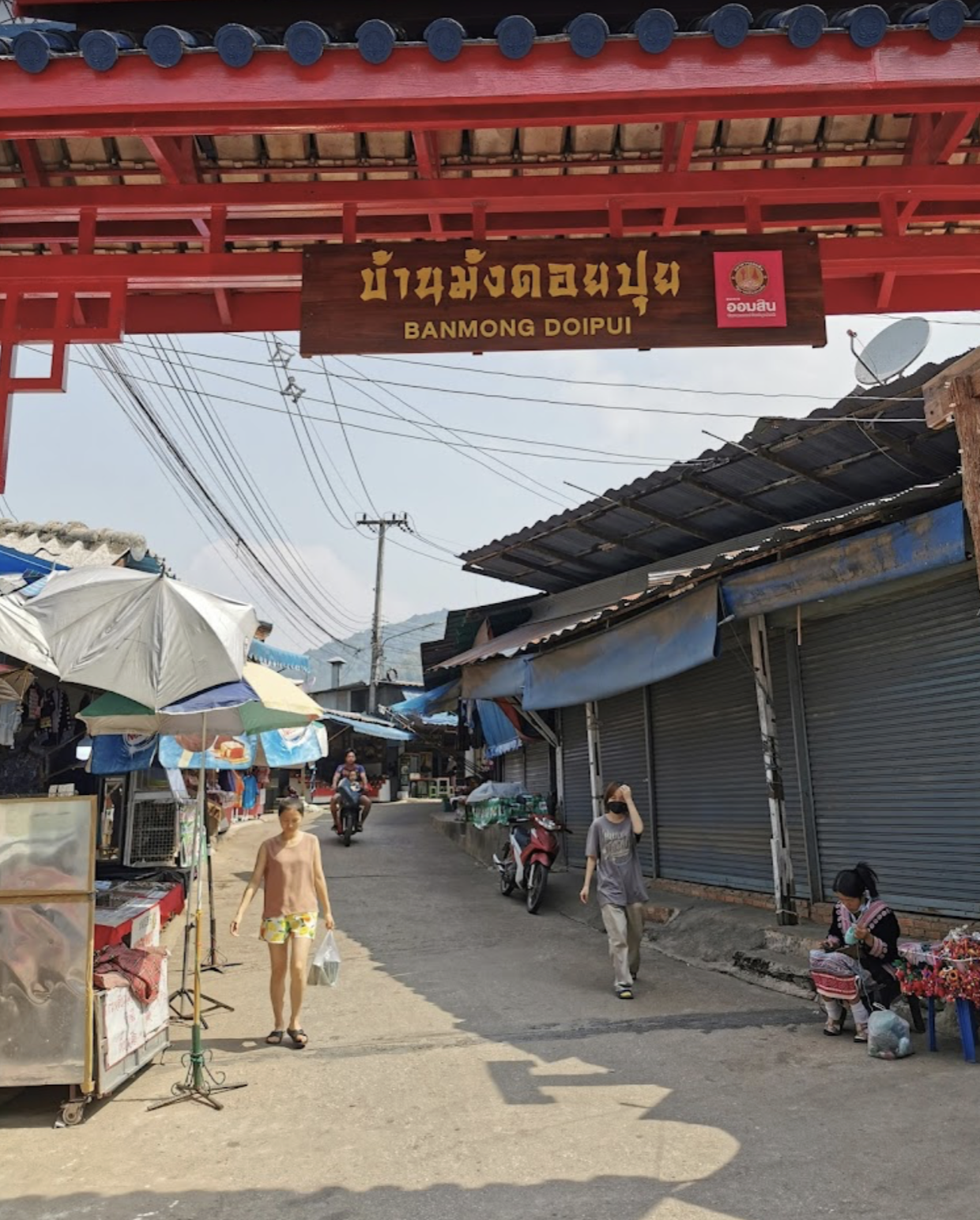
Heads up: avoid buying anything labeled as "Long Neck" (Kayan) goods. The Hmong are a different ethnic group with their own rich culture. The Long Neck attractions exist elsewhere in Northern Thailand and are ethically problematic. Hmong handicrafts (especially textiles) are a fair purchase that supports village artisans directly.
For travelers wanting all three sites (Doi Suthep, Wat Pha Lat, Doi Pui) in one organized half-day with a private vehicle and flexible pace, the half-day private option we mentioned in the "How to get there" section combines them efficiently. The driver knows where to stop for the best photos and the best coffee, which saves a lot of trial and error.
What to Wear and Bring
The dress code is strictly enforced at Doi Suthep. Two non-negotiable rules:
- Shoulders fully covered: no tank tops, no spaghetti straps, no off-shoulder tops. A simple T-shirt works.
- Knees fully covered: no shorts above the knee, no skirts above the knee, no transparent fabric. Long pants, a long skirt, or a sarong over shorts.
If you arrive without proper clothing, the temple sells/rents sarongs at the entrance (around 100 THB rental, often returnable). But bringing your own is more respectful and faster.
What to bring:
- Cash: 50 THB entry, plus optional cable car (50 THB), plus donations if you want
- Water bottle: refilling stations near the parking
- Sunscreen and hat: even at the temple level, sun exposure is real
- Comfortable shoes: you'll take them off frequently inside the buildings, so slip-on works well
- Light jacket or sarong (cool season): mornings at 1,073m can be 15-18°C
- Camera: but be respectful, no flash inside the viharn
Temple Etiquette (Beyond the Obvious)
A few rules that go beyond "cover your shoulders":
Shoes off in every building. Not just the main viharn. Sometimes also in certain courtyards. Look at what locals do.
Sit lower than monks when seated near them. Floor seating is standard. Don't sit cross-legged with your feet pointing toward Buddha statues. Tuck them under.
Don't touch monks (if you're a woman). Even accidentally. If you want to give an offering, place it on a cloth they hold out, never directly into their hand.
Don't take selfies with the Buddha statue behind you. Turning your back to the Buddha is considered disrespectful. Stand to the side instead, facing the statue if possible.
Speak quietly. Especially during prayer times. Temples are working religious sites, not photo studios.
Photography is OK in most areas, with these limits: no flash near worshippers, no climbing on statues, ask permission before photographing monks up close.
Don't point at Buddha statues or any sacred objects with your foot. Pointing with the foot is considered the rudest gesture in Thailand.
The Tourism Authority of Thailand (tourismthailand.org) emphasizes respectful temple visits as central to maintaining Northern Thailand's sacred sites. These rules exist because visitors who follow them are welcome long-term; those who ignore them get the doors closed.
Combining Doi Suthep With Other Activities
Doi Suthep is rarely the only thing you do in a day. Here are the smart combinations:
Doi Suthep + Wat Pha Lat + Doi Pui (half-day, 4-5 hours): the natural mountain combination. Covered above.
Doi Suthep + Old City temples (full day, your own pace): morning at Doi Suthep, lunch in the Old City, afternoon visiting the famous temples we covered in our Top 10 Temples in Chiang Mai guide. Excellent for first-time visitors.
Doi Suthep + Elephant Sanctuary: morning sunrise at Doi Suthep, full day at an ethical sanctuary. Long but unforgettable. Detailed in our Ethical Elephant Sanctuaries guide.
Doi Suthep + Monk's Trail hike: for the active. Hike up via the forest trail from kilometer 5 of the Doi Suthep road, reach Wat Pha Lat, continue up to Doi Suthep, take Grab back down. 3-4 hours total of walking. Cool season only.
What to Skip
A few common Doi Suthep mistakes:
Buses from your hotel: if your hotel offers a "Doi Suthep tour" for 200 THB, it's usually a big bus with 30 strangers, midday arrival, 30-minute visit. Skip it. The savings aren't worth the experience loss.
Hiking up from the very bottom: don't try to hike the full 15 km from Chiang Mai. The road is dangerous for pedestrians (no sidewalk, fast scooters). The Monk's Trail starts at kilometer 5, after the driveable initial section.
Buying expensive "blessed" amulets: vendors sometimes approach foreigners with amulets at inflated prices ("blessed by a senior monk"). The amulets are genuine, but you'll pay 5-10x the local rate. Buy modest amulets from the temple's official donation stand instead.
Visiting only Doi Suthep without Wat Pha Lat: the biggest mistake. Doi Suthep alone is impressive but tourist-saturated. Wat Pha Lat completes the experience and brings you back to the peaceful version of Northern Thai temple culture.
FAQ: Everything People Ask Us About Doi Suthep
Is Doi Suthep worth visiting?
Yes, but with conditions. Visited at the right time (early morning), combined with Wat Pha Lat, with respect for the dress code and etiquette, it's one of the most meaningful experiences in Northern Thailand. Visited at midday with a tour bus group, it's a forgettable rush.
How long do I need at Doi Suthep?
Minimum 1 hour for the main temple complex. 2-3 hours including the road trip from Chiang Mai. Half a day if you combine it with Wat Pha Lat and Doi Pui. Full day for sunrise + sanctuary combo.
Can I visit Doi Suthep at night?
The temple complex closes at 6 PM, but the outer terrace remains accessible until later (sometimes around 8 PM). The night view of Chiang Mai lit up below is beautiful but the main viharn and chedi are closed. Sunset around 5:30 PM is the sweet spot for both light and access.
Is there an ATM at Doi Suthep?
There's an ATM at the bottom of the staircase (parking area). But bring cash for entry fees and donations. Most stalls and the temple itself only take cash.
Are there toilets at Doi Suthep?
Yes, near the parking area. 3-5 THB to use. Bring tissue paper just in case.
Can I visit Doi Suthep during burning season (March-May)?
You can, but views from the terrace will be poor due to smoke. The temple itself is unaffected. If your only window is March-May, expect to enjoy the temple structure but skip the panoramic views.
Can I climb to Doi Suthep on foot?
Yes, via the Monk's Trail starting at kilometer 5 of the Doi Suthep road. It's a 1-hour forest hike (steady uphill) leading to Wat Pha Lat, then another 30 minutes via road to Doi Suthep. The first 5 km from Chiang Mai must be done by car or scooter (no safe pedestrian access on the main road).
What's the best time of year to visit?
November to February (cool season): mornings can hit 15-18°C at temple elevation, clear air, best views. March to May: hot and smoky, less ideal. June to October: green and lush after rain, occasional showers, good for hikers comfortable with humidity.
Final Word: Doi Suthep Done Right
Most visitors to Doi Suthep leave saying "it was nice but crowded". A small minority leave saying "I'd come back tomorrow". The difference isn't the temple, it's the way you visit it.
Go before 8 AM. Climb the stairs slowly. Walk around the chedi three times in silence. Spend 10 minutes inside the viharn watching nothing in particular. Stop at Wat Pha Lat on the way back. Have a coffee in Doi Pui village with mountain views.
That version of Doi Suthep is the one Northern Thailand keeps secret while serving the speed-tourist version to the tour buses. You came to Chiang Mai to see it the first way.
If you want help organizing the right timing or combining Doi Suthep with other activities for your dates, drop us a comment. We'll respond with specifics based on your travel style and budget.
Team note: article updated May 2026. Entry fees, prices, and timings reflect what was observed at the time of writing and may vary. Always check current information at the temple or activity page when booking.