
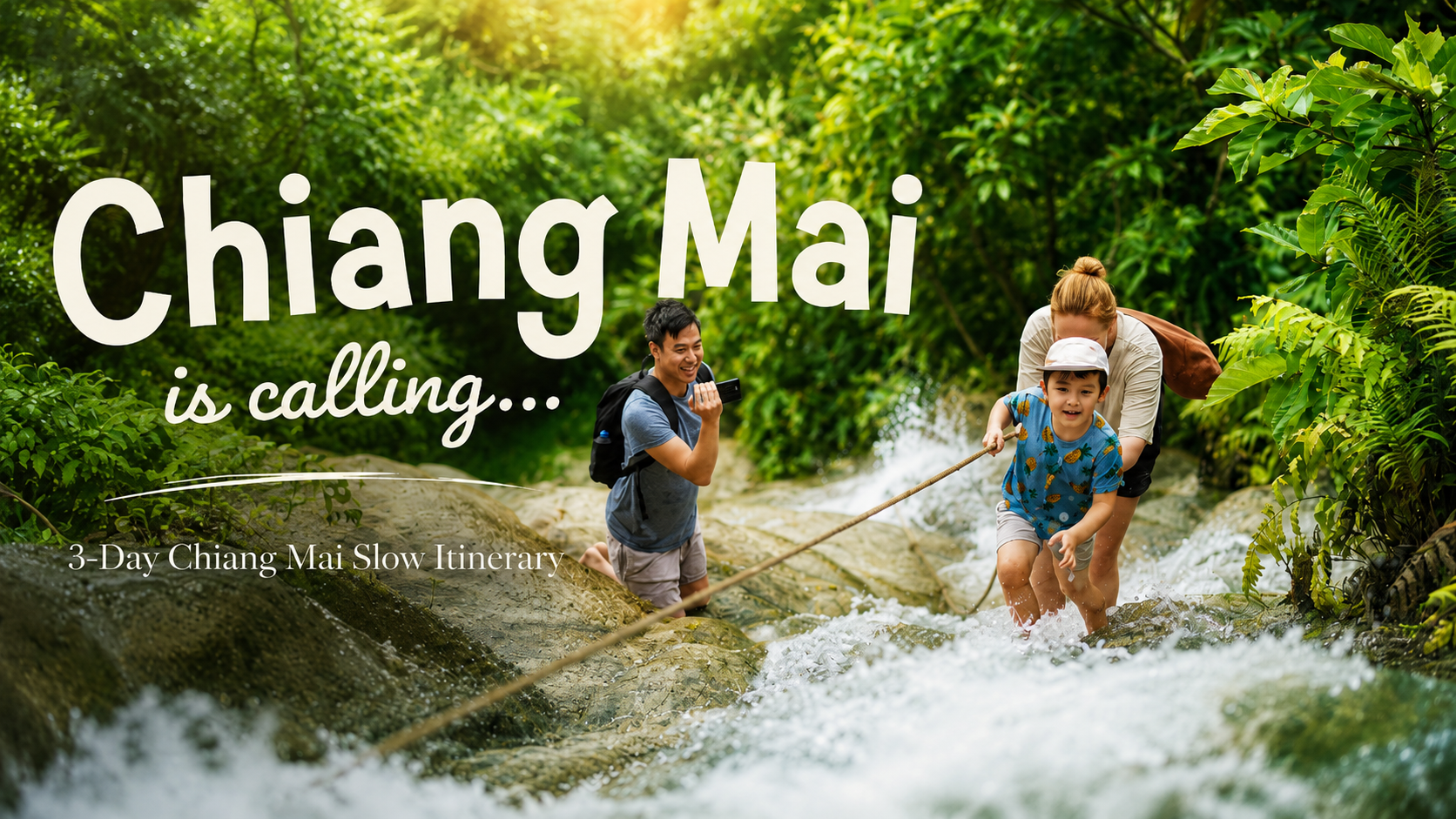
This itinerary takes a different approach. It's built for travelers who want to slow down, not check boxes. Less ground covered, more depth. Mornings start at 8 or 9, not 5am. Each day has only one or two real anchors. The point is to leave Chiang Mai feeling like you actually understood something about the place.
If your goal is to maximize photo opportunities and Instagram stories, this isn't your itinerary. If you want to leave saying "I'd come back for a month", read on.
Why a Slow Itinerary Works Better in Chiang Mai
Chiang Mai is not a "tick the box" destination. Bangkok is. Chiang Mai rewards the people who give it time. Reasons:
The best moments happen in dead time. A 30-minute conversation with a monk after the temple closes. Sitting at a café in Mae Kampong watching coffee being roasted. Walking back from dinner through quiet old city streets at 9pm. None of this fits a 4-hour tour itinerary.
The climate forces rest. Even in cool season (November to February), midday is 28 to 32°C. Trying to sightsee from 11am to 3pm is exhausting and unpleasant. A slow itinerary works with the climate, not against it: active mornings, slower midday, second activity in late afternoon.
Quality experiences need time. A real cooking class is 5 hours, not 2. An ethical elephant sanctuary is a full day. Yi Peng festival evenings are 6 to 10pm. If you compress everything, you miss the depth that makes these experiences worth doing at all.
Slow travel costs less. Doing one anchor activity per day plus exploration on foot or bike costs 30 to 50% less than booking 4 activities a day. You eat better (local restaurants instead of tour buffets), sleep more, and end up with more money for the things that matter.
How to Use This Itinerary
This is a template, not a script. The activities are real and bookable, but the times and orders can flex. We've also added "if you have extra energy" extensions for each day, in case you wake up feeling extra adventurous.
The itinerary assumes you stay in or near the Old City (the most central neighborhood for first-time visitors), but everything works from Nimman as well with slight changes to transport time.
Budget total for 3 days (excluding accommodation): approximately 6 000 to 12 000 THB per person, depending on how many anchor activities you book. Most of the cheap exploration (temples, walking, street food) is genuinely cheap, so the budget swings come from the bigger activities.
Day 1: Temples and Old City (Ease Into the Pace)
The first day is about acclimating without rushing. You're probably jet-lagged or fresh off a long bus from Bangkok. Don't go full tilt on day 1. Walk a lot, take photos, eat well, sleep early.
Morning: Old City Temple Walking (8:30 to 12:00)
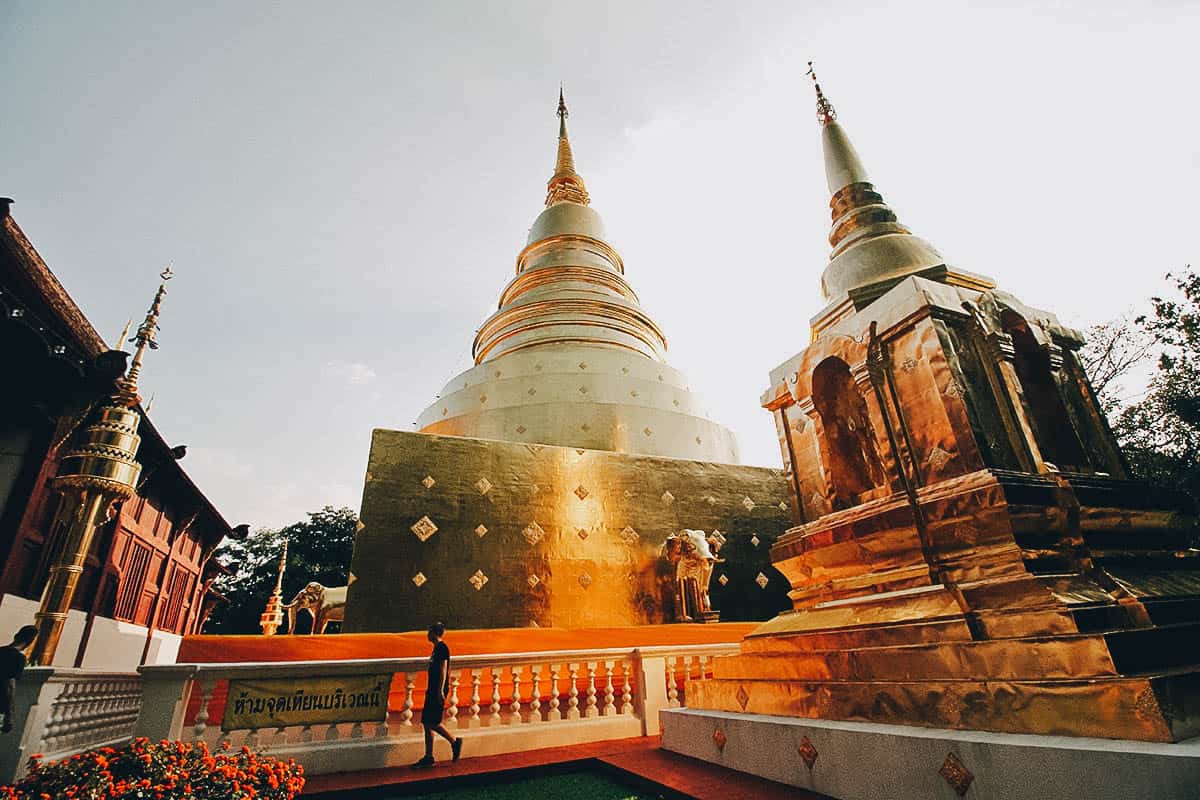
Start at Wat Phra Singh around 8:30am. It opens at 6am but mornings are quieter after the locals' prayer hour. Pay the 50 THB entry fee, sit inside the Wihan Lai Kham for at least 15 minutes (the 14th-century murals are the highlight). Then walk south to Wat Chedi Luang (the ruined giant chedi), another 50 THB entry.
If you're curious about Buddhism, sit at the Monk Chat area at Wat Chedi Luang. Free, no pressure, and one of the rare chances to talk to a novice monk about real life. This kind of moment is exactly why slow travel works.
End the morning loop at Wat Phan Tao (free, next to Chedi Luang) and Wat Chiang Man (free, oldest temple in the city). By noon you've seen four of the most important temples in Chiang Mai, without rushing, and you understand why the city is called the "City of 300 Temples". We covered all 10 of the temples in detail in our Top 10 Temples in Chiang Mai guide if you want to plan additional stops.
Lunch: Khao Soi (12:00 to 13:30)
Time to try khao soi, the legendary northern Thai noodle dish. Khao Soi Khun Yai (near Wat Mengrai) is a favorite among locals. Cash only, closes when sold out (often by 13:30). Order chicken khao soi with a side of fermented mustard greens and pickled shallots. About 60 to 90 THB. The best khao soi of your trip will probably come from this kind of family-run shop, not a restaurant.
Afternoon: Quiet Time and Wandering (13:30 to 17:00)
This is your rest block. Walk slowly back through the Old City. Stop at one of the cafés around Wat Phra Singh. Get an iced latte for 80 THB. Read your book. The temptation will be to "make use of the time" by adding another activity. Resist it. The point of day 1 is to install a slow pace for the rest of the trip.
If you really need to move, walk to Wat Lok Molee (north of the moat) or Wat Suan Dok (west, peaceful temple with white chedis). Both are free, both are calm, both let you decompress without seeing crowds.
Evening: Walking Street + Street Food (17:30 to 21:30)
Two options depending on what day you arrive:
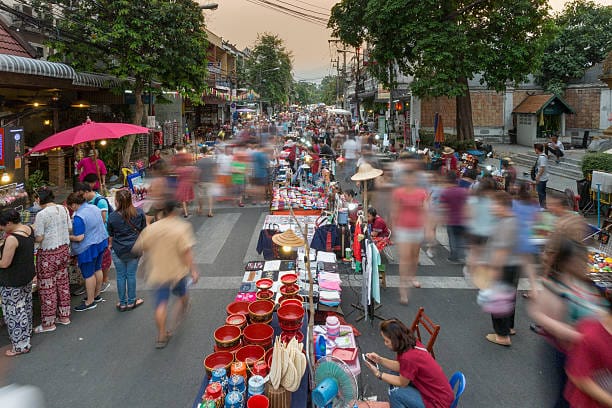
- Sunday: head to the Sunday Walking Street on Ratchadamnoen Road (closes the main avenue of the Old City to cars from 16:00 to 22:00). Arrive before 18:00 to beat the crowds. Eat your way through the street food vendors. Budget 200 to 300 THB for a full meal of sai ua, sticky rice, mango, and Thai milk tea.
- Saturday: similar concept on Wualai Road (south of the Old City, Silver Quarter). Less famous, less crowded, more crafts. Combine with a quick sunset stop at Wat Sri Suphan (the Silver Temple), which is right on Wualai Road.
- Other days: head to Chang Phueak Night Market for the famous Cowboy Lady stand (grilled pork rice). Cheap, fast, authentic.
Be back at your accommodation by 22:00. Day 1 is over.
Extra energy?
If you somehow have extra steam in the evening, book a traditional Thai massage at a reputable place in the Old City. 60 minutes for 250 to 400 THB. Perfect end to a temple day.
Day 2: Nature, Mountain Village, Slow Mode (The Day That Changes Your Trip)
This is the day that turns a normal Chiang Mai trip into a memorable one. We're heading into the mountains.
Full Day: Mae Kampong Village + Waterfall + Giant Treehouse Café (8:30 to 17:00)
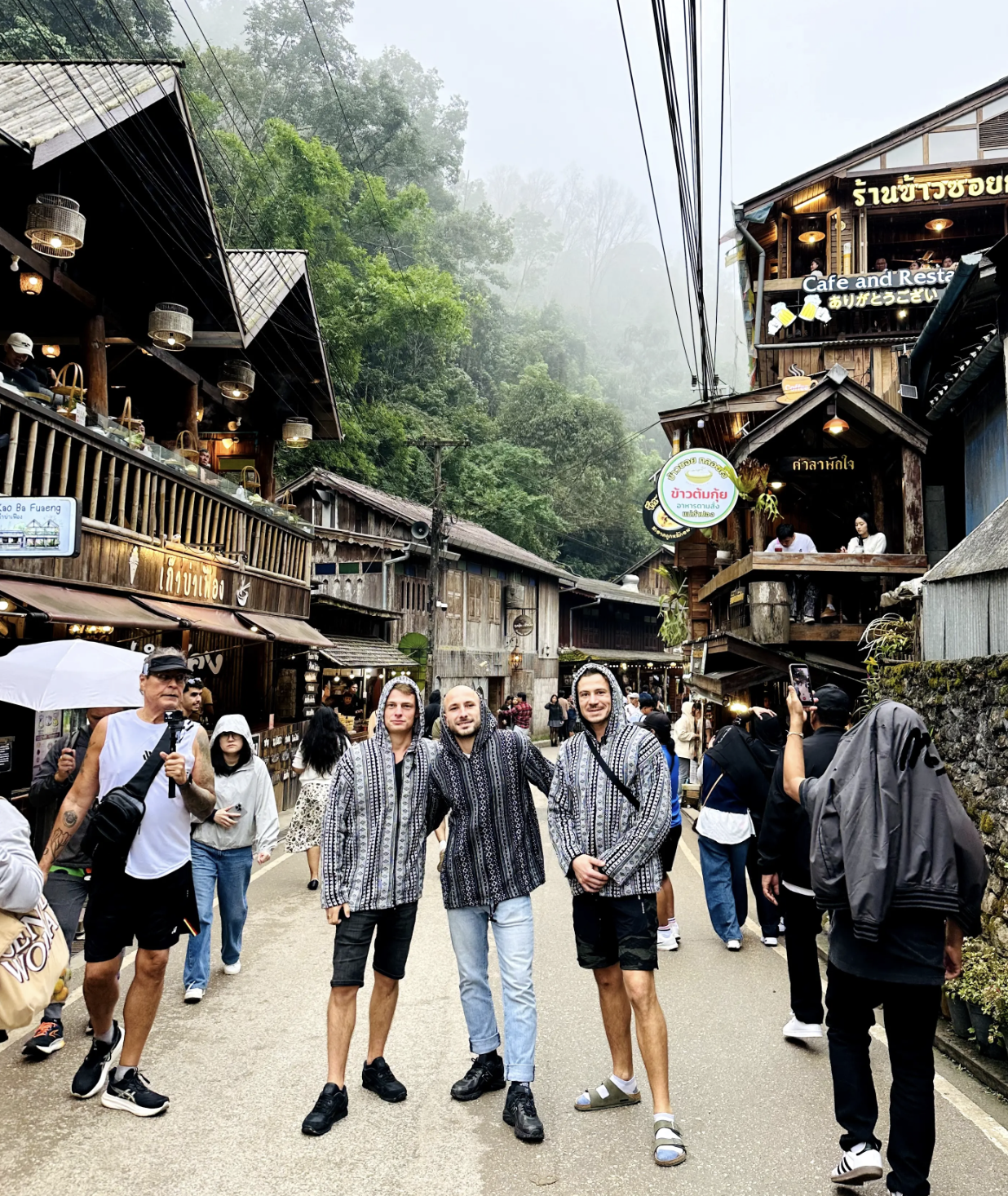
This is the day's anchor. Mae Kampong is a small mountain village at 1,300m elevation, 1h30 northeast of Chiang Mai. It's been a slow travel reference for years, and for good reason: cooler climate, fresh air, organic coffee plantations, traditional wooden houses, and almost no large tour groups.
A typical day includes:
- 8:30am pickup from your hotel, scenic drive through the hills
- Mae Kampong village exploration: traditional wooden houses, local coffee shops, slow walks through the village. The village is small and easy to navigate
- Mae Kampong waterfall (short forest walk to reach it, about 15 minutes from the parking)
- Panoramic café overlooking the valley (the views are the point, the coffee is good too)
- Lunch at a local restaurant (recommended by your driver, around 200 to 300 THB)
- The Giant Chiang Mai Café: a unique café built into a giant tree, with suspended wooden walkways through the jungle canopy. Genuinely impressive
- Return to Chiang Mai around 16:30 to 17:00
This is our pick for slow travelers who want one big mountain day without the logistics of doing it solo (the road is winding, and the waterfall requires a local shuttle for the final stretch). Bookable on Guidestination: Mae Kampong Village, Waterfall and Giant Treehouse Café day tour.
Why Mae Kampong over Doi Inthanon?
Most "must-do" lists send you to Doi Inthanon (Thailand's highest peak, 90km southwest). It's a beautiful national park, but it's a fast itinerary day: park bus, two pagodas, waterfalls in sequence, sometimes with 50 other tourists at each stop. The opposite of slow travel.
Mae Kampong is the slow alternative. You can sit, you can talk to the local café owners, you can walk at your own rhythm. Save Doi Inthanon for a second visit to Chiang Mai if you're a national parks person.
Evening: Cooking Class Prep (Optional)
If you're doing a cooking class on day 3 with a market visit, this is a good evening to rest fully. Light dinner, early bed. Cooking classes start at 8 or 9am with the market visit, you'll need the energy.
If you're skipping the cooking class, this is a good evening for a leisurely dinner in Nimman (the hipster neighborhood). The North Gate area also has good casual spots. Budget 200 to 600 THB depending on where you go.
Extra energy or extra day?
If you find yourself with extra time on this day or want an alternative full day, consider Bua Tong "Sticky Waterfall" instead of (or in addition to) Mae Kampong. The Sticky Waterfall is famous because the limestone rocks are mineral-coated and non-slippery, which means you can actually climb up the waterfall barefoot. It's an unusual sensory experience, and the surrounding cave and forest hike are bonus. Day tour with lunch buffet included: Bua Tong Sticky Waterfall + huge cave + Thai lunch buffet, around 950 THB for the day.
Day 3: Hands-On Day (Cooking and Hidden Temples)
Last day. The temptation is to do too much because you're leaving. Don't fall for it. Pick one anchor activity in the morning and leave the afternoon and evening open.
Morning: Thai Cooking Class with Market Visit (8:30 to 13:30)
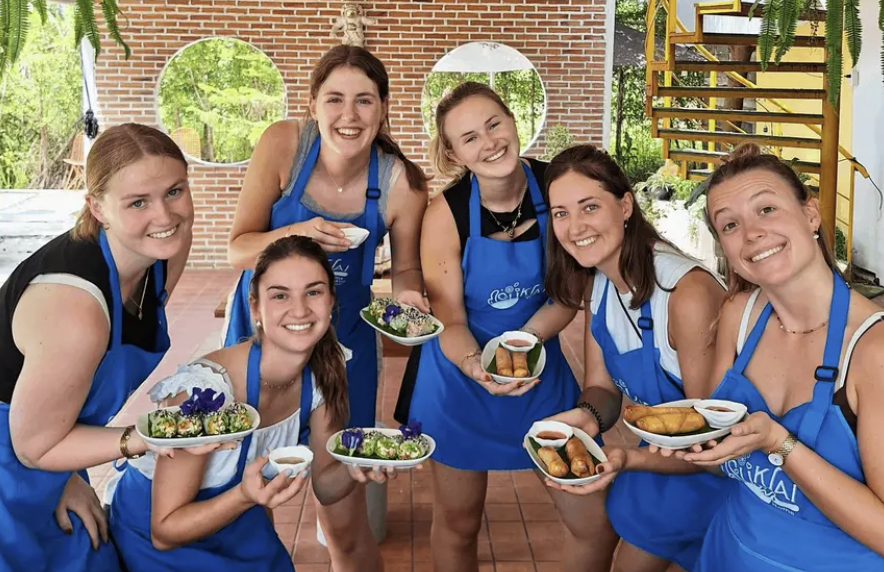
The best way to take Chiang Mai home with you is to learn to cook one of its dishes. A good cooking class is 5 hours long and includes:
- A morning market visit with the chef explaining each ingredient
- 4 to 5 dishes prepared from scratch (typically a curry, a soup, a stir-fry, a salad, and a dessert)
- A printed recipe book to take home
- A shared meal at the end with everything you've cooked
We've reviewed our top picks in our Thai Cooking Classes in Chiang Mai comparison. The half-day farm-based options work well for the slow travel itinerary because they're outside the city in a peaceful agricultural setting.
Why morning over afternoon: the market is more authentic in the morning (locals shopping, not tourists). The cooking happens during the hottest part of the day when you'd want to be inside anyway. By 13:30 you're full, you have a recipe book, and you've already eaten "lunch" (everything you cooked).
Afternoon: Hidden Temples and Soft Adventure (14:00 to 17:30)
You've already seen the famous temples on day 1. Now we go to the ones tourists miss. Two options:
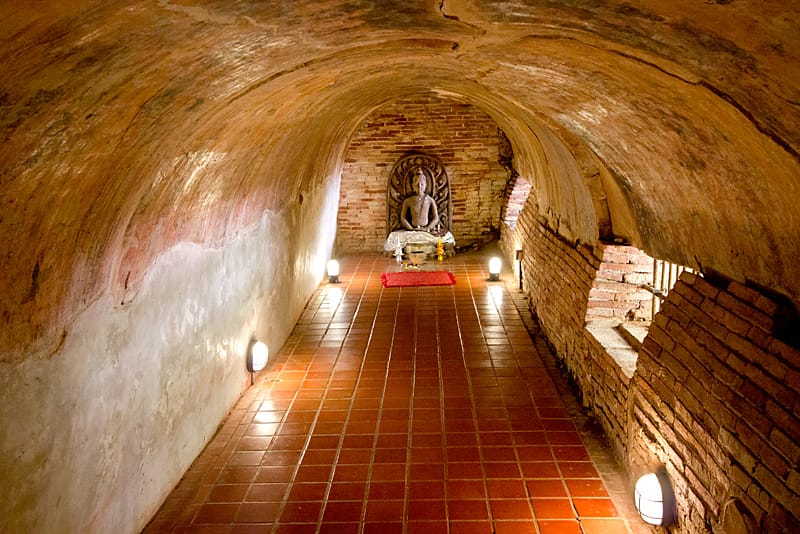
Option A (Wat Umong, the tunnel temple): 4km west of the Old City, near Chiang Mai University. A 13th-century forest temple with ancient brick tunnels carved into a hill, each with a Buddha statue inside. Mature trees, walking paths, a lake with fish and turtles. Free. Spend an hour just sitting on a bench by the lake.
Option B (Wat Pha Lat, hidden forest temple): halfway up Doi Suthep mountain. Take a Grab (about 200 THB one way) to kilometer 5 of the Doi Suthep road, then walk the Monk's Trail (1 hour forest hike to the temple). Or skip the hike and have your Grab drive you directly to Wat Pha Lat. Mossy stones, small waterfall, monks in residence, almost no tourists. Free.
Pick one. Both are perfect day 3 endings because they're calm, contemplative, and very different from the famous temples.
Evening: Yoga Sunset + Dinner (18:00 to 22:00)
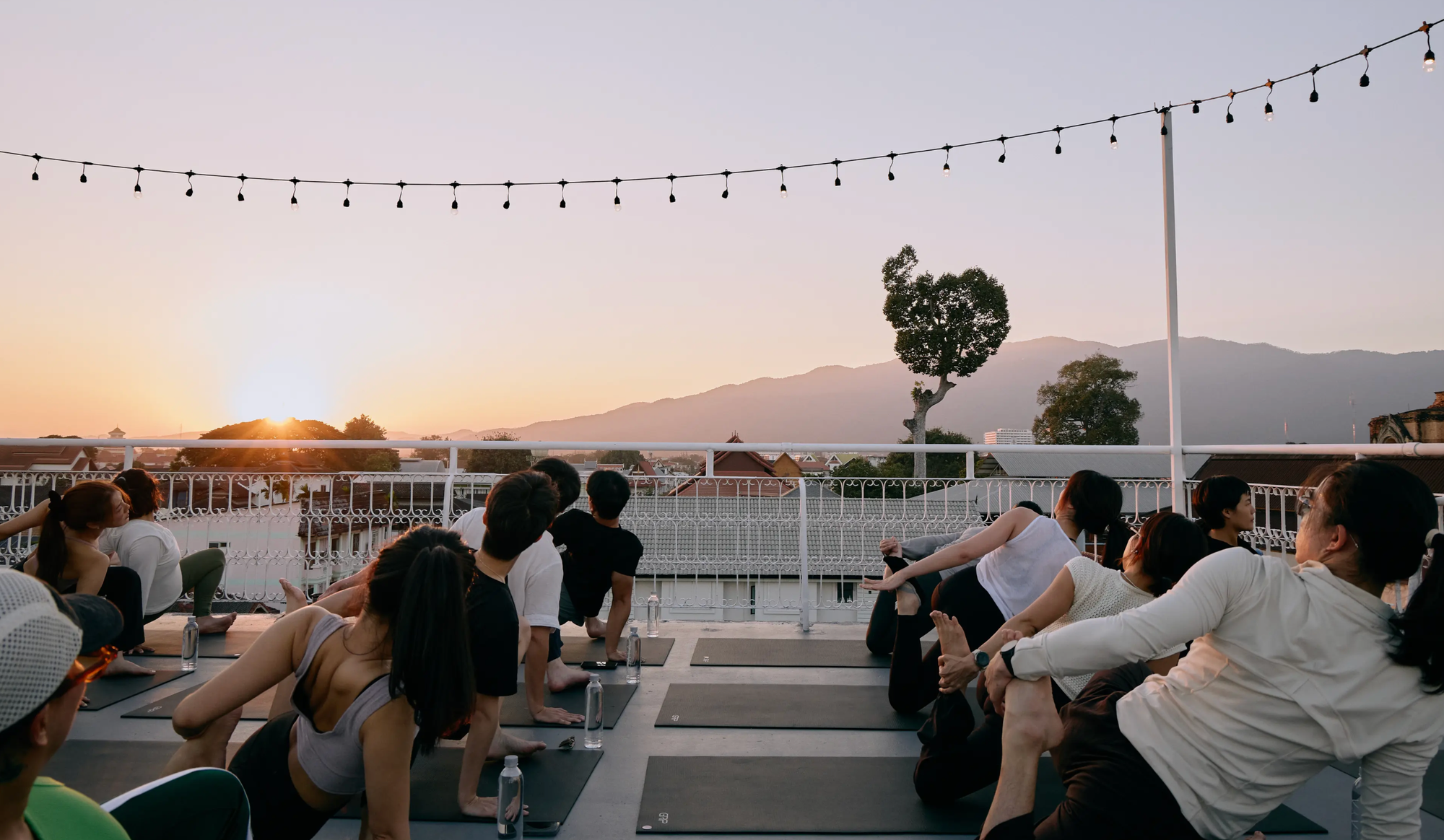
End your Chiang Mai trip with a rooftop sunset yoga session. 75 minutes of gentle flow as the sun sets over the city. Even if you've never done yoga, the all-levels format means you can just follow along. We covered the studios we recommend in our Yoga in Chiang Mai guide. The rooftop session in the Old City is around 550 THB and is genuinely a special experience to close a trip.
After yoga, walk to dinner at a Northern Thai restaurant. Order kaeng hang le (Burmese-influenced pork curry, slow-cooked), nam prik ong (tomato-pork chili dip with raw vegetables), and sticky rice. Real Lanna food, hard to find back home. About 400 to 600 THB for two.
Extra energy?
If you're not flying out at 6am the next morning and you have extra evening, consider a traditional Thai foot massage (45 to 60 minutes for 200 to 300 THB). Then sleep.
Where to Stay for a 3-Day Slow Itinerary
Three neighborhood options depending on your style:
Old City is the right pick for first-time visitors and short stays like this 3-day format. You're within walking distance of most temples, the Sunday Walking Street, multiple cafés, and good street food. Budget guesthouses from 600 THB/night, mid-range hotels 1 500 to 3 000 THB, boutique hotels 4 000+ THB.
Nimman is better for second-time visitors or digital nomads who want a hipper, café-heavy neighborhood with great restaurants and bars. But it's a 15-minute drive from the Old City temples, which adds friction to day 1. Mid-range from 1 500 THB, upper from 3 000 THB.
Santitham is the local quieter option between Old City and Nimman, with traditional restaurants and less tourism. Best for slow travelers and longer stays. Budget guesthouses from 400 THB.
For a 3-day itinerary, we recommend Old City unless you've been here before.
What to Skip in Your 3 Days
Travelers often add these to their 3-day itinerary and regret it:
Doi Inthanon day trip: too long (10 to 12 hours), too rushed, you spend more time in the van than at the mountain. Save it for a 5+ day trip.
Chiang Rai day trip: 8 hours in a van for 3 temples. Save it for a 2-day Chiang Rai trip on a longer Northern Thailand itinerary.
Tiger Kingdom and other "wildlife" attractions involving close interactions with sedated tigers. We don't recommend these for ethical reasons. If you want a wildlife experience, focus on the ethical elephant sanctuaries instead. We covered this in detail in our Ethical Elephant Sanctuaries guide.
Long Neck Karen villages (Kayan): ethically problematic visits. Avoid.
Massive shopping malls (One Nimman, MAYA): you didn't come to Chiang Mai for a mall. Skip unless you specifically need something.

FAQ: 3 Days in Chiang Mai
When is the best time to do this 3-day itinerary?
November to February is the ideal window: cool, dry, perfect for mountain trips and outdoor cooking classes. March to May is burning season (smoky air, hot), skip the rooftop yoga and add indoor activities. June to October is rainy season but green and beautiful, just bring rain gear for Mae Kampong day. The Tourism Authority of Thailand (tourismthailand.org) confirms November to February as the high season for Northern Thailand, with the best weather conditions for outdoor and mountain activities.
Is 3 days enough for Chiang Mai?
For a first introduction, yes. You'll see the iconic temples, do one big mountain day, and learn a cooking skill. You won't see everything, but you'll leave wanting to come back. Most travelers we talk to wish they'd stayed longer the second time.
Should I rent a scooter for this itinerary?
Not necessary. Day 1 is walkable. Day 2 includes a driver. Day 3 needs one Grab (around 200 THB) to get to Wat Umong or Wat Pha Lat. Total transport budget around 1 000 to 1 500 THB for 3 days using Grab/songthaew, which is less than renting and dealing with parking, helmets, and accidents. Rent a scooter only if you're staying longer than 5 days.
Can I do this itinerary with kids?
Yes, with adjustments. The temple walking on day 1 should be limited to 2 temples (not 4) for kids under 10. Day 2 Mae Kampong works well for all ages (the Giant Treehouse Café is a hit). Day 3 cooking classes have minimum ages (usually 8 or 10+), check at booking. The afternoon temples are too quiet for most young kids, replace with a swim at the hotel pool.
What's the total budget for 3 days?
Excluding accommodation:
- Budget version (food + transport + 1 anchor activity): 4 500 to 6 500 THB per person
- Standard version (this itinerary as written): 7 000 to 10 000 THB per person
- Premium version (private tours, premium activities, fine dining): 12 000 to 18 000 THB per person
How early should I book the activities?
For high season (November to February): book the cooking class and Mae Kampong day at least 7 days in advance. For low season: 2 to 3 days usually works. Sunday Walking Street and temples need no booking.
Should I combine Chiang Mai with another city?
For a 2-week Thailand trip: yes. Common pairings are Chiang Mai + Bangkok (cultural contrast), Chiang Mai + Pai (slow travel double), Chiang Mai + Krabi/Phuket (mountains + beach), or Chiang Mai + Chiang Rai (Northern circuit).
Final Word: Why Slow Beats Maximalist in Chiang Mai
Most travelers come to Chiang Mai with a list of 15 things to do in 3 days and leave having done all 15 superficially. This itinerary has 6 anchor moments (4 temples, 1 mountain village day, 1 cooking class) plus open exploration time. That's the right ratio for first-time visitors.
The Chiang Mai we want you to leave with isn't a checklist. It's a feeling: that you sat under a 700-year-old tree at Wat Umong without checking your phone. That you tasted real khao soi from a family-run stand. That you watched the mist clear over Mae Kampong with a fresh coffee. That you cooked a Thai green curry you can recreate at home.
Three days, six real moments. That's what makes a trip worth telling people about.
If you want help fine-tuning this for your dates, group size, or travel style, drop us a comment. We'll respond with specifics.
Team note: article updated May 2026. Prices listed are those observed at the time of writing and may vary. Always check the current rate on the activity page at booking time.