
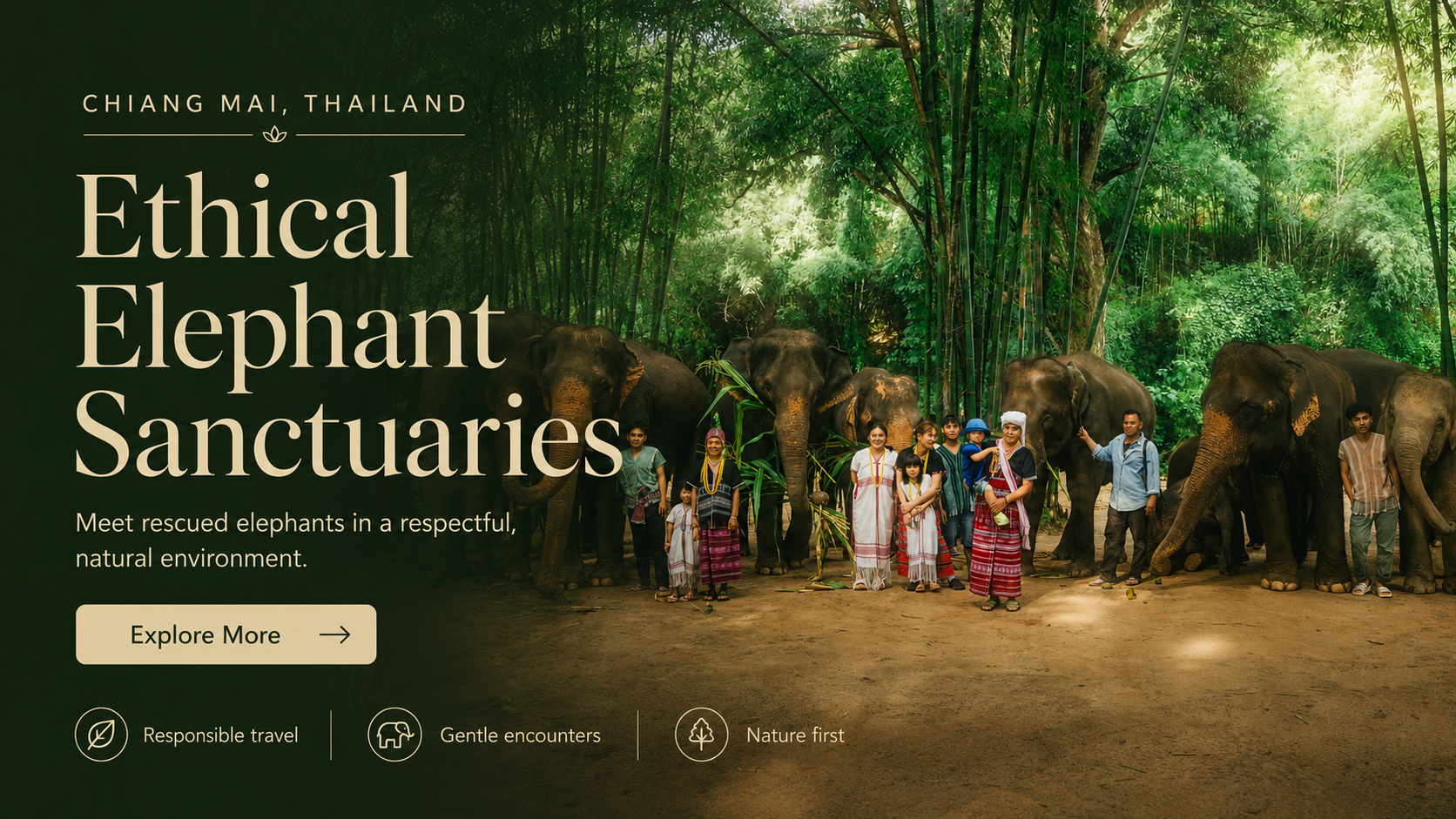
There are over 50 elephant camps within 2 hours of Chiang Mai. Most of them call themselves a "sanctuary". Most of them aren't.
The word "sanctuary" has been hijacked by the tourism industry. Today it's plastered on the entrance of camps that still offer elephant rides, painting shows, or "soccer" matches. We know because we've visited them. The misuse of the word is exactly why we wrote this guide.
This article does two things. First, we'll teach you how to actually evaluate whether an elephant experience is ethical or not (the real red flags, not just the marketing). Second, we'll share our recommendations: a small number of sanctuaries we've personally vetted and continue to send our clients to with confidence.
We don't pretend to be neutral on this topic. We refuse to sell unethical elephant experiences. If you're looking for an article that lists everything and lets you "decide for yourself", this isn't it. The information below is what we'd tell a friend.
Why Elephants in Thailand Need Sanctuaries in the First Place
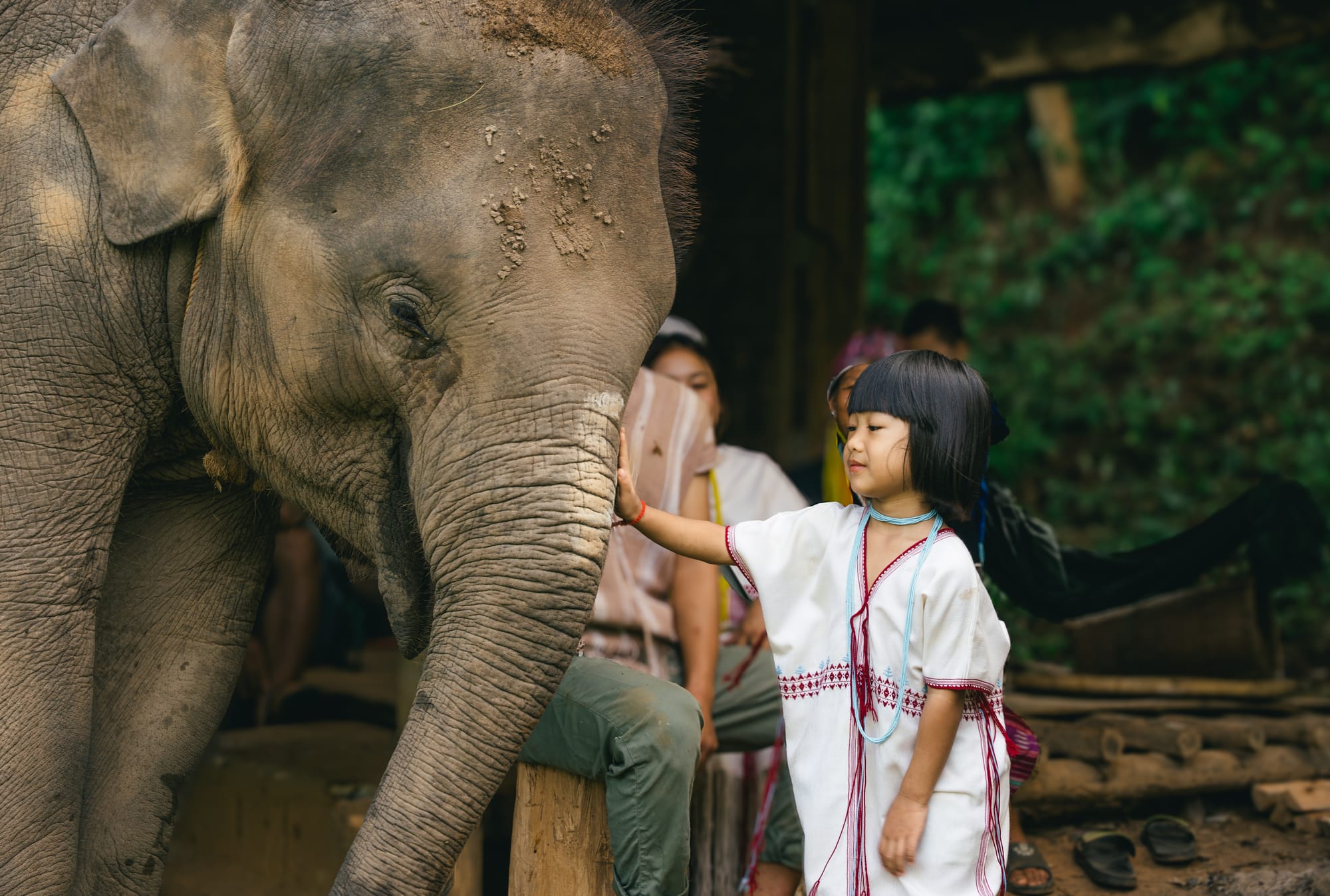
To understand the sanctuary question, you need a 2-minute background. Thailand has roughly 3,800 captive elephants, most of them in the tourism industry. They are not wild elephants. Many were born into captivity, or were rescued from logging camps after Thailand banned commercial logging in 1989.
When logging ended, thousands of working elephants suddenly had no income source. Their owners (mahouts and their families) often had no other livelihood. The tourism industry stepped in: elephant riding camps, shows, and "experiences" became the primary economic model.
The problem: traditional elephant tourism is brutal for the animals. To make a wild animal accept a saddle on its back, accept commands, or perform tricks, you need to break its spirit. The traditional method, called phajaan ("the crush"), involves separating young elephants from their mothers, restraining them, and using bullhooks and food deprivation to enforce obedience. This is documented and ongoing.
Over the past 15 years, organizations like Save Elephant Foundation (founded by Sangduean "Lek" Chailert) have pushed an alternative model: observation-only sanctuaries, no riding, no tricks, where rescued elephants live in conditions closer to their natural behavior. Lek's flagship sanctuary, Elephant Nature Park, became the global reference for ethical elephant tourism starting in 2003.
Today, dozens of camps copy the language ("sanctuary", "ethical", "no riding") without changing the underlying practices. Telling them apart is your job as an informed traveler. We'll help you.
The 7 Red Flags of a Non-Ethical Elephant Experience
If you see any of these at a camp, walk away or don't book. No exceptions.
🚩 Red Flag 1: Elephant Riding (Especially With Saddles)
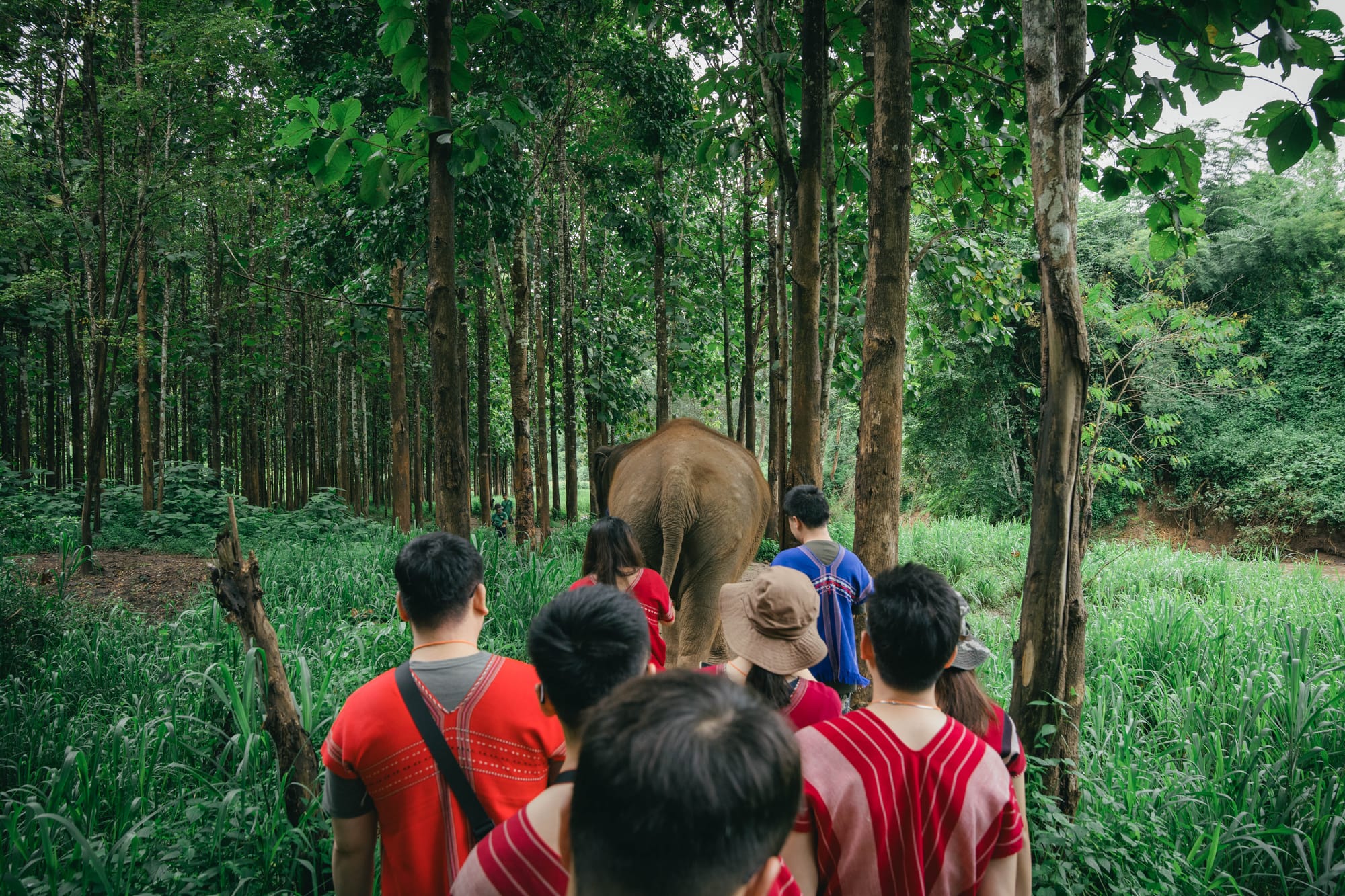
The deal-breaker. An elephant's spine is not built to carry weight on its back. Wooden saddles cause chronic injuries. A "bareback ride" still involves coercion to make the elephant accept it. Real ethical sanctuaries do not offer rides under any condition, including soft language like "short bareback experience" or "elephant trekking".
🚩 Red Flag 2: Painting, Soccer, Basketball, or Any "Performance"
If elephants perform any kind of trick (painting, kicking a ball, walking on two legs, hugging tourists for photos), they were trained using fear-based methods. Wild elephants do not naturally do these things. The training process is the problem, not the show.
🚩 Red Flag 3: Bullhooks Visible
A bullhook is a metal-tipped hook used to control elephants by hooking sensitive parts of their ears, mouth, or feet. Even when not actively used, just carrying one is a coercion tool. Ethical sanctuaries either don't use them or have visibly transitioned away from them.
🚩 Red Flag 4: Baby Elephants Separated From Their Mothers
In wild populations, baby elephants stay with their mothers for 3 to 5 years. In captive tourist camps, babies are often separated early to be used in photo opportunities. If you see babies presented to tourists without an adult elephant of their own family group nearby, that's a strong red flag.
🚩 Red Flag 5: Large Groups, Short Encounters
Real sanctuaries cap their daily visitors so elephants aren't overstimulated. Camps with 100+ tourists per day rotating through 30-minute "encounters" are more like elephant zoos than sanctuaries. Look for camps with small daily group sizes (under 30 visitors per day for the sanctuary as a whole, not just your tour).
What You SHOULD See at an Ethical Sanctuary
The positive checklist:
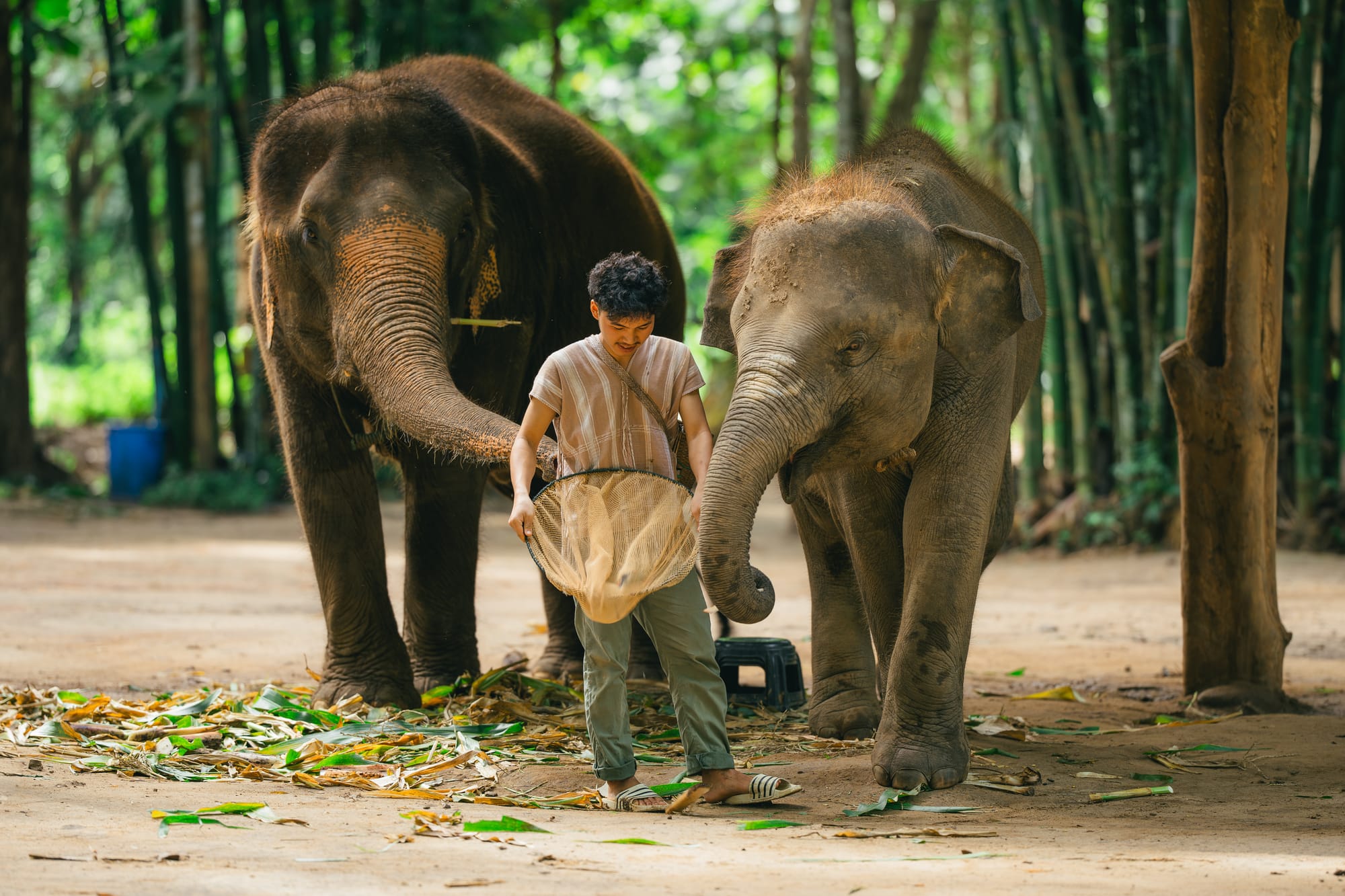
- Elephants free to roam in a large area (multiple hectares minimum), not chained or restricted to small enclosures
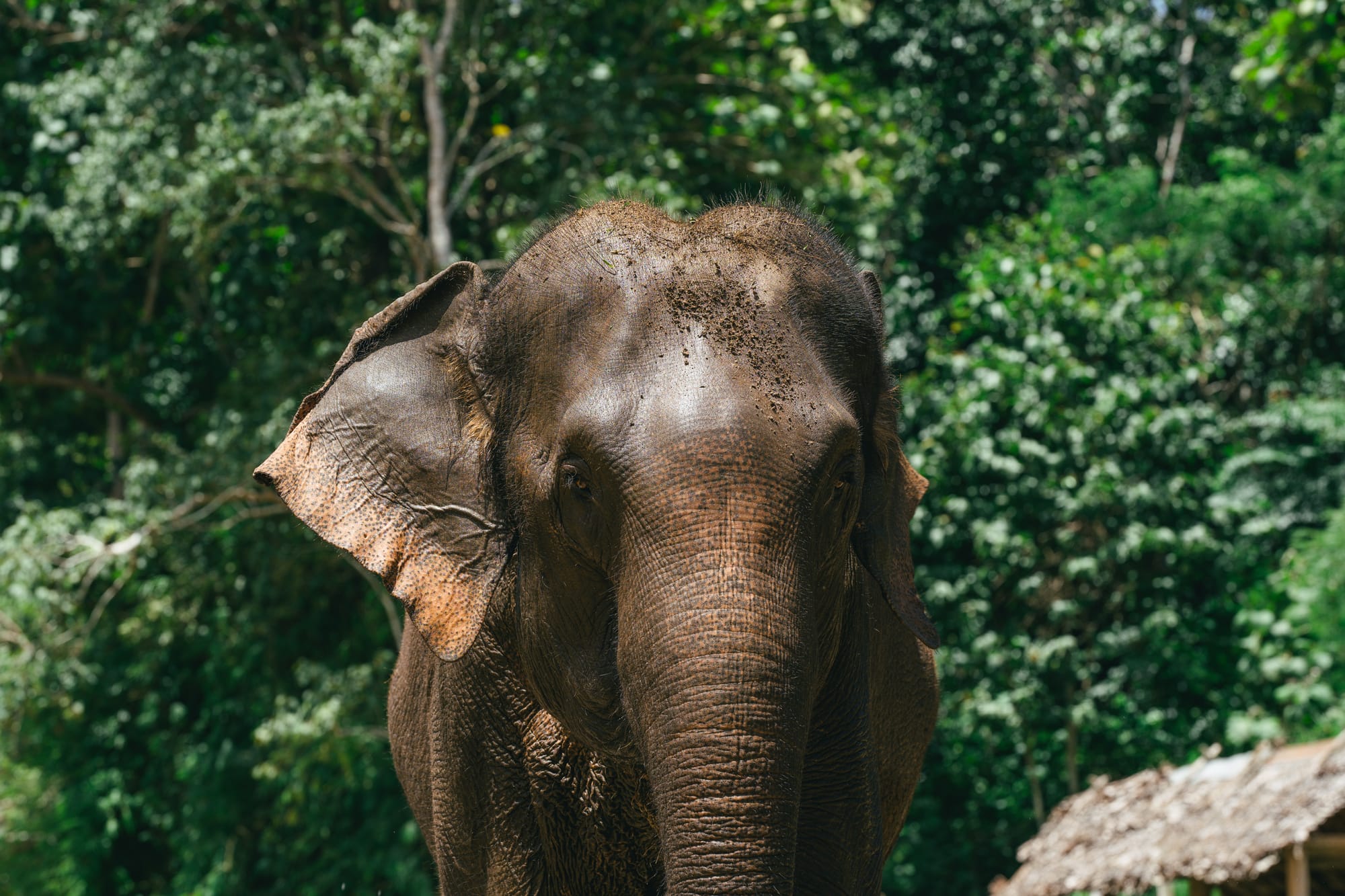
- Multiple natural behaviors visible: foraging, dust bathing, social interactions, sleeping in shade
- Educational content from staff: real explanations of each elephant's history, age, personality, behaviors
- Small group sizes (under 20 visitors, ideally under 10 for premium experiences)
- Distance respected: no forced close contact, no climbing on elephants, no hugging
- Transparent funding: the sanctuary explains where your money goes (food, vet care, mahout salaries, rescue operations)
- No baby elephants used as props for photos
If a camp checks all these boxes, you're probably in a real sanctuary.
The Most Famous Reference: Elephant Nature Park
Any honest discussion of ethical elephant tourism in Northern Thailand has to mention Elephant Nature Park (ENP), founded by Lek Chailert in the Mae Taeng valley north of Chiang Mai.
ENP was one of the first sanctuaries in Thailand to ban riding entirely (2003). It currently hosts around 100 rescued elephants on a large protected area, alongside hundreds of rescued dogs, cats, water buffaloes, and other animals. Lek Chailert was named one of TIME magazine's "Heroes of Asia" for her work, and ENP is regularly cited by World Animal Protection and similar organizations as a model for ethical tourism.
ENP is iconic but heavily booked. If you have your heart set on visiting ENP specifically, book it weeks in advance. There are however other ethical sanctuaries in the Chiang Mai region that offer comparable (sometimes better) intimate experiences with fewer visitors. The ones we recommend below are our personal picks based on direct visits and ongoing relationships.
Our 4 Recommended Ethical Elephant Experiences in Chiang Mai
We've visited many camps over the years. Many we've rejected. The 4 below are the ones we currently commercialize and stand behind. Each appeals to a slightly different profile.
1. The Pure Observation Experience (Best for Strict Ethical Standards)
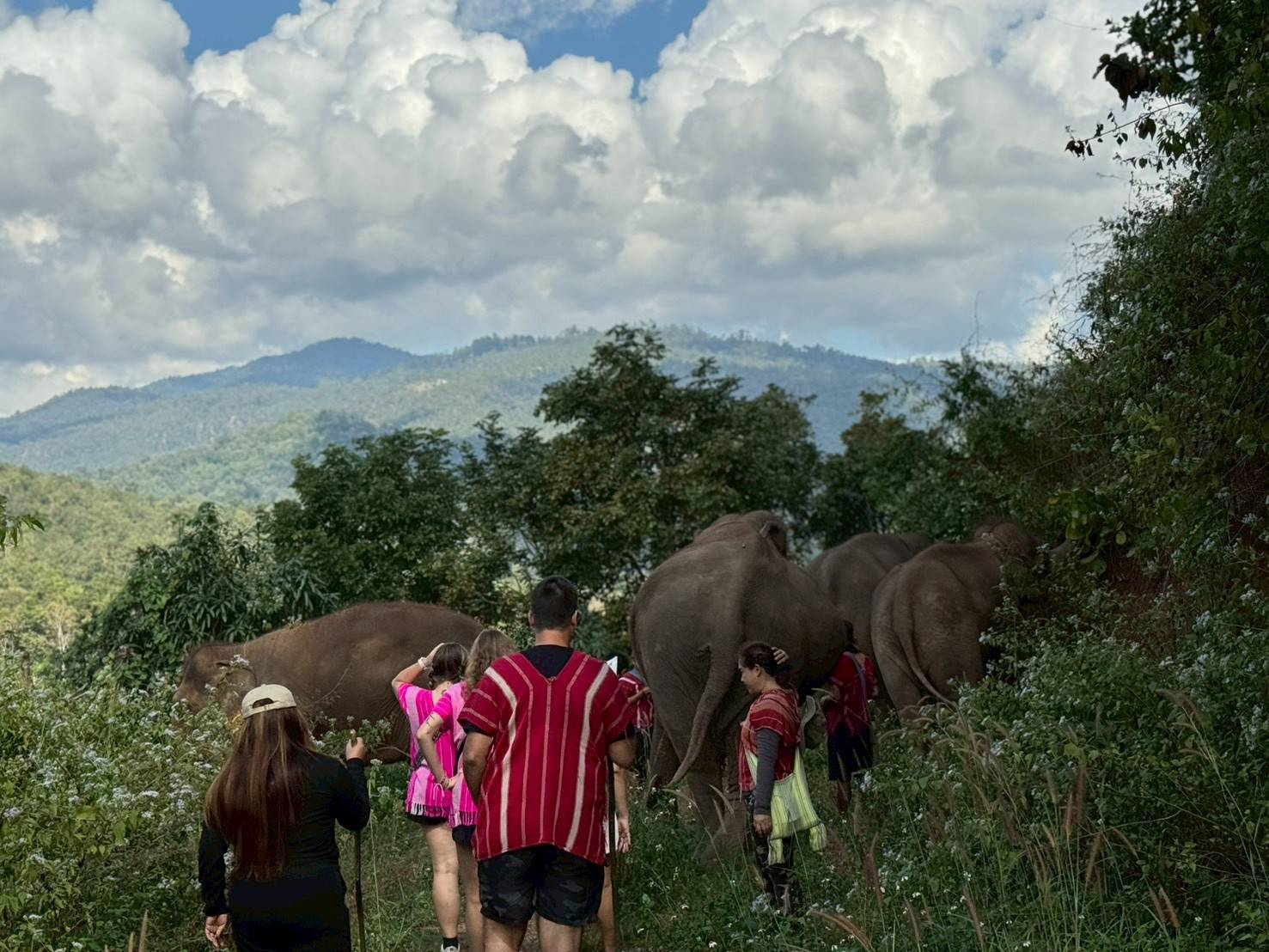
For travelers who consider that even feeding and bathing constitute interference, the most ethical option is observation only. We work with a sanctuary in Mae Wang (1h40 west of Chiang Mai) that operates on this exact philosophy: no riding, no tricks, no forced interactions, no bathing sessions. Just observing elephants in a natural environment, doing what elephants do.
- Duration: 6 hours total (with transport)
- Price: around 2 050 THB per adult, 1 000 THB per child (4-11), free under 4
- Group size: maximum 10 people
- Format: small group with English-speaking guide
- Includes: hotel pickup, lunch, insurance, guide
- Best for: travelers who want the purest ethical experience, photographers, anyone uncomfortable with close interactions
You'll spend the morning at a quiet area in Mae Wang where the elephants graze, interact, take mud baths, or rest. Your guide explains what you're seeing: which elephant is in heat, why this one is shy, what the social hierarchy looks like, what rescue story brought each elephant here. A traditional Thai lunch is served before heading back to Chiang Mai around 14:30.
This is the format we recommend to clients who tell us "I want to see elephants without participating in anything that could be questionable". It's the most respectful option we offer. Bookable on Guidestination: Ethical Elephant Observation Half-Day Tour.
2. The Karen Community Sanctuary (Best for Cultural Depth)
This is our personal favorite for travelers who want more than just elephant time. The sanctuary is run by a Karen community in Mae Wang (1 hour from Chiang Mai). The Karen people have lived alongside elephants for centuries, and this is one of the rare experiences where the cultural and ecological dimensions are integrated.
- Duration: 9 hours full day (8am pickup, 17:00 return)
- Price: around 2 000 THB per adult, 1 600 THB per child
- Group size: maximum 20 people
- Includes: transport, lunch, insurance, English-speaking guide, all activities
- Best for: travelers wanting cultural depth, families, anyone interested in conservation as a community project
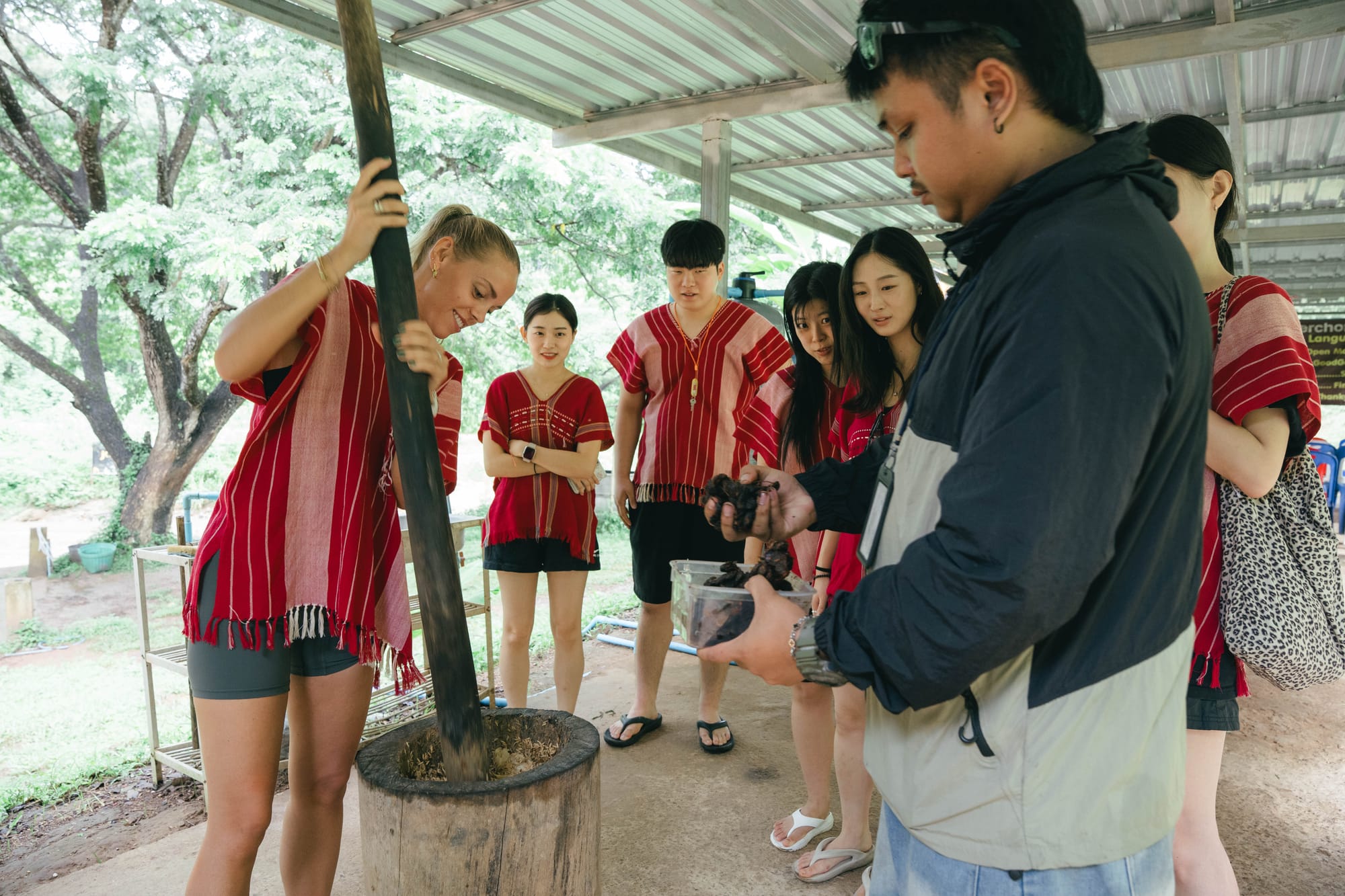
The program includes a safety briefing, a presentation on elephant welfare, learning to prepare herbal medicine balls and mineral salt blocks for the elephants, walking alongside them while observing natural behavior, and (depending on elephant state) participating in mud spa sessions. No riding, no tricks. Income directly funds elephant care, food, veterinary costs, and the local community's livelihoods.
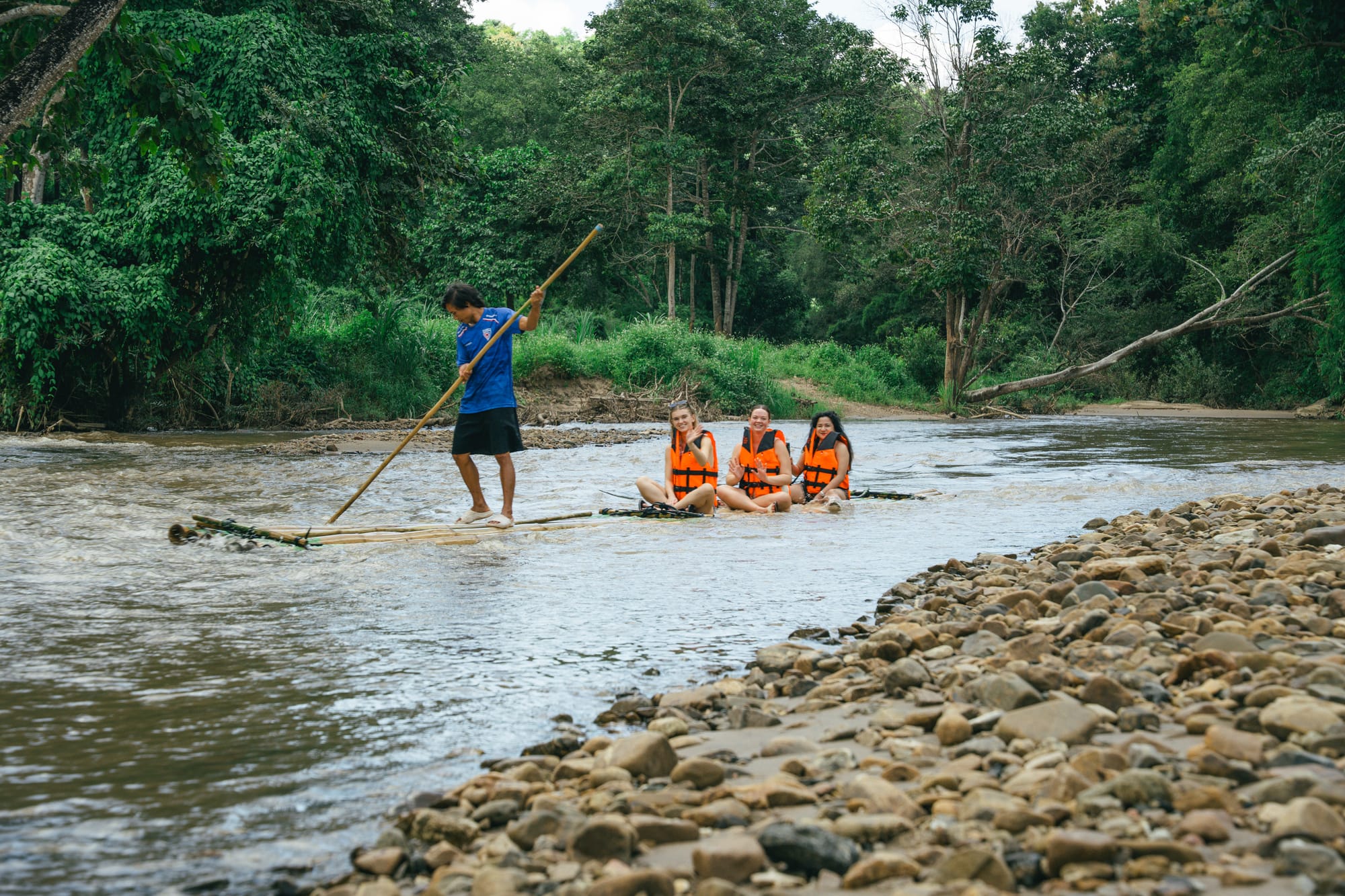
The activity also includes bamboo rafting and a waterfall visit, giving you a full day in nature beyond the elephant experience. This is the experience we recommend to travelers staying in Chiang Mai for at least a week who want depth over speed. Bookable on Guidestination: Karen Community Elephants Full-Day Tour.
3. The Hands-On Ethical Care Day (Best for Active Participation)
For travelers who want to actively contribute to elephant care without crossing into questionable territory, this is the right format. A full day in the Kuet Chang area (Mae Taeng valley, around 1h15 from Chiang Mai) where you participate in real care routines: preparing food and vitamins, feeding the elephants, observing them bathe in their natural environment, walking alongside them in the forest.
- Duration: 6 hours
- Price: around 2 600 THB per adult, 1 300 THB per child
- Group size: small group format
- Includes: transport, lunch, professional team supervision, safety equipment, full insurance
- Best for: travelers wanting an active role, slow-travel oriented visitors, repeat Chiang Mai visitors looking for depth
What distinguishes this experience: the emphasis is on respect, learning, and connection in the elephants' natural environment, with no riding and no forced activities. The mahouts lead, you support. The bathing happens in the natural river area, on the elephants' schedule. This is the closest you can get to genuine interaction while staying within ethical boundaries.
4. The Elephants + Jungle Adventure Combo (Best for Variety)
If you want elephants AND something else in the same day, this combo works without compromising the ethical side. Half-day with ethical elephant care (no riding, no bullhooks, no forced interactions), followed by a zipline session and bamboo rafting through the forest.
- Duration: 5 hours half-day
- Price: around 3 000 THB per adult, 1 500 THB per child
- Group size: small group with safety equipment
- Includes: transport, buffet lunch, life jacket, full insurance, all entry tickets
- Best for: travelers with limited time, families with kids 8+, adventure-leaning visitors
The elephant portion sticks to ethical standards (food preparation, feeding, observation, walking alongside in the forest). The zipline and bamboo rafting add an outdoor adventure dimension without animal involvement. We recommend this option specifically for travelers who only have one free day and want to maximize variety while still doing the elephants right.
How Much It Should Cost (And Why "Cheap" Is a Red Flag)
Ethical elephant sanctuaries are inherently more expensive than ride-based camps. There's no way around it. Caring for one elephant costs roughly 20 000 to 30 000 THB per month (food, vet care, mahout salary, land). A sanctuary with 20 elephants needs significant income from a limited number of daily visitors to break even.
Honest pricing in 2026 for ethical elephant experiences in Chiang Mai:
- Pure observation half-day: 1 800 to 2 500 THB per adult
- Standard ethical sanctuary day: 2 000 to 3 000 THB per adult
- Premium / small group / ENP: 3 000 to 4 500 THB per adult
- Multi-day ethical experiences: 6 000 to 15 000+ THB per person
If you see a camp advertising "elephant sanctuary day" for under 1 500 THB, ask yourself how they can afford it. The answer is usually: they cut corners on elephant welfare. Larger groups (40+ visitors per day), shorter encounters, less food, no vet care, and often hidden ride options sold on-site.
The price you pay funds the sanctuary's ability to exist. Cheap = compromised is the rule for elephant tourism. Budget at least 2 000 THB per person for any sanctuary visit, and don't try to negotiate it down.
What to Expect on the Day Itself
A few practical points for first-time visitors:
What to wear: comfortable clothes that can get muddy or wet, closed shoes or sturdy sandals, lightweight long pants (mosquito protection), a hat. Bring a change of clothes if the program includes bathing.
What to bring: sunscreen, mosquito repellent, water bottle (most sanctuaries provide refills), towel if bathing is included, camera. Many sanctuaries ask you to leave bags in lockers.
Pickup timing: most sanctuaries pick up between 7am and 9am. The transport is usually 1 to 2 hours each way (Mae Wang for the western sanctuaries, Mae Taeng for the northern ones). Expect to be back in Chiang Mai mid-afternoon for half-day formats, late afternoon for full-day.
Physical effort: low to moderate. You'll walk on uneven forest terrain, sometimes in mud. Standing for long periods. Not suitable for travelers with serious mobility limitations, but most fitness levels are fine.
Children: most sanctuaries welcome children from age 4. Some experiences require minimum age 8 or older for adventure components (zipline, rafting). Always check at booking time.
Photography: encouraged at ethical sanctuaries, but with respect. No flash near elephants, no climbing on them for photos, no hands on faces or trunks. The best photos are at distance, with the elephant doing what elephants do.
According to International Welfare Standards
The World Animal Protection organization established a clear ranking of elephant tourism practices, identifying riding, performances, and forced interactions as practices to avoid. Similar positions are taken by the Tourism Authority of Thailand (tourismthailand.org), which now actively promotes ethical wildlife tourism as a positioning axis for Northern Thailand.
This isn't a niche position anymore. Most informed travelers in 2026 understand the difference. The remaining commercial ride-based camps survive on tour groups that haven't been properly informed, mostly from large cruise tours or budget-focused package tours. As a Guidestination visitor, you're past that point.
Avoid: The Camps That Got Through Our Filter (And Why We Rejected Them)
We've visited at least 15 camps in the Chiang Mai region we ultimately rejected. We won't name them publicly (we don't want lawsuits and they could improve), but here are the types of issues we found:
- A "sanctuary" in Mae Taeng that markets itself as ethical but still runs paid bareback ride sessions in the afternoon
- A "rescue center" that uses bullhooks visibly during feeding sessions, claiming they're "just decoration"
- A high-volume "ethical experience" near Pai with 80+ daily visitors and rotation cycles that exhaust the elephants
- A camp claiming to be ethical that hosts cruise ship tour groups doing 30-minute encounters with bareback photo ops
- A self-promoted "sanctuary" with baby elephants paraded for photos, mothers visibly absent
If you find a camp online with strong marketing and very low reviews on its ethics from independent observers (look on Reddit r/Thailand or r/digitalnomad for honest opinions), trust the negative reviews more than the marketing. Real ethical sanctuaries don't usually have hundreds of recent Google reviews. They cap their daily visitors.
FAQ: Everything People Ask Us About Ethical Elephant Sanctuaries
Is bathing elephants ethical?
It depends. If the elephant chooses to bathe and visitors observe or gently assist (small splashes of water, no climbing, no forcing), it's ethical. If bathing is scheduled multiple times per day specifically for tourists, with elephants brought to the water on command and large groups splashing for 30 minutes, it's a tourist activity disguised as care. Ask the sanctuary about their bathing philosophy before booking.
Can I feed an elephant ethically?
Yes, feeding is one of the most natural interaction points. Real ethical sanctuaries have feeding sessions where you offer fruits or vegetables, with the elephant choosing to take them or not. The danger is when feeding becomes a continuous photo opportunity with the elephant restrained to keep eating. Look for calm feeding moments, not Instagram lines.
Are elephant sanctuaries in Chiang Mai actually rescuing elephants?
The best ones are. Real sanctuaries have documented rescue stories for each elephant (logging camp, riding camp, circus, etc.) and a transparent care budget. Ask the sanctuary how they fund their work and how many elephants they currently have. Real sanctuaries are proud to tell you. Camps that dodge the question are not actually rescuing.
What's the difference between Elephant Nature Park and other ethical sanctuaries?
ENP is the largest and most institutionally established. It hosts more elephants, has more international visibility, and tends to be more visitor-controlled (large daily groups, set timing). Smaller ethical sanctuaries like the ones we work with offer more intimate experiences with smaller daily caps, deeper cultural context, and a stronger sense of being a guest rather than a tourist. Both are valid choices.
Should I avoid all elephant experiences entirely?
That's a defensible position. Some animal welfare advocates argue that all captive elephant tourism should be phased out and that the only ethical position is to support sanctuaries through donations without visiting. However, the economic reality is that tourism revenue funds sanctuary operations, and without it, many rescued elephants would have no funding source. Visiting an ethical sanctuary is a way to support the alternative model directly.
How many days in advance should I book?
For Elephant Nature Park: 2 to 4 weeks in advance during high season (November to February), 1 week otherwise. For other ethical sanctuaries: 3 to 7 days is usually enough, but during peak weeks (Christmas, Yi Peng festival, New Year) book earlier.
Can I visit with children?
Yes, most ethical sanctuaries welcome children. Minimum age varies: usually 4 or 6 for elephant-only experiences, 8+ for combos with zipline or rafting. Children often have powerful experiences with elephants when the format is respectful. Check minimum age at booking time.
Final Word: Your Choice Funds the Future of Elephant Tourism
Every booking is a vote. When you book an ethical sanctuary, you're voting for the model where elephants live free of riding, performances, and forced interactions. When you book a ride-based camp (even unknowingly), you're voting to keep that model profitable.
Most travelers we talk to want to do the right thing. They just don't know how to tell the difference between marketing and reality. Hopefully this guide gave you the tools to evaluate any camp you encounter, in Chiang Mai or anywhere else in Thailand.
If you have questions about specific sanctuaries we haven't covered, drop a comment. We've probably visited them and have an honest opinion. We just don't publicly publish negative reviews of camps we haven't worked with, to stay legally safe and constructive.
Team note: article updated May 2026. Prices, durations and policies reflect what was observed at the time of writing and may vary. Always check current information at the activity page when booking.