
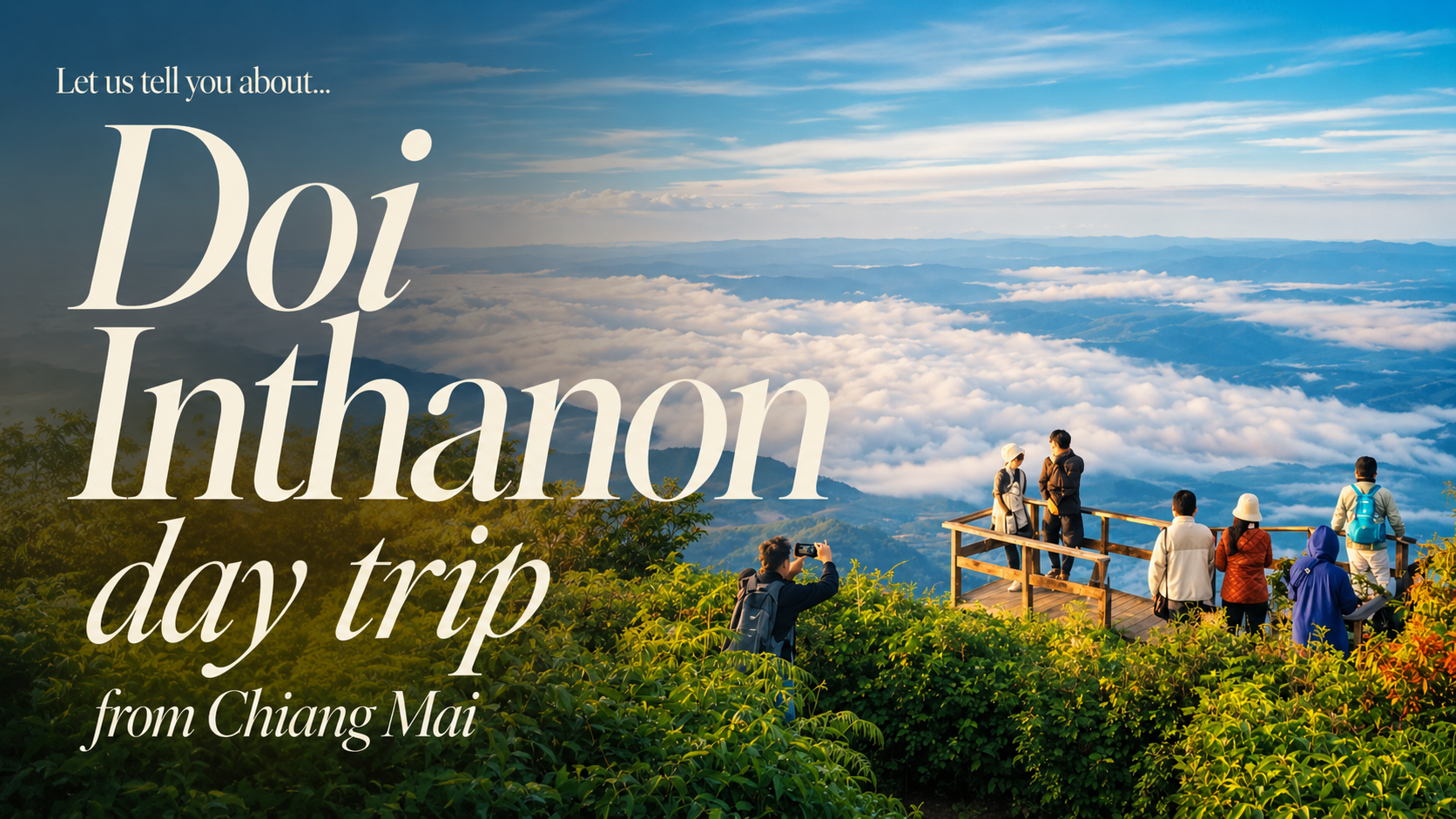
Doi Inthanon is on every "must-do Chiang Mai" list. Thailand's highest peak, twin royal pagodas, three impressive waterfalls, Karen and Hmong villages, all packed into one day trip 90 km southwest of Chiang Mai. The marketing photos are gorgeous.
The reality is more nuanced. A bad Doi Inthanon day is 10 hours in a van for 4 quick photo stops. A good Doi Inthanon day is one of the most varied and beautiful day trips you can do in Northern Thailand. The difference is in the planning.
This guide covers everything: what's actually worth seeing, how to organize the day, when to go (and when to skip), what to wear (it's much colder than Chiang Mai), and the tourist traps that kill the experience. Whether you do it independently or with a tour, you'll know exactly what you're getting into.
Why Doi Inthanon Matters (And Why It's Different From Doi Suthep)
Doi Inthanon is a 482 km² national park centered around Thailand's highest peak: Doi Inthanon mountain (2,565 m). The park sits in the Mae Chaem and Chom Thong districts of Chiang Mai province, about 90 km southwest of Chiang Mai city.
The mountain was named after Inthawichayanon, the last king of Chiang Mai before the city joined modern Thailand in 1899. His ashes are kept in a small stupa near the summit, which is one of the reasons the park has spiritual significance for Northern Thai people, not just an outdoor playground for tourists.
What's distinctive about Doi Inthanon (versus Doi Suthep):
- Distance: 90 km southwest vs 15 km west. Doi Inthanon is a full day trip (10-12 hours total). Doi Suthep can be done in 3 hours.
- Scale: a national park with multiple peaks, waterfalls, trails, and ethnic villages, vs a single temple complex.
- Elevation: 2,565 m at the summit vs 1,073 m at Doi Suthep. Temperatures can be 15°C colder than Chiang Mai.
- Vibe: nature and conservation focus vs spiritual/religious focus.
If you only have time for one mountain experience in Chiang Mai, Doi Suthep wins for spiritual/cultural depth, Doi Inthanon wins for nature and views. Most visitors with 5+ days do both.
Quick facts:
- Park hours: 5:30 AM to 6:30 PM
- Distance from Chiang Mai: 90 km (1h45 to 2h drive)
- Best season: November to February (cool, clear)
- Worst season: March to May (burning, hot, hazy)
The 5 Main Stops Inside the Park
Most visitors do these 5 sites in one day. Here they are in order from the entrance (south) to the summit (north).
1. Wachirathan Waterfall
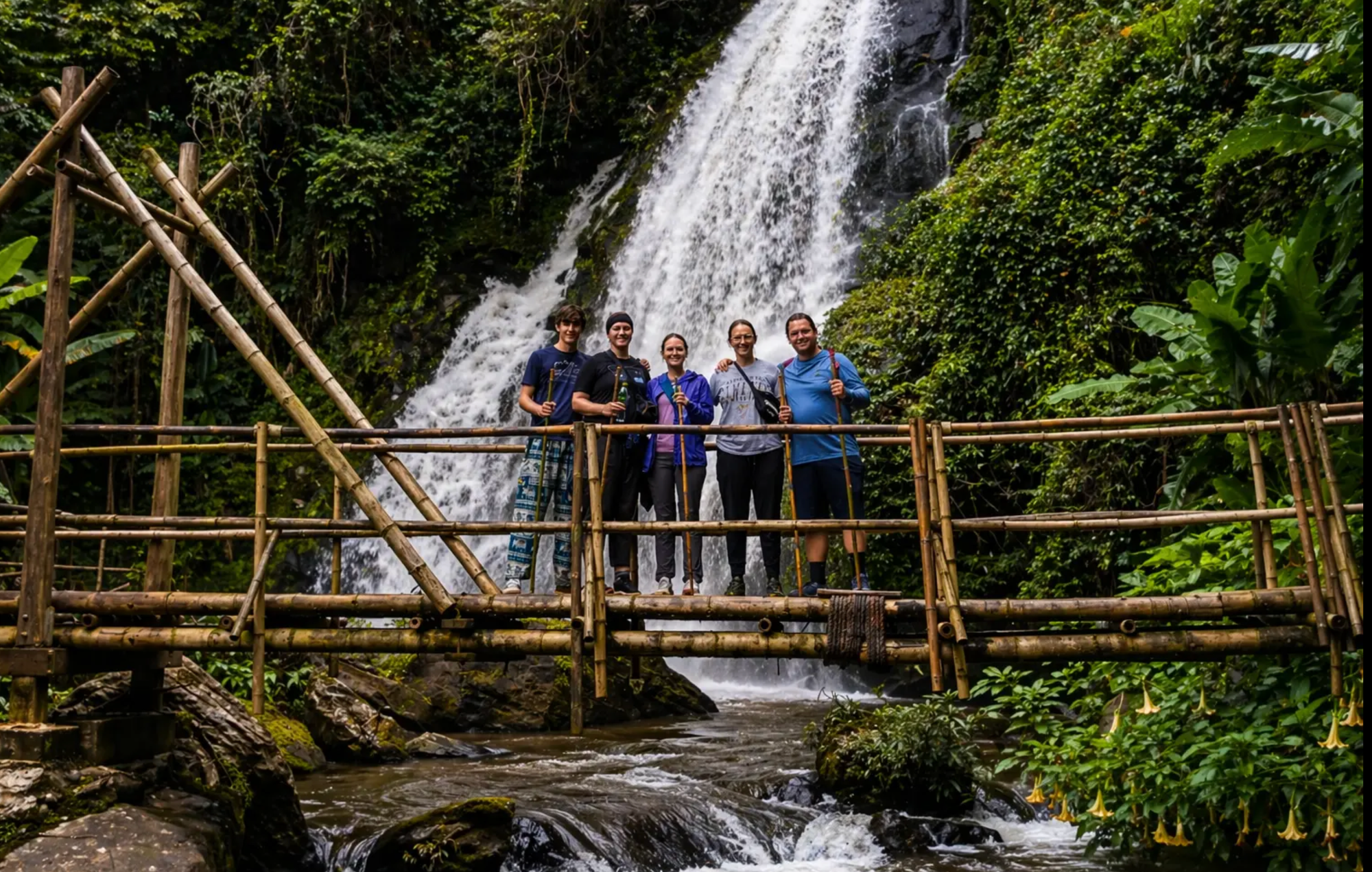
The most spectacular waterfall in the park. A powerful 80-meter drop with mist that sometimes creates rainbows in the afternoon sun. The viewpoint is 5 minutes from the parking lot on a short paved path, accessible to all fitness levels.
Time needed: 30 minutes
Best for photos: 10:00 AM to noon (sun lights up the spray)
This is the best photo stop of the entire day. Don't rush it. The amount of water depends on the season: massive in rainy season (June-October), still impressive but smaller in dry season.
2. Sirithan Waterfall
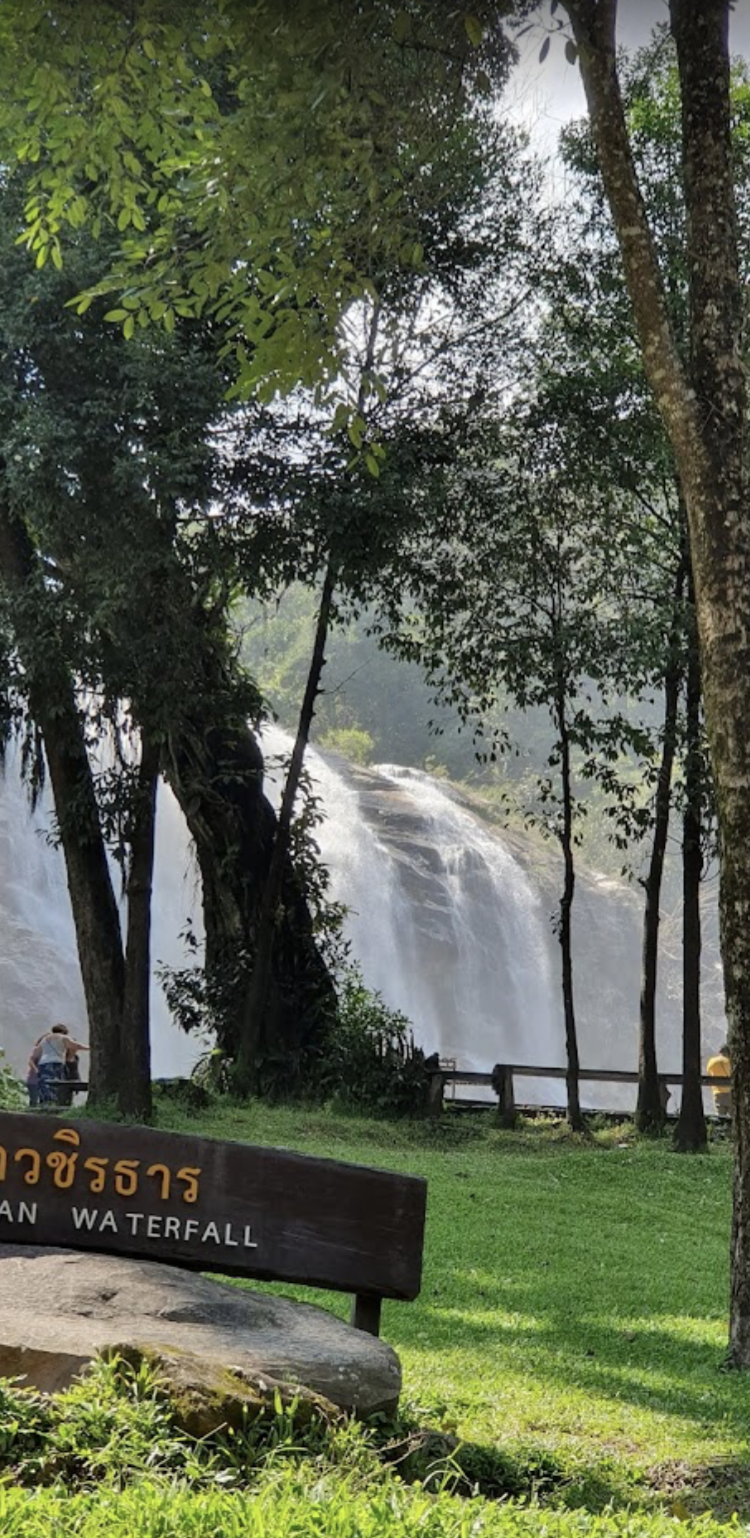
A smaller, more delicate cascade about 10 minutes further into the park. Less dramatic than Wachirathan but more accessible (you can walk closer to the base), and usually less crowded.
Time needed: 20 minutes
Best for: people who want a calmer waterfall experience without the crowds
Some tour itineraries skip Sirithan to save time. We recommend doing both if your schedule allows.
3. The Twin Royal Pagodas (Naphamethanidon and Naphaphonphumisiri)
Two massive chedis built for King Bhumibol's 60th birthday in 1987 and Queen Sirikit's 60th in 1992. They sit at around 2,100 m elevation with an enormous mountain garden between them.
The garden is the highlight, not the chedis themselves. Manicured flower beds, fountains, panoramic views of the surrounding peaks. In cool season, the air is genuinely cold (5-12°C). Plan to walk slowly because the altitude affects breathing if you're rushing.
Time needed: 1 to 1.5 hours
Entry: 100 THB additional to park fee
Best time: 11 AM to 2 PM (warmer, better light for photos)
The chedis are working religious sites, so the temple etiquette applies: shoulders covered, knees covered, quiet voices, no climbing.
4. The Summit (Highest Point in Thailand)
Doi Inthanon's summit at 2,565 m is the highest point in Thailand. There's a small stupa containing King Inthawichayanon's ashes, a viewing platform (often clouded in), and a famous road sign photo opportunity.
The honest truth: the summit itself is anticlimactic. There's no real "view" because the peak is surrounded by dense forest. It's mostly a photo stop for the bragging rights ("I was at the highest point in Thailand"). The views were better at the Twin Pagodas.
Time needed: 20-30 minutes
Best for: collectors of "highest point" achievements
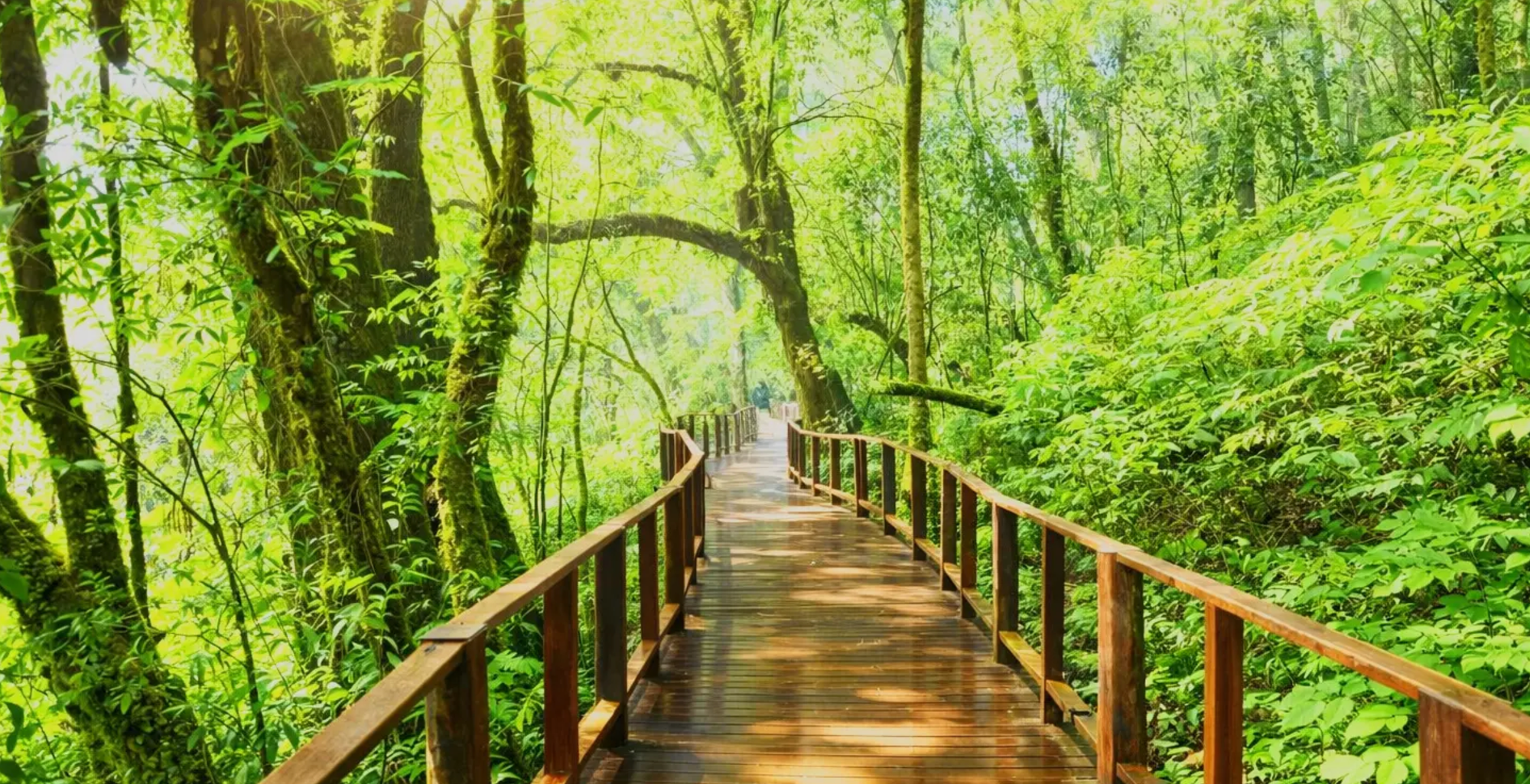
What's actually interesting at the summit area is the Ang Ka Nature Trail, a short raised wooden boardwalk through misty cloud forest with rare orchids, mosses, and bird species. 30 minutes of walking, easy fitness level. Don't skip this.
5. Karen Village + Pha Dok Siew Trail (Optional Extension)

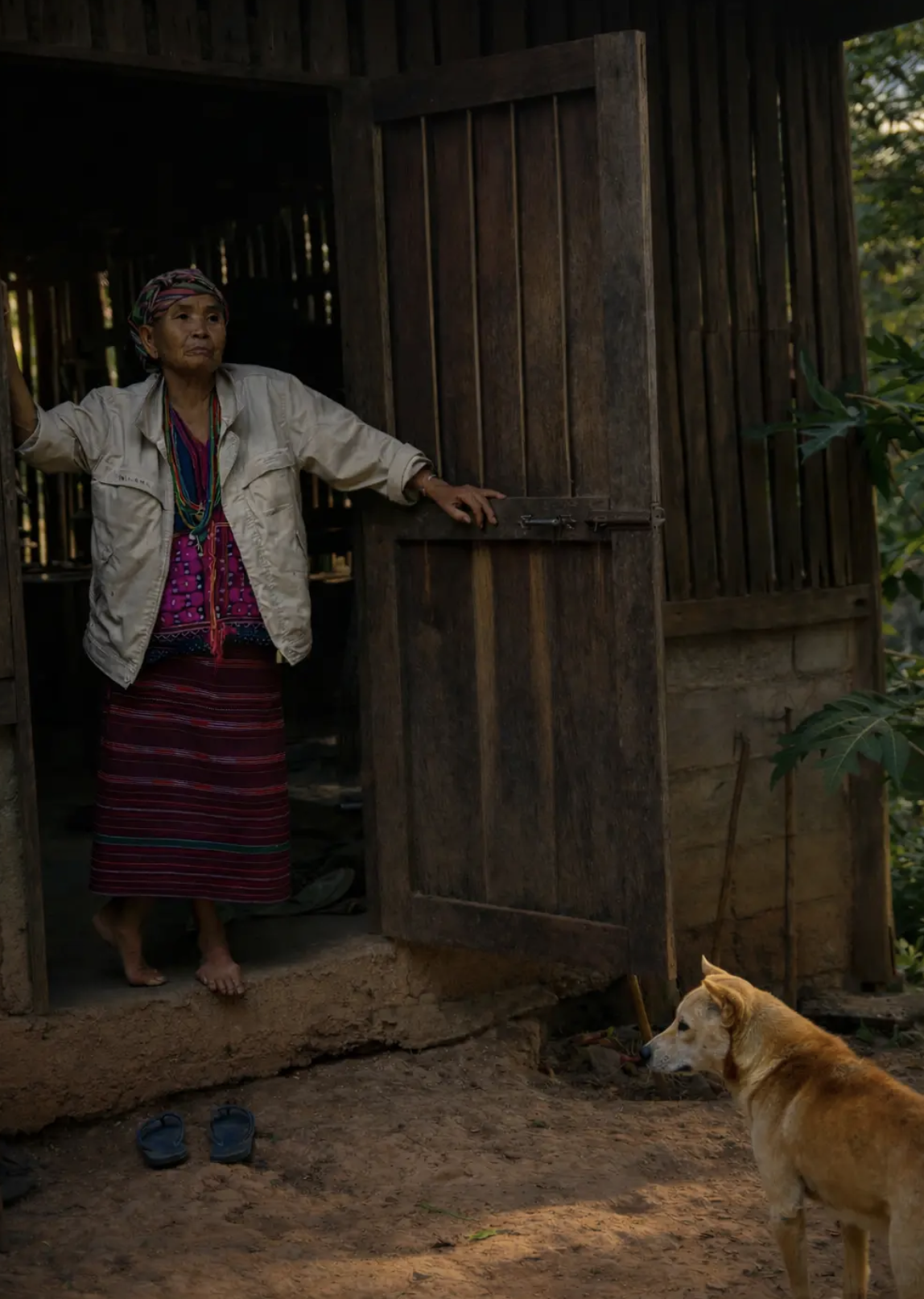
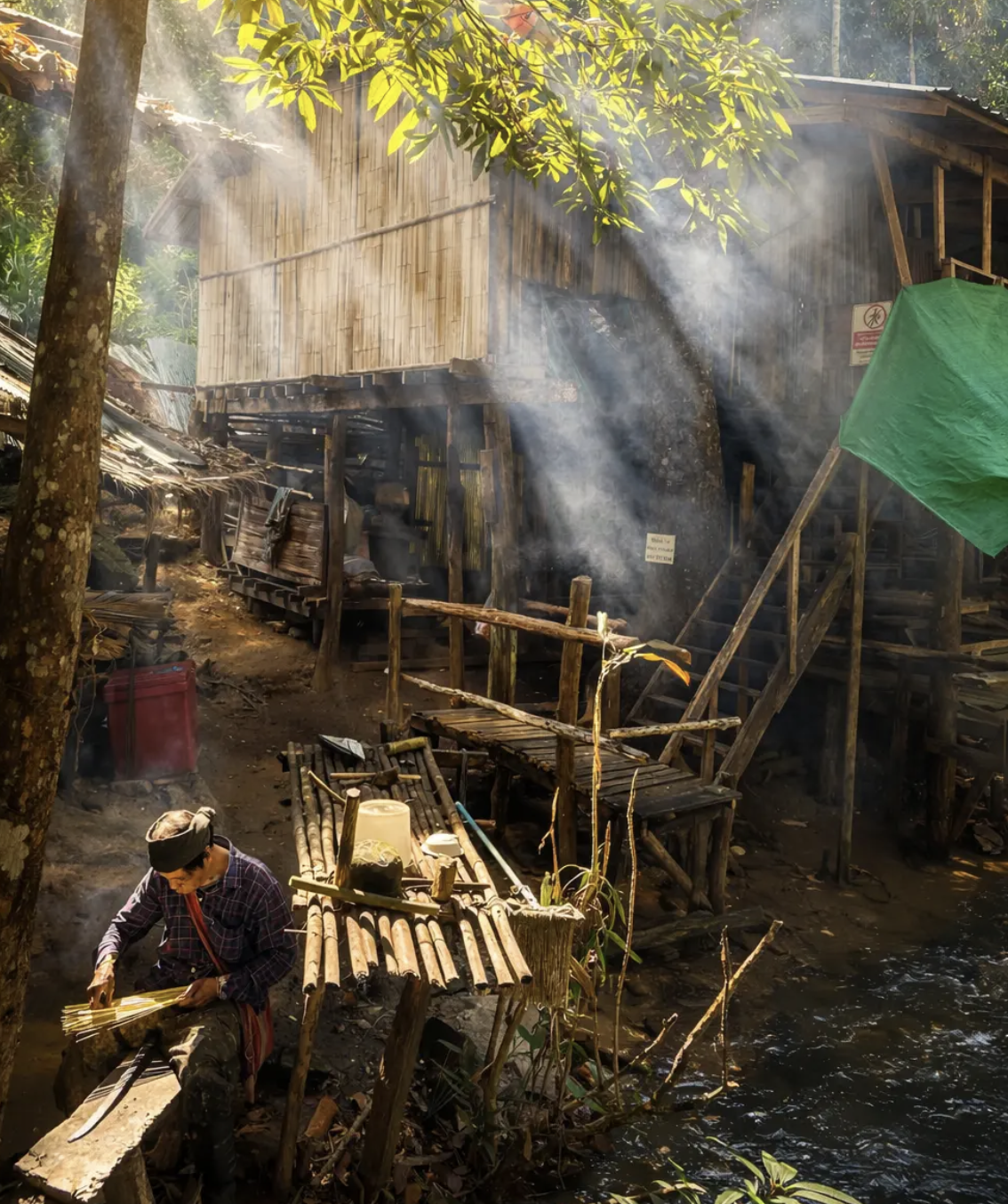
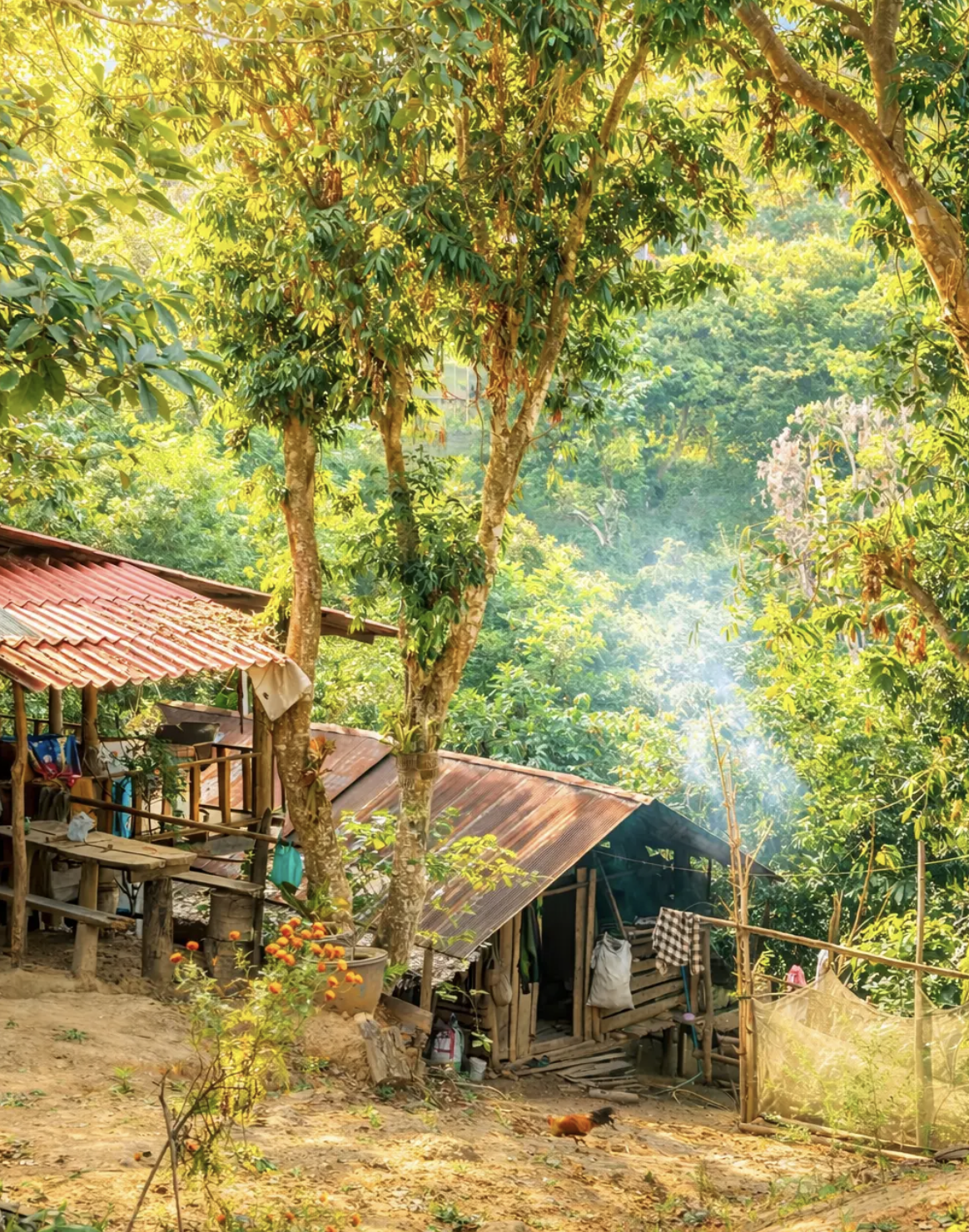
Pha Dok Siew Karen trail through rice terraces and tropical forest at Doi Inthanon
The Pha Dok Siew Trail is a 1-hour moderate hike through tropical forest, rice terraces, and small Karen waterfalls. It ends at a Karen ethnic village where you can buy local coffee, see traditional farming techniques, and learn about life at this elevation.
This trail requires a local Karen guide (mandatory for trail access, around 200-300 THB per person depending on group size). The guide is part of the experience: they explain the medicinal plants, the rice cycle, and answer questions about Karen culture.
Time needed: 1.5 to 2 hours including transport between trailheads
Best for: travelers who want depth beyond photo stops, slow travelers, anyone curious about ethnic communities in Northern Thailand
Skip if: you have mobility issues, hate hiking, or are running short on time
This is the best add-on to standard Doi Inthanon itineraries. Most rushed tours skip it. The slow travel approach includes it.
How to Visit Doi Inthanon (4 Real Options)
Four practical ways to do this day trip, ranked here by what you sacrifice and what you gain.
Option 1: Group Tour (Cheapest, Most Common)
A standard group tour picks you up at 7:30 AM, drives 90 minutes, hits the 4-5 main sites in 4-5 hours, lunch break, returns to Chiang Mai by 6 PM. Around 1,500 to 2,500 THB per person, group size 8-15 people.
Pros: cheapest, everything organized, no logistics stress
Cons: fast pace at each stop, group dynamics, less flexibility, mid-quality guides
Best for: budget travelers (Léo profile), solo travelers who want company, anyone short on time
The downside is real: at each stop, you have 15-30 minutes maximum while the guide hurries the group forward. The waterfalls and Twin Pagodas deserve more time than this. If you book a budget group tour, set expectations accordingly.
Option 2: Private Tour (Best Balance of Comfort and Cost)
A private guide and vehicle for the day, just you and your group (couple, family, friends). Around 3,500 to 5,500 THB total for the vehicle (not per person), which makes it cost-competitive for groups of 3-4.
Pros: flexible pace, you decide where to spend more time, better guide quality, comfortable AC vehicle, real conversations with your guide
Cons: more expensive for solo travelers, requires booking ahead in high season
Best for: families, couples, groups of 3-4 friends, anyone who wants depth over speed
This is our recommended option for first-time Doi Inthanon visitors. The price difference vs a group tour (about 1,500-2,500 THB more for a couple) buys you 3-4 extra hours at the right stops, much better photos, and a guide who'll actually answer your questions in detail.
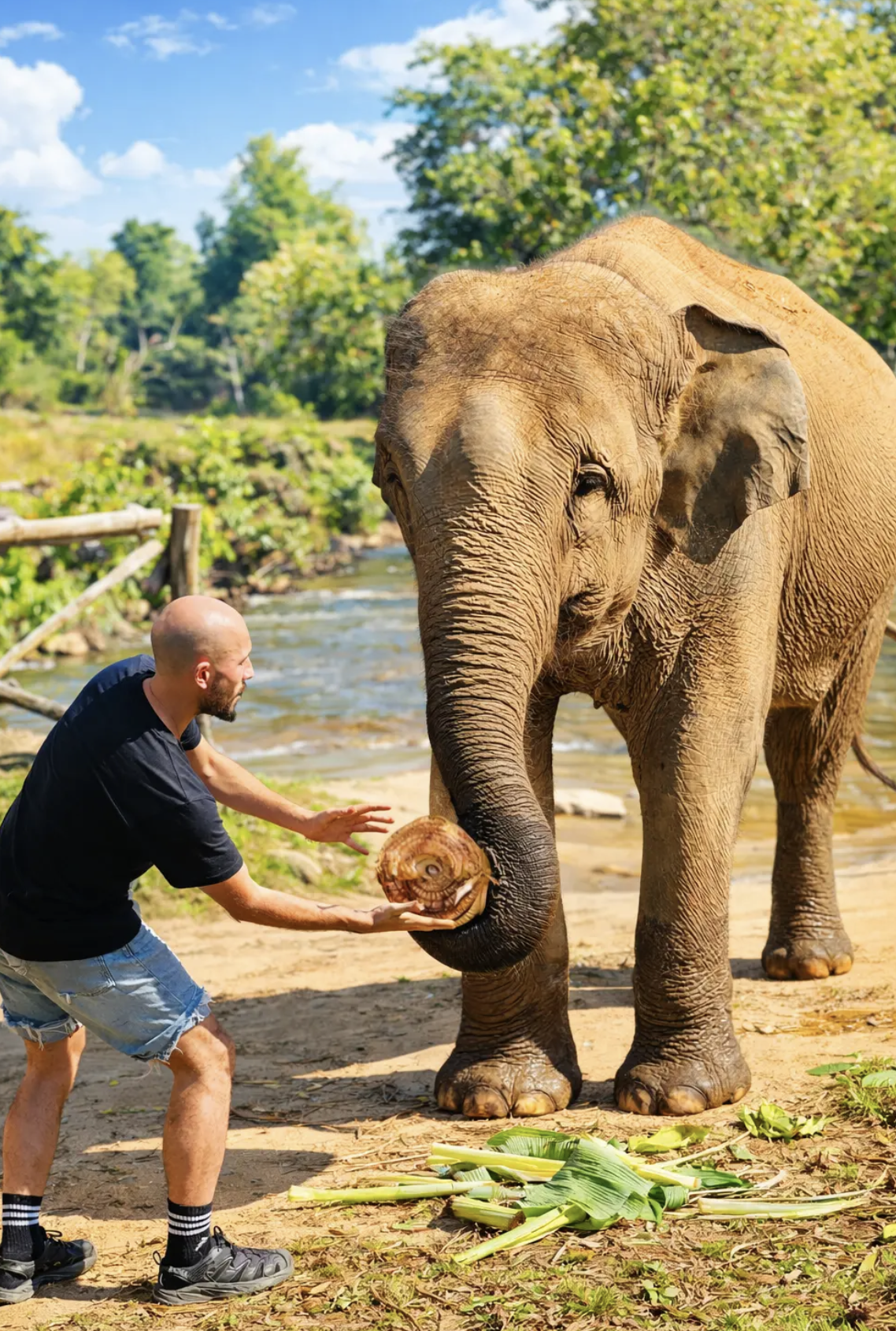
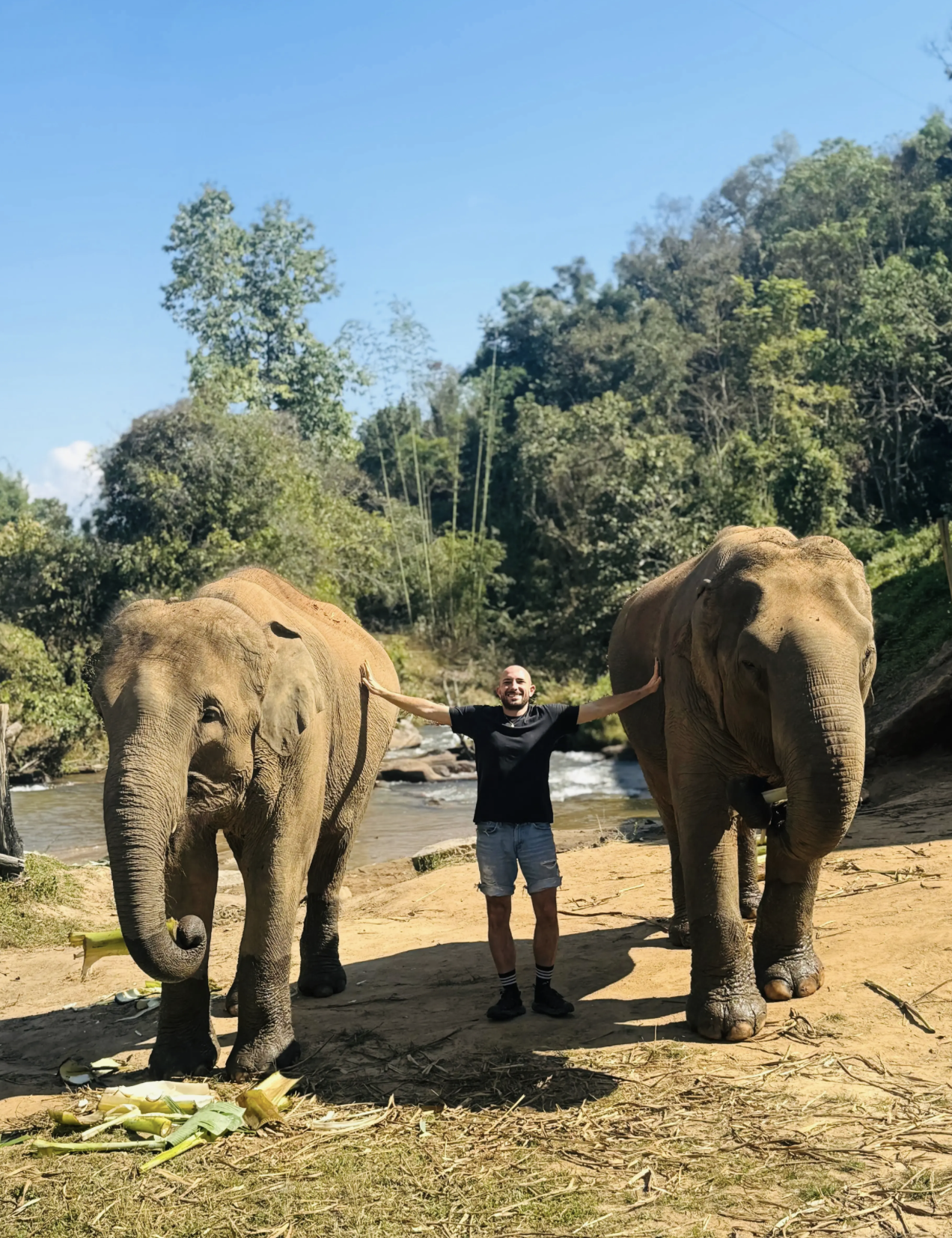
Feeding elephant near Doi Inthanon summit
Option 3: Combo with Ethical Elephant Sanctuary
The smart combo for travelers who want both Doi Inthanon AND an elephant experience without dedicating two days to it. A full 12-hour day starts at the ethical Joy Elephant Sanctuary (observation only, no riding, no forced bathing), then moves on to Doi Inthanon for the Twin Pagodas, summit, and Pha Dok Siew trail.
Around 2,500 THB per adult, 1,800 THB per child, 12h30 total, group size up to 25. The advantage: you efficiently combine two of the most-wanted experiences in Northern Thailand in one well-organized day. The ethical sanctuary respects our welfare standards (which we covered in detail in our Ethical Elephant Sanctuaries guide).
Bookable on Guidestination: Doi Inthanon + Ethical Elephant Sanctuary day tour.
Best for: travelers with only 3-4 days in Chiang Mai who want to maximize, families with kids 5+ years, slow travelers who want quality without sacrificing breadth.
Option 4: DIY (Scooter or Rented Car)
If you're comfortable with a long winding drive on Thai roads, renting a car for the day gives you total freedom. A small car rents for around 1,200-1,800 THB per day + gas (about 500-700 THB) + park entry (400 THB per person) + Twin Pagoda (100 THB).
Total cost for 2 people: around 2,800-3,400 THB.
Pros: complete flexibility, can leave at 6 AM to beat all the tour buses, stop anywhere you want, do the Karen trail at your own pace
Cons: 90 km of winding mountain road each way (4 hours of driving), parking logistics inside the park, you don't get local context
Best for: experienced drivers comfortable with Thai roads, return visitors who already know the park, photographers who want sunrise/sunset access
Don't rent a scooter for Doi Inthanon. The road is 90 km of mountain switchbacks, often with trucks and buses. Scooter accidents happen here regularly. The savings aren't worth the risk.
Best Time to Visit Doi Inthanon
When to go
- November to February (cool season): best window. Clear skies, comfortable hiking temperatures, no rain, full waterfalls. Cold at the summit (5-12°C) so bring layers.
- June to October (rainy season): green and lush, waterfalls at maximum power, fewer tourists, but trails can be muddy and views often clouded. Best for photographers wanting moody atmospheres.
When NOT to go
- March to May (burning season): smoke from agricultural burning fills the valley. AQI often exceeds 200. Views are hazy or absent, hiking is unpleasant due to smoke inhalation. Skip Doi Inthanon entirely in these months if you have any respiratory sensitivity.
Time of day matters
- Arrive by 8-9 AM: beat the tour bus groups (which mostly arrive 10:30-11:30 AM at the Twin Pagodas)
- Avoid weekends: Thai families come up on Saturdays and Sundays, parking is harder
- Avoid Thai public holidays: extreme crowds, expect 2x normal time at each stop
What to Wear (Don't Underestimate the Cold)
This is the #1 mistake first-time visitors make. Doi Inthanon is cold. Even when Chiang Mai is 28°C in the city, the summit can be 5-12°C in cool season, with strong winds.
Cool season (November-February) packing list:
- Long pants (definitely not shorts)
- Light jacket or fleece (essential for the summit and Twin Pagodas)
- Long-sleeved shirt or sweater
- Closed shoes (hiking shoes ideal for Pha Dok Siew trail)
- Hat or beanie (the wind at altitude is real)
- Light gloves (optional but nice)
- Sunscreen (UV intensity is high at altitude)
Rainy season (June-October):
- Rain jacket or poncho
- Quick-dry pants
- Waterproof shoes or sandals with grip
- Plastic bag for phone/camera
What's NOT needed:
- Heavy winter coats (it's not that cold)
- Hiking poles (trails are easy enough)
- Snake gaiters (the trails are well-maintained)
How Doi Inthanon Fits Into Different Itineraries
3-day Chiang Mai visit: only do Doi Inthanon if you really want it. It's a long day that eats one of your three days. Most slow travelers find that other day trips (like Mae Kampong) are better for short stays. We covered the slow travel alternatives in our 3 Days in Chiang Mai itinerary.
5-day Chiang Mai visit: Doi Inthanon fits well as day 3 or 4. The combo with ethical elephants works particularly well at this length.
7+ day Chiang Mai visit: Doi Inthanon is a must. You can dedicate a full day without feeling like you're sacrificing other activities. Add Doi Suthep on a separate day. Our Doi Suthep complete guide covers that.
With kids: Doi Inthanon works for kids 6+ years. The Twin Pagodas garden is fun, the waterfalls are impressive, the Karen village hike is doable. Avoid the long combo tours (12+ hours) for children under 8.
According to the Tourism Authority of Thailand (tourismthailand.org), Doi Inthanon National Park welcomes around 1.5 million visitors per year. The vast majority come during the cool season window, which explains why off-peak times (early morning weekdays) feel so much more peaceful than the average.
FAQ: Doi Inthanon Day Trip
How long is the drive from Chiang Mai to Doi Inthanon?
About 1h45 to 2h each way, depending on traffic and your pickup point. The route is mostly highway with a winding mountain section in the final 30 km.
Can I do Doi Inthanon in half a day?
Not really. The park is too far from Chiang Mai to justify a half-day visit. The minimum useful day is 8 hours, the standard is 10-11 hours, and the combo tours run 12 hours. If you only have 4-5 hours, do Doi Suthep + Wat Pha Lat instead.
Is Doi Inthanon worth it?
For most visitors, yes. The waterfalls and Twin Pagodas are genuinely impressive, and the Pha Dok Siew Karen trail adds cultural depth that elevates the day beyond typical photo stops. For travelers who hate van rides, prefer slow travel, or are short on time, Mae Kampong is a smaller-scale alternative that delivers similar mountain vibes in half the time.
How much does Doi Inthanon cost in total?
For 2 adults doing a private tour with everything included:
- Private tour vehicle: ~4,500 THB
- Park entries (2 adults): 800 THB
- Twin Pagoda entries (2 adults): 200 THB
- Karen trail guide: ~400 THB
- Lunch (2 people): ~600 THB
- Total: around 6,500 THB for a private day trip for 2 people
For 2 adults doing a group tour: around 4,500-5,500 THB total.
What's the difference between the King's and Queen's pagodas?
The King's Pagoda (Naphamethanidon) is dedicated to King Bhumibol's 60th birthday (1987). The Queen's Pagoda (Naphaphonphumisiri) is dedicated to Queen Sirikit's 60th birthday (1992). They're architecturally similar but the gardens between them have different flower selections. Walk through both, don't pick one.
Can I see snow at Doi Inthanon?
No. Thailand doesn't have snow. The lowest recorded temperature at the summit is around 0°C, sometimes with frost early in the morning during cold snaps (rare, in January). But no snow.
What animals can I see at Doi Inthanon?
Doi Inthanon hosts over 360 bird species (best birding in Thailand), small mammals (mongoose, civets), and rare orchids and butterflies. Don't expect to see large mammals on a regular day trip. Serious birders book multi-day birding tours with binoculars.
Are there restrooms at Doi Inthanon?
Yes, at every major stop (Wachirathan, Twin Pagodas, summit area). Usually 3-5 THB to use, bring tissue paper just in case.
Final Word: Doi Inthanon Done Right
The mountain rewards travelers who slow down. Take 45 minutes at Wachirathan instead of 15. Walk both pagoda gardens, don't just photograph from the parking. Do the Pha Dok Siew Karen trail. Eat lunch with mountain views instead of in a rushed restaurant.
A bad Doi Inthanon day is exhausting and forgettable. A good one is one of the best memories you'll have from Northern Thailand. The difference is mainly in how rushed you are at each stop.
Choose a tour format (private or small group) that gives you time. Skip the commercial detours. Wear warm enough clothes. And bring a real camera if you have one, the photo opportunities at the Twin Pagodas and Wachirathan deserve more than a phone shot.
If you want help fine-tuning the itinerary for your dates, group size, or specific interests (photography, hiking, ethical animal experiences), drop us a comment. We'll respond with specifics.
Team note: article updated May 2026. Prices, fees, and durations reflect what was observed at the time of writing and may vary. Always check current information at the park or activity page when booking.