

Reading time : 9 min | Updated : April 2026
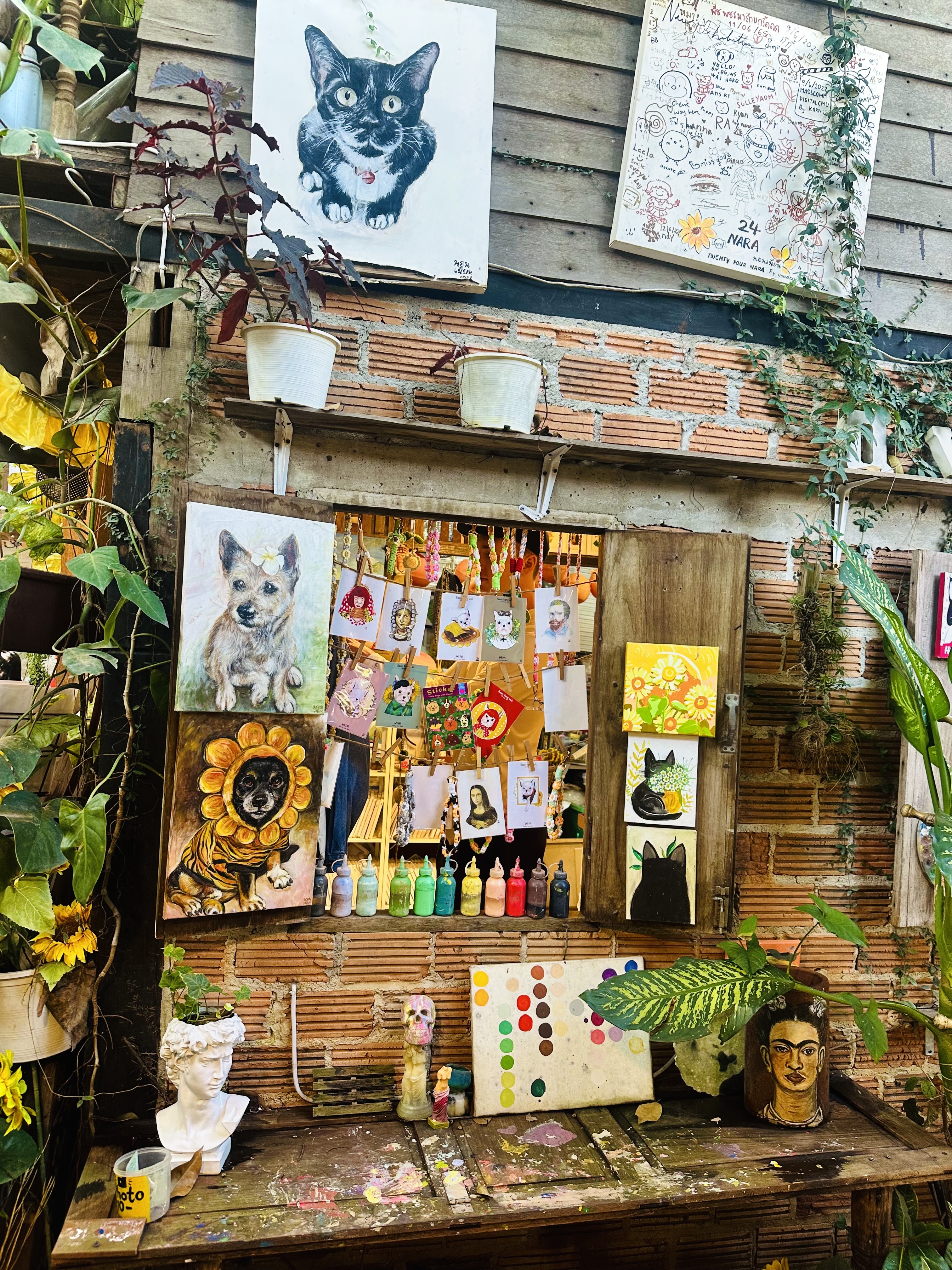
There is a street in Chiang Mai where the sound of hammers on silver starts around eight in the morning and does not stop until evening. Not a performance. Not a demonstration set up for visitors. Just work, the same work that has been done on Wua Lai Road since the 13th century, when King Mangrai brought silversmiths from Bagan to teach the craft to the residents of his new Lanna capital.
This is what makes Chiang Mai's craft scene different from what you find in most cities. The tradition is not archived. It is in use. The silversmiths, woodcarvers, lacquerwork painters, and weavers operating in and around Chiang Mai today are the direct successors of a Lanna artistic culture that developed its own distinct visual language across seven centuries. Understanding that history changes how you experience the work and what you take home from it.

The Lanna Kingdom and Why It Matters for Craft
The Lanna Kingdom ruled northern Thailand from 1296 to the late 18th century. During its golden age in the 14th and 15th centuries, it was a major centre of Buddhist scholarship and artistic production, drawing craftspeople from Burma, Yunnan, and the hill communities of the surrounding highlands.
What came out of that confluence was a visual tradition that is immediately recognisable once you know what to look for. The curvilinear decorative patterns on temple gables. The particular way Lanna woodcarvers render the sacred Bodhi tree in relief. The weight and texture of northern Thai silverwork compared to the lighter, more ornamental silver of central Thailand. These are not variations on a common style. They are a distinct artistic language that developed in geographic and cultural isolation from Bangkok for centuries.
As National Geographic documented in their deep dive into Chiang Mai's craft scene, the city's artisans continue the Lanna creative legacy today, respecting their heritage while adapting for contemporary life. That balance, between preservation and living practice, is exactly what makes the workshops here worth seeking out.

Silversmithing : Seven Centuries on Wua Lai Road
The story of Chiang Mai silver starts in 1296. King Mangrai, founder of the Lanna Kingdom, negotiated with the city of Bagan in Burma to bring skilled silversmiths to Chiang Mai. They settled in what is now the Wua Lai Road district, south of the Old City, and established workshops that have been in continuous operation ever since.

The technique they brought with them involves working directly with sterling silver sheet. The metal is cut, sized, heated, formed, soldered, textured, and polished entirely by hand. There are no shortcuts in traditional Lanna silversmithing. A single piece can take days. The patterns used on ceremonial objects reference Buddhist iconography and Lanna decorative motifs that have been in use for centuries.
The most dramatic monument to this tradition is Wat Sri Suphan, also called the Silver Temple, which sits on Wua Lai Road and is covered almost entirely in hand-worked silver panels. Local silversmiths began the project in 2008 and completed it in 2016, creating what is believed to be the world's first silver ordination hall. Visiting the temple before or after a workshop gives the craft an architectural context that makes the whole thing more legible.
The silver ring workshop available in the Wua Lai area takes the core silversmithing process and distils it into a two-hour session accessible to complete beginners. You start with a sheet of nickel-free sterling silver, choose from more than twenty traditional and contemporary designs, size and cut the band, solder the join with a torch, shape it on a mandrel, add texture through hammering, and polish to a finish. The ring you leave with was made by your hands using the same fundamental techniques that have been practiced in this neighbourhood for seven centuries.

Wood Carving : Reading the Temples Through Your Hands
Walk into any of Chiang Mai's major temples and you are surrounded by wood carving. The gilded panels above doorways. The decorative gables with their mythological figures. The manuscript cabinets with their lacquer and inlay. The carved shutters of the assembly halls. All of it is Lanna woodcarving, and all of it follows visual systems that were codified during the kingdom's golden age.

The primary wood used historically was teak, which grows in abundance in the forests of northern Thailand and is dense enough to hold fine detail across centuries. Rosewood and camphorwood are also used for smaller pieces. The carving itself divides into three types: bas-relief, which is flat and primarily decorative; deep-relief, which has genuine three-dimensional depth; and round-relief, which includes sculpture carved on all sides. Buddha images are the main example of round-relief work, and a single large piece can take months or years to complete.
Baan Tawai village, about 15 kilometres south of Chiang Mai, has been the centre of professional woodcarving production in the region for decades. Some of the craftsmen there have been working in the Lanna tradition for more than 40 years. The village exports carved pieces internationally and its reputation for quality has given it recognition as one of Thailand's official handicraft villages.

The wood carving workshop and cultural discovery session in Chiang Mai brings this tradition into a two-hour hands-on format. You work with real tools on real wood, following the basic movements that underlie every piece of Lanna decorative carving, and the session includes explanation of the cultural meaning behind the patterns you are learning to make. That context is the part most craft workshops skip. Walking through Wat Chedi Luang after doing this class produces a noticeably different experience than walking through it before.

Lacquerware : Gold on Black, a Specifically Lanna Art
Lanna lacquerware is one of the most visually distinctive crafts from the north and one of the least-known outside Thailand. The process involves applying layers of black lacquer, derived from the sap of the Melanorrhoea usitata tree, to a bamboo or wood base. Each layer must dry completely before the next is applied. The final surface is then carved or painted with Lanna-style decorative patterns and sometimes highlighted with gold leaf.
The objects produced historically were ceremonial: offering trays, scripture boxes, royal containers. Today the craft extends to decorative objects of all kinds, and several workshops along the San Kamphaeng Road east of the city still produce lacquerware using traditional methods. The finished pieces have a depth of colour and surface that is genuinely unlike anything made with synthetic materials.
Lai Thai Painting : The Pattern Language of the Temples
Lai Thai is the formal decorative pattern system that appears across Thai temple architecture, manuscript illustration, and ceremonial textiles. The curvilinear forms, the symmetrical arrangements, the intricate repetition of leaf and flame motifs, represent one of the most disciplined visual languages in Southeast Asian art.
Learning to draw Lai Thai patterns by hand takes the craft from something you observe on temple walls into something you understand from the inside. The workshops available in Chiang Mai teach the system step by step, from basic structural forms through to colour and detail, and the result is both a finished artwork and a working understanding of the visual grammar behind almost everything you see in a Lanna temple.

The Sunday Walking Street : Where to See It All Together
Every Sunday evening, Wua Lai Road closes to traffic and becomes the city's best craft market. Silversmiths, woodcarvers, textile weavers, lacquerwork artists, and Lai Thai painters all set up stalls along the street. The quality is higher than the tourist night markets, the prices are more reasonable, and the people selling the work are often the people who made it.
The Saturday evening market is also worth noting. Wat Sri Suphan stays open until around 9:30pm to coincide with the Wua Lai Night Market, and the combination of the silver temple lit at night and the craft stalls below it is one of the more genuinely atmospheric experiences available in Chiang Mai.
What to Know Before You Go
Workshops fill up. The better ones have small group sizes, and the silversmithing sessions in particular fill their slots days in advance during peak season from November to February. Book two to three days ahead at minimum.
Morning sessions are better for concentration. Silversmithing and woodcarving require focus and good light. Afternoons work for Lai Thai painting and herbal workshops, which are more meditative in pace.
The Wua Lai Road area is walkable from the Old City. About 15 minutes on foot from Tha Phae Gate, or five minutes by tuk-tuk. The Saturday and Sunday markets are busiest from 5pm onwards.
What you make is the souvenir. The ring, the carved panel, the painted artwork, these are more honest representations of Chiang Mai than anything you could buy in a night market, and they cost about the same or less.
FAQ
What is Lanna craftsmanship ? Lanna refers to the culture and artistic tradition of the Lanna Kingdom, which ruled northern Thailand from 1296 until the late 18th century. Lanna craftsmanship encompasses silversmithing, wood carving, lacquerware, textile weaving, and decorative painting, all of which developed distinctive visual styles that differ from central Thai artistic traditions.
Where is the best place to see traditional crafts in Chiang Mai ? Wua Lai Road for silversmithing, with Wat Sri Suphan as the most dramatic example of the tradition in architectural form. Baan Tawai village for woodcarving. The San Kamphaeng Road area east of the city for lacquerware, textiles, and umbrella making.
How long do craft workshops take in Chiang Mai ? Most workshops run between two and three hours. Silversmithing and woodcarving are typically two hours. More complex sessions, such as multi-day woodcarving courses offered at specialist studios, can run over several days.
Is prior experience needed for craft workshops in Chiang Mai ? No. All workshops listed are designed for complete beginners. The instruction is in English, materials are provided, and the pace is set by the group rather than a fixed schedule.