
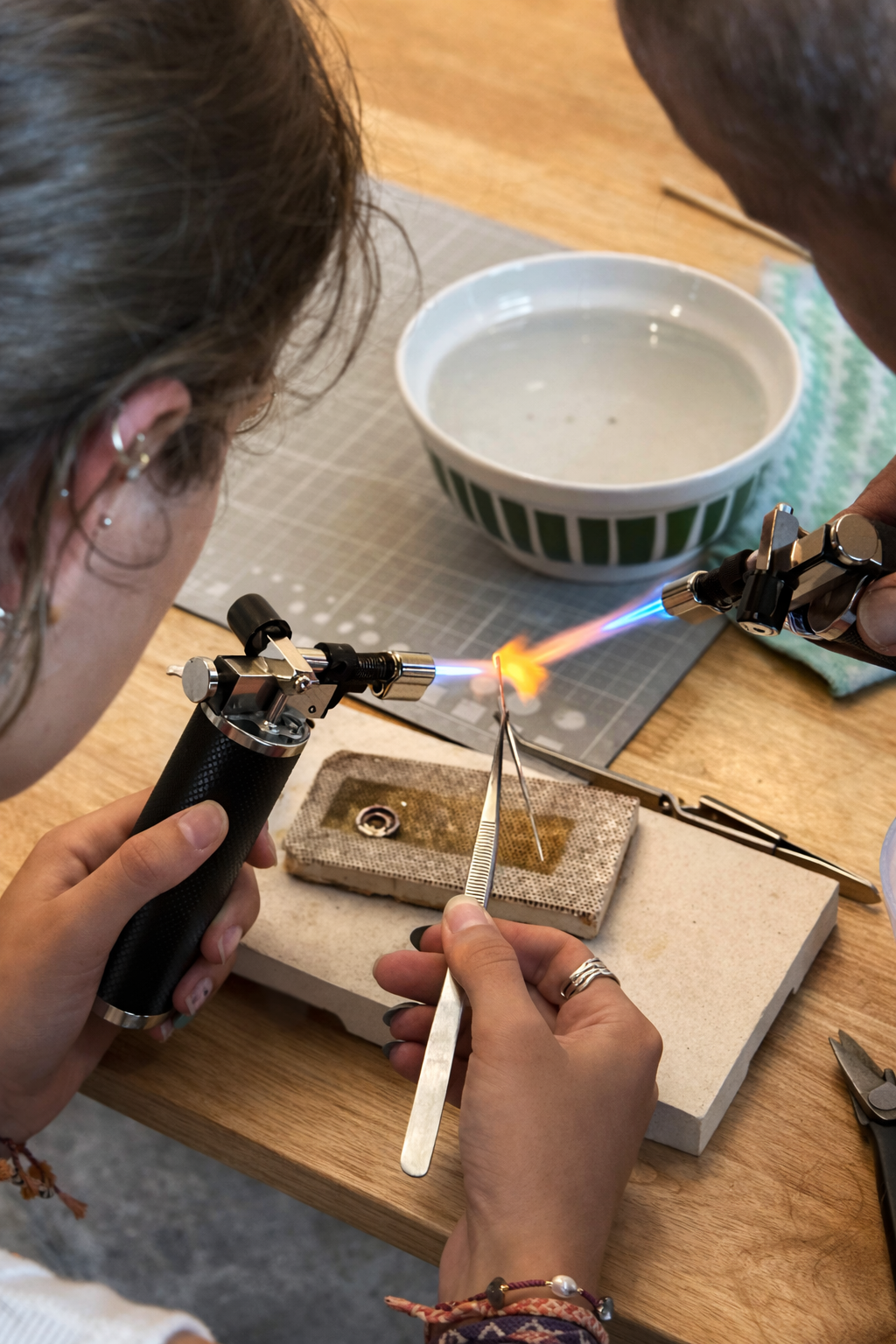
Most souvenirs from Chiang Mai are things you bought. A silver ring you made yourself is something else: you can point at the slightly uneven hammer mark and say exactly how it got there. The city happens to be one of the few places in the world where you can learn this from people whose families have been doing it for generations, and a beginner workshop costs less than a nice dinner. Here is what the three options actually involve, and which one suits which kind of traveller.
Why Chiang Mai, and why Wua Lai Road
Silver here is not a tourist invention. South of the old city walls, Wua Lai Road has been the silversmiths' quarter for generations, and the craft is still worked in small shophouses along the same street and its sois.
The clearest evidence sits at the top of the road. Wat Sri Suphan, the temple the silversmith community built, has an ordination hall clad in silver, aluminium and nickel, a project the local artisans began in 2004 using their own trade skills. The Bangkok Post's account of the silver temple covers how the community rebuilt it.
One practical note before you go, because it surprises visitors: women are not permitted inside the silver ubosot. A sign in Thai and English at the entrance states the rule, which follows long-standing local belief. The rest of the complex is open to everyone, and the exterior panels are the part most people photograph anyway. If temples are a big part of your trip, our guide to Chiang Mai's Lanna temples covers the ones worth your time.
On Saturday evenings the same street becomes the Saturday Walking Street, with silverwork among the stalls. The Nation's piece on the Silver Temple and Wua Lai Walking Street is a good primer if you want to pair the two.

What actually happens in a beginner workshop
People picture something closer to a craft kit. It is not that. Even the short classes use the real sequence, and it is worth knowing the five steps so the day makes sense:
- Measure. Your finger is sized first, because everything after depends on it.
- Anneal. The silver is heated with a torch until it softens enough to bend. Cold sterling silver fights you.
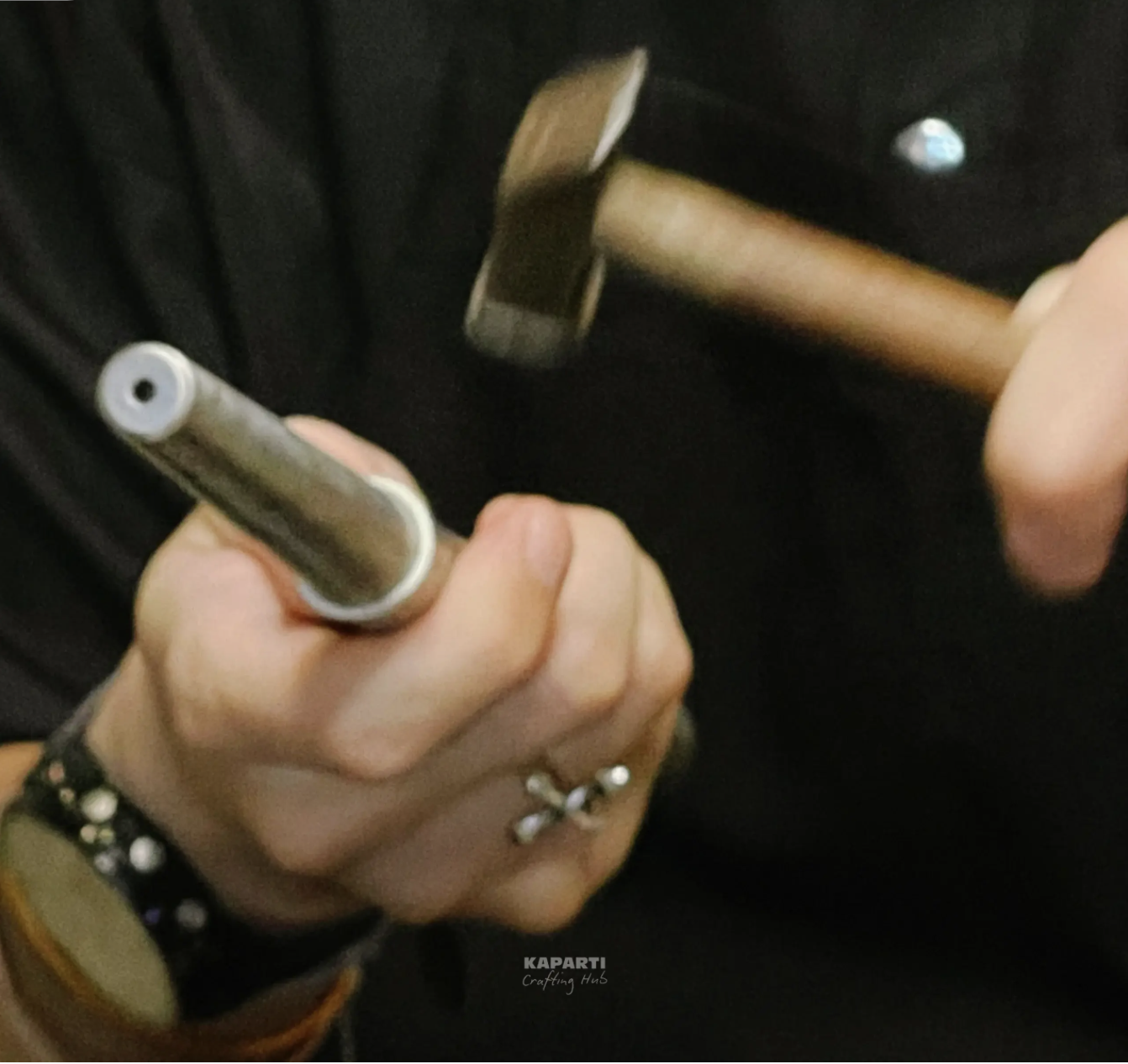
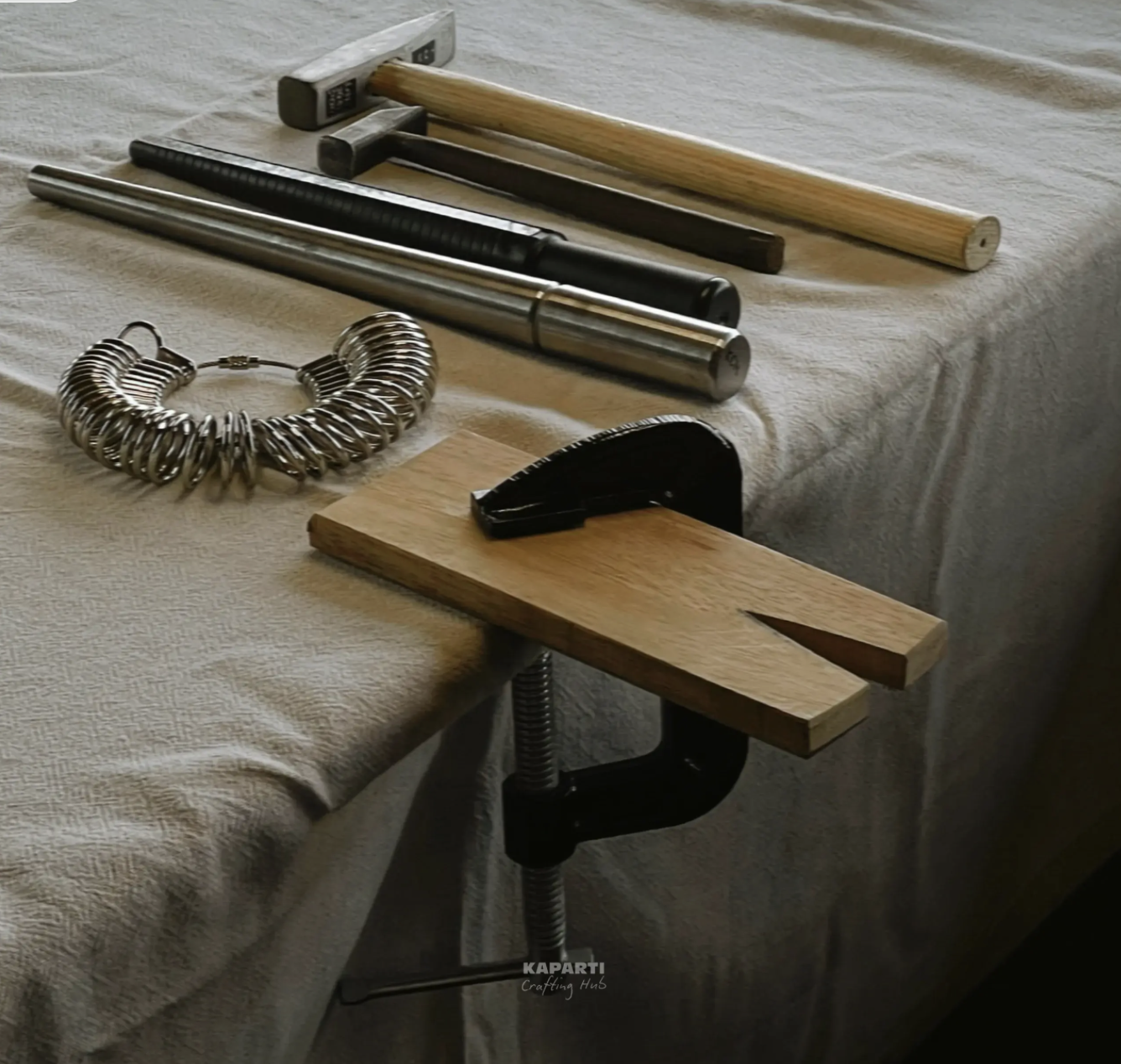
- Shape. You work the metal around a steel ring mandrel, tapping it into a circle.
- Solder. The two ends are joined with heat. This is the step that feels like real metalwork.
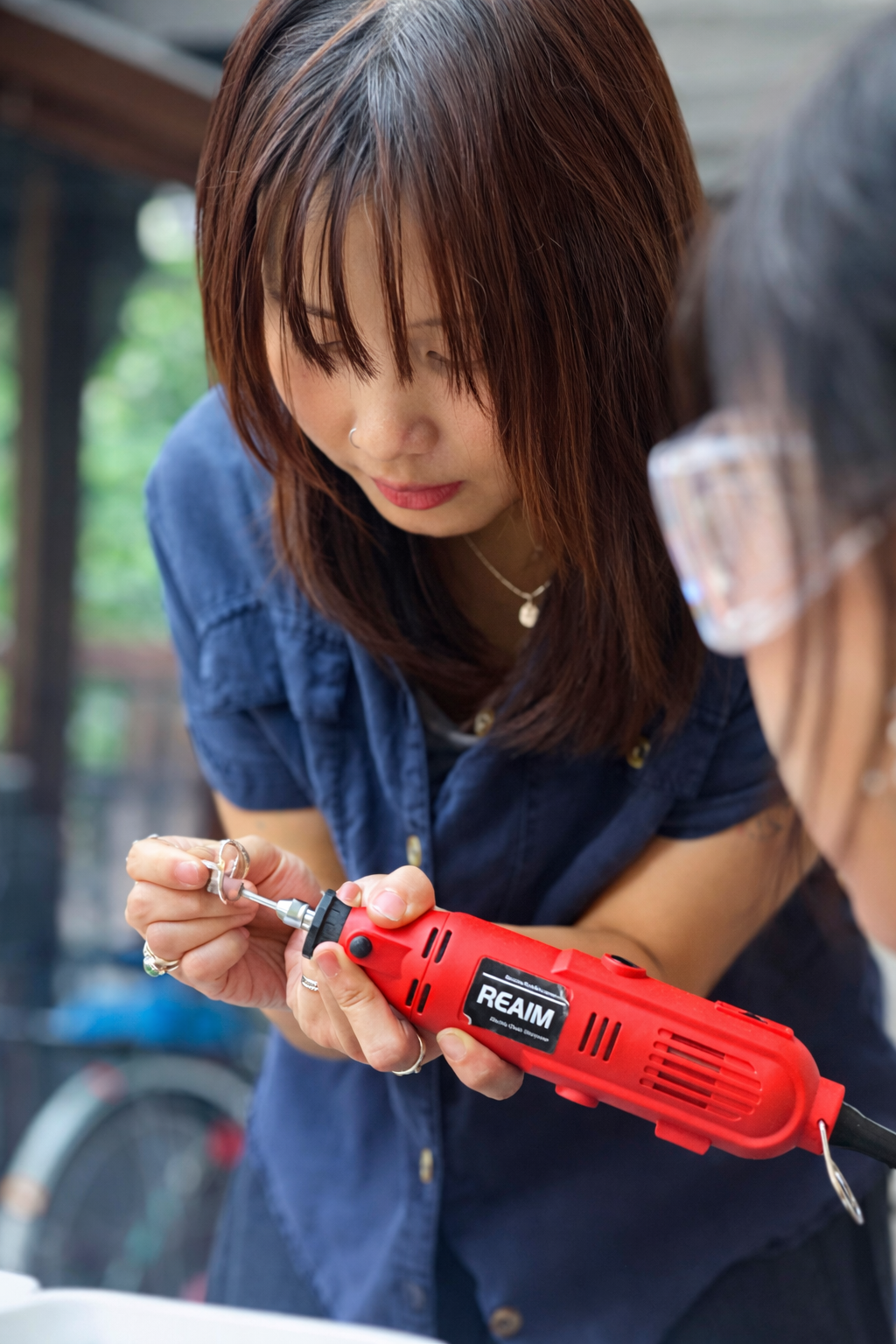
- File and polish. The longest part, and the one that decides whether the ring looks handmade or homemade.
A torch and sharp hand tools are involved at every one of these places, which is why the age limits below are firm rather than suggestions.
One piece of jargon worth knowing, because every studio uses it. Sterling silver is 925, meaning 92.5 percent pure silver and 7.5 percent other metal, usually copper. Pure silver is too soft to hold a ring shape, so the copper is what makes the piece wearable. It is also what makes silver tarnish, which is normal and reversible rather than a defect. The Wua Lai Road workshop works in recycled 925, and the Old City studio's alloy is nickel free, which is the detail to look for if costume jewellery ever turned your finger green.
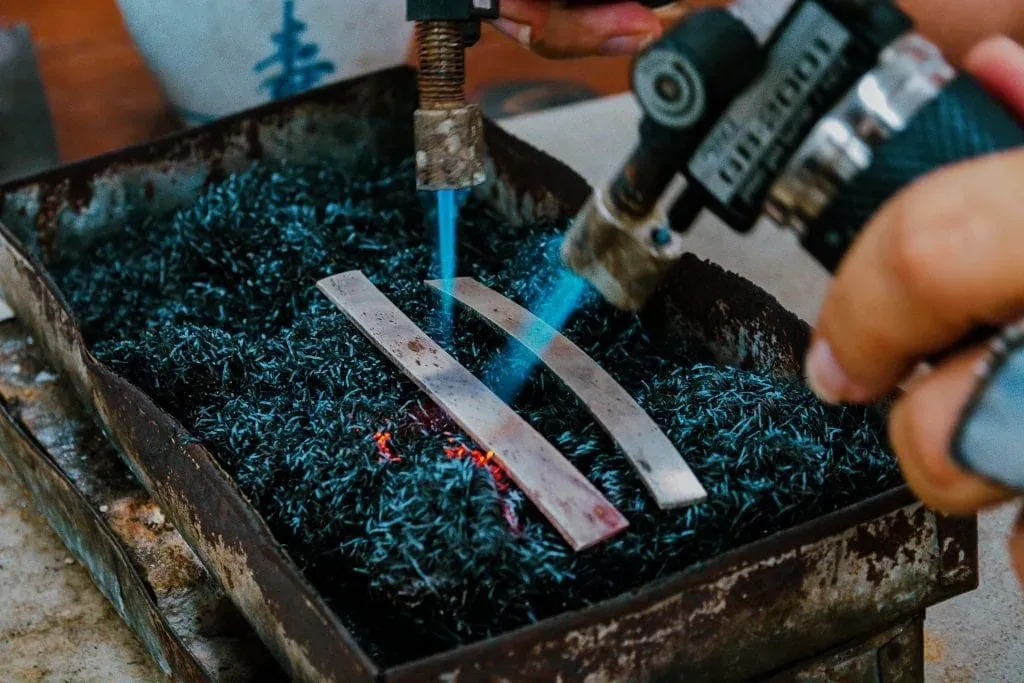
The three workshops
Ninety minutes on the silver street
The shortest of the three, and the only one actually on Wua Lai Road. Ninety minutes, up to six people, ฿2,590 per person.
You pick a silver profile, then personalise it with hand stamping, surface texture or a twisted design before annealing, shaping and soldering. The silver is recycled 925 sterling.
What stands out is what comes after the class. Alongside the tools, materials and silver allowance, you get a certificate card and complimentary lifetime polishing and resizing. Silver tarnishes and fingers change size, so a standing offer to fix both is more useful than it sounds. Gemstone setting and laser engraving are available at extra cost. A drink and parking are included.
Minimum age is 15, the highest of the three.
Two hours, four people, twenty designs
Inside the old city walls. Two hours, ฿2,250 per person, and the smallest group of the three at a maximum of four.
You start from a flat sheet of silver rather than a pre-formed profile, which means you do more of the shaping yourself: measuring, soldering, forming, texturing and polishing. There are over twenty signature designs to choose from, so there is a middle ground between a plain band and designing something from nothing. The silver is nickel free, which matters if you react to costume jewellery.
Optional extras afterwards include flush-set gemstones and laser engraving in a range of fonts, for a date or a word.
Ages 12 and up. The studio is explicit that it is not suitable below that because of the sharp hand tools and the jeweller's torch.
A full day at a master's bench
The serious one. Just east of the old city, running 10:30 to 16:30 with an hour for lunch, up to six people, ฿5,000 per person.
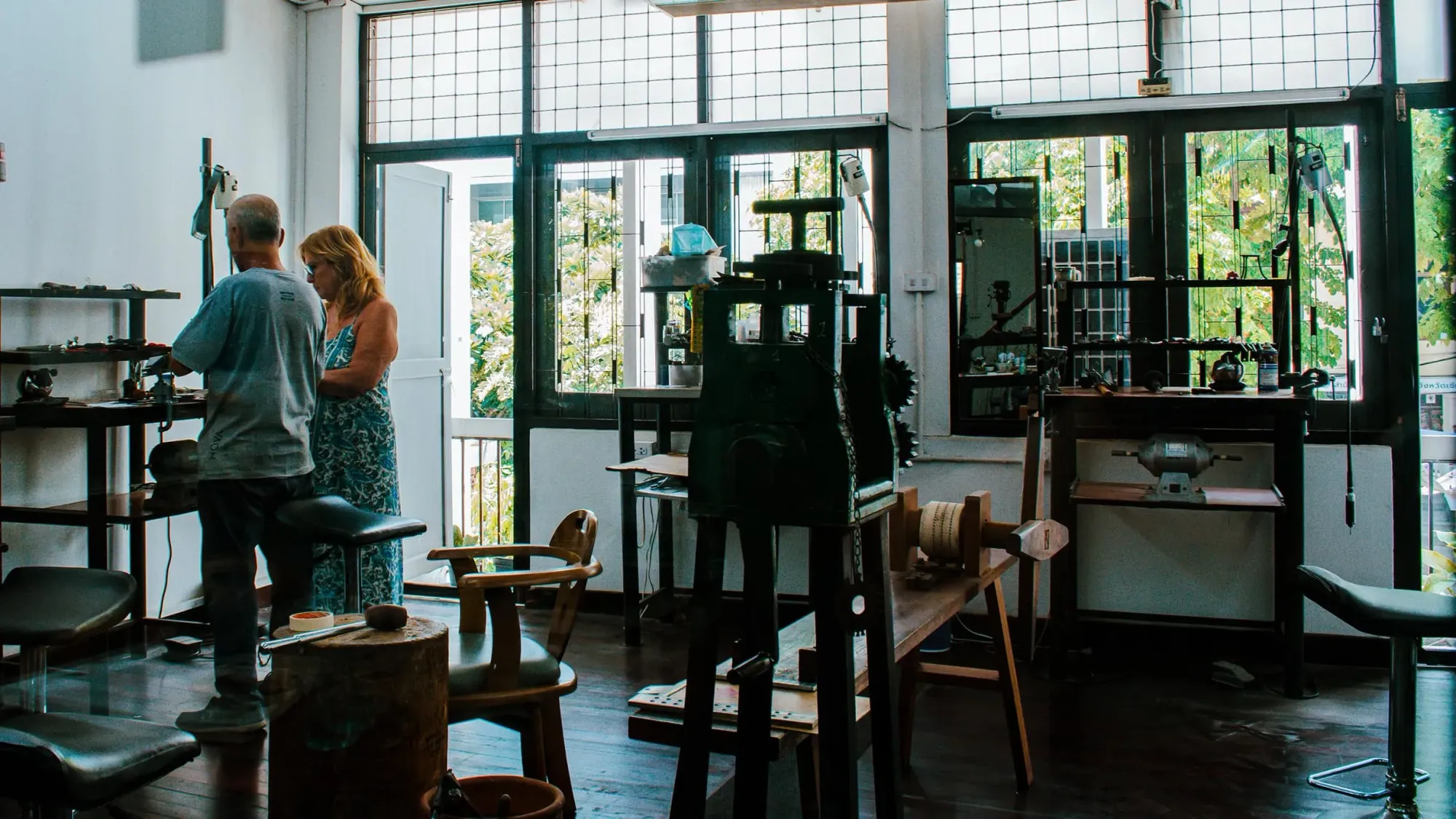
The difference is not just length. You start with a sketch rather than a catalogue, and you can make a pendant instead of a ring. Your instructor has more than thirty years at the bench and works the way independent studios actually work: demonstrate the step, hand over the tools, let you go at your own pace, step in when you need it. Over a day you saw, file, shape, solder, hammer in texture if you want it, then sand and polish.
Two things to budget for. Lunch is not included (there are cafés all around), and the sterling silver is charged separately by the gram, so the ฿5,000 covers tuition, tools and the bench, while the metal depends on what you make. A chunky ring costs more in silver than a slim band.
Ages 12 and up. Most guests finish one piece in the day.
Which one should you book
| Ninety minutes | Two hours | Full day | |
|---|---|---|---|
| Length | 90 minutes | 2 hours | 10:30 to 16:30 |
| Price per person | ฿2,590 | ฿2,250 | ฿5,000 plus silver by weight |
| Group size | Up to 6 | Up to 4 | Up to 6 |
| Minimum age | 15 | 12 | 12 |
| Where | Wua Lai Road | Inside the old city | East of the old city |
| Start from | A silver profile | A flat sheet, 20+ designs | Your own sketch |
| Also makes | Rings | Rings | Rings or pendants |
| Notable | Lifetime polishing and resizing | Nickel free, smallest group | 30+ years at the bench |
Prices move with promotions, so treat them as indicative.
If you have a spare morning and want the experience more than the technique, ninety minutes at a bench on Wua Lai Road itself is the one to take. Being on the silver street is part of it, and you can walk up to the temple afterwards. The lifetime resizing quietly makes it the best value of the three.
If you are travelling with a teenager, or you react to cheap metal, the nickel-free class is the one. Four people to one instructor is close to private tuition, and it is the cheapest of the three despite running longer than the ninety-minute class.
If you already know you enjoy making things, the full day is not an upsell, it is a different activity. Starting from your own sketch instead of a design sheet is the line between following instructions and actually designing something. It is also the only one where you can make a pendant.
Group sizes here are four to six people, not twenty. Slots go early in high season, and booking ahead is what secures the seat rather than just saving you a walk.
Before you go
- Get your ring size measured first, ideally at the studio rather than from memory. Fingers swell in the heat, and a ring sized on an August afternoon in Chiang Mai fits differently in a European winter.
- Short nails help. Filing and polishing are fiddly with long nails.
- Wear something you do not mind marking. There is metal dust and polishing compound.
- Tie back long hair. There is an open flame on the bench.
- Leave the silver unpolished if you like it that way. A matte or hammered finish hides the small irregularities that a mirror polish shows off. Say so early, because the finish is decided near the end.
- Decide about engraving before you start. Both the Wua Lai Road workshop and the Old City studio offer laser engraving afterwards at extra cost, but it is easier if the design leaves room for it.
Looking after it afterwards
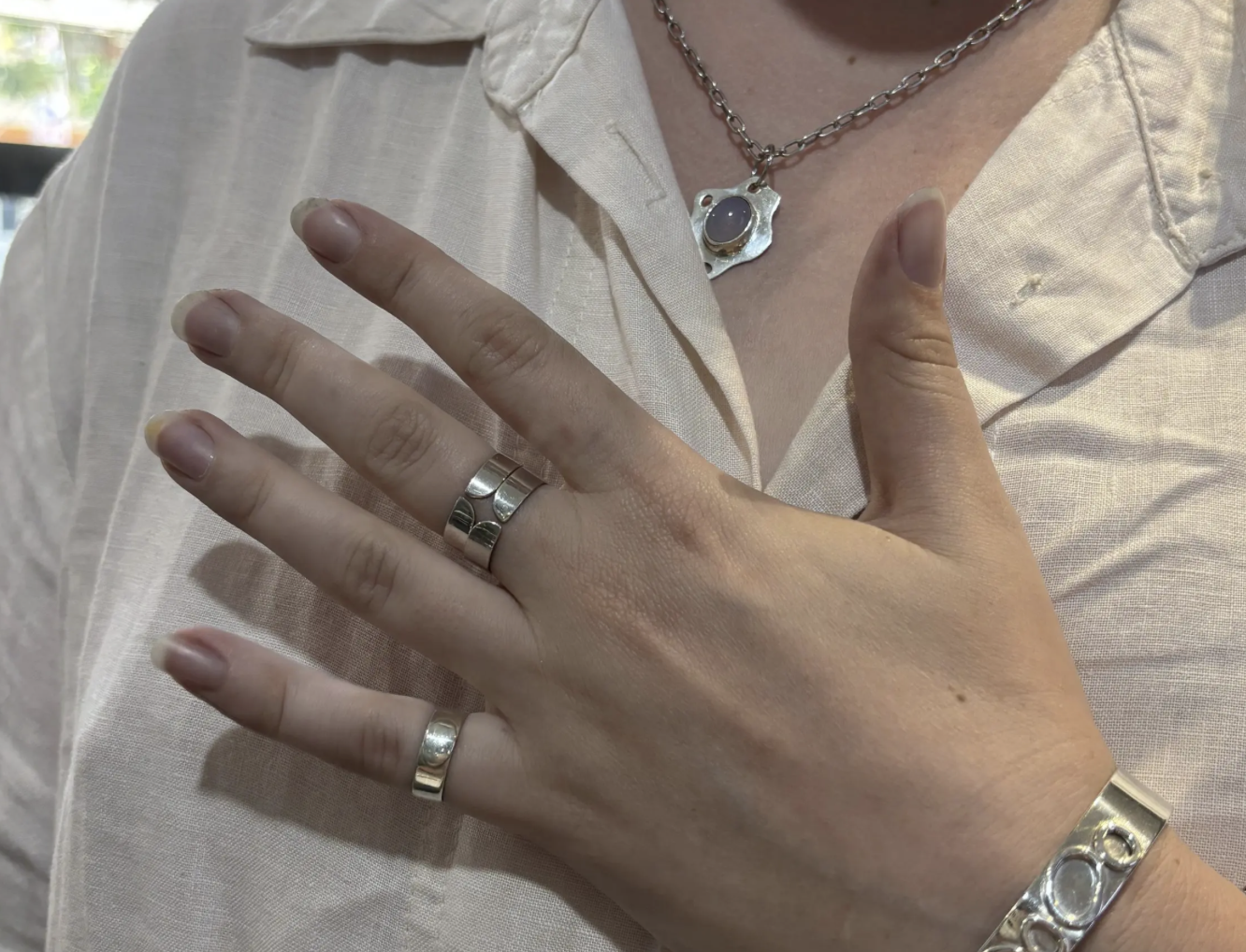
Silver tarnishes. It is a reaction with sulphur in the air, not a sign the piece was badly made, and it happens faster in humid weather and faster still if the ring lives in a sealed plastic bag with nothing to absorb moisture.
Three things keep it looking the way it did on the bench. Wear it, because skin contact slows tarnish more than careful storage does. Take it off before swimming pools and before anything involving bleach, since chlorine attacks the copper in the alloy. And store it dry and loosely, not sealed.
When it does darken, a silver polishing cloth takes it back in a couple of minutes. Avoid the dip-style liquid cleaners on a textured or hammered piece: they strip the darkened recesses that give the texture its depth, and a hammered ring can come out looking oddly flat. This is also where the Wua Lai Road workshop's standing offer earns its place, since a free polish and resize any time means you are not stuck with a ring that no longer fits after a few years.
Frequently asked questions
Do I need any experience? No. All three are built for complete beginners and say so. The instructor handles anything genuinely difficult, and the techniques that look intimidating, soldering above all, take about one demonstration to understand.
Will the ring actually be wearable, or is it a souvenir? Wearable. These are real sterling silver pieces made with standard jewellery techniques, not plated craft metal. All three work in sterling silver, and the Old City studio's alloy is nickel free.
Can children do it? From 12 at the Old City studio and on the full day, from 15 at the Wua Lai Road workshop. The limits exist because of the torch and the sharp tools, and studios do not bend them.
How much silver will I end up paying for on the full day? That depends on your design, since the metal is charged by the gram on top of the ฿5,000. Sketch your idea before you arrive and ask at the start of the day, so there are no surprises at the end.
Can I make a wedding or engagement ring? Two people making each other's bands is one of the more common reasons to book the full day, where you have time to design rather than choose. For a stone setting, ask the studio in advance rather than assuming it can be added on the day.
One afternoon, one thing you keep
Chiang Mai is full of things to look at. This is one of the few that sends you home with an object, and the one you made is almost never the one you would have bought. Ninety minutes on Wua Lai Road is enough to understand why silver stayed on that street for generations. A full day at a bench is enough to find out whether you want to keep doing it.
Sources: Bangkok Post, The Nation Thailand