
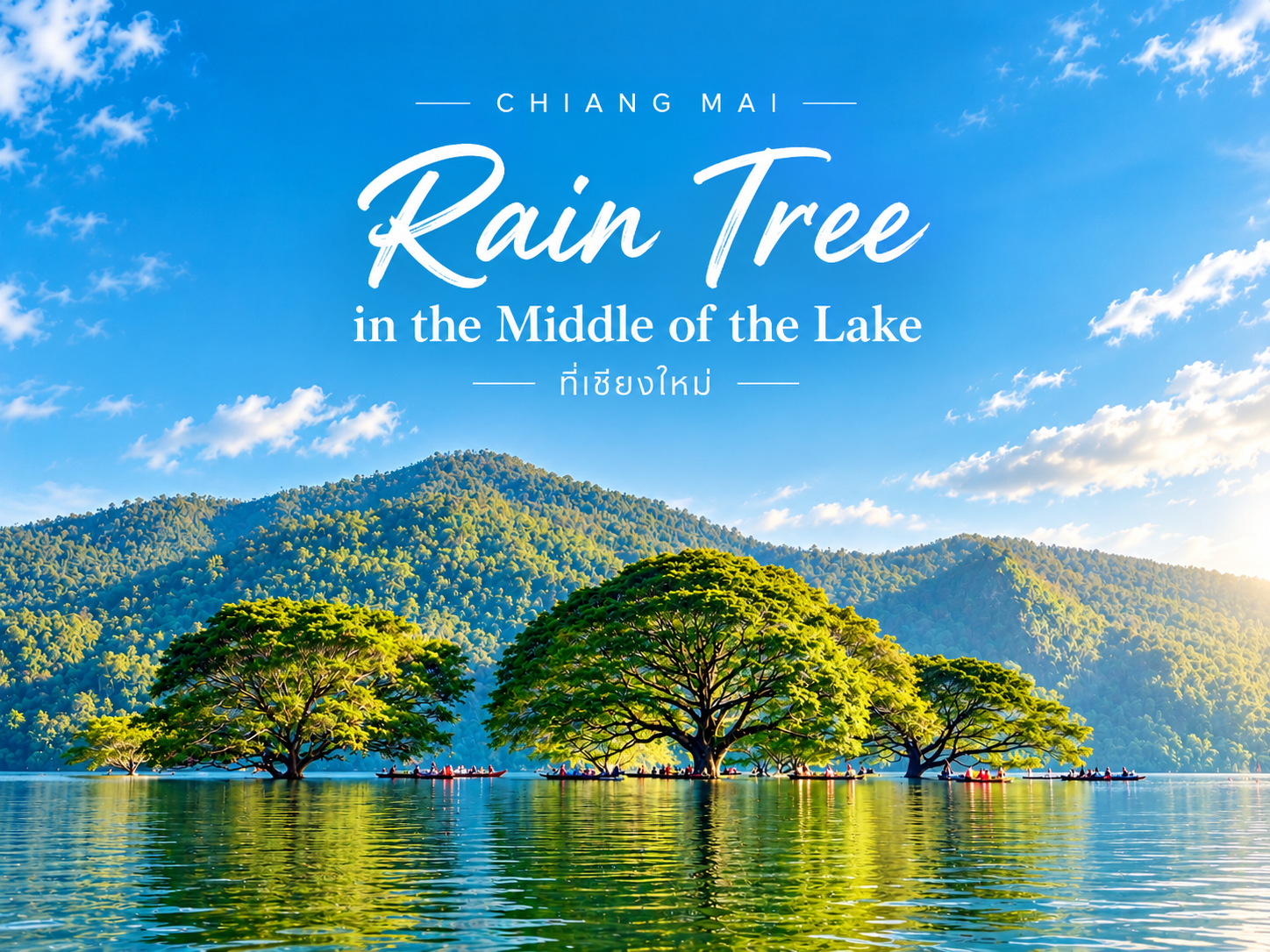
An hour north of Chiang Mai, a single enormous rain tree stands in the middle of a lake. Thai visitors have been photographing it for years. Most international travellers have never heard of it, which is the clearest sign left that there is still a Chiang Mai off the beaten path worth driving to. You can reach it two ways: as the final stop of a full day that also takes in a Lanna temple complex and a waterfall you climb barefoot, or on an afternoon that ends with you paddling under it at sunset. Here is what each one is actually like.
Why this one tree is worth the drive
Its name is the Rain Tree in the Middle of the Lake, or ต้นฉำฉากลางน้ำ (ton chamcha klang nam) in Thai, and Thai visitors generally call it exactly that rather than anything shorter.
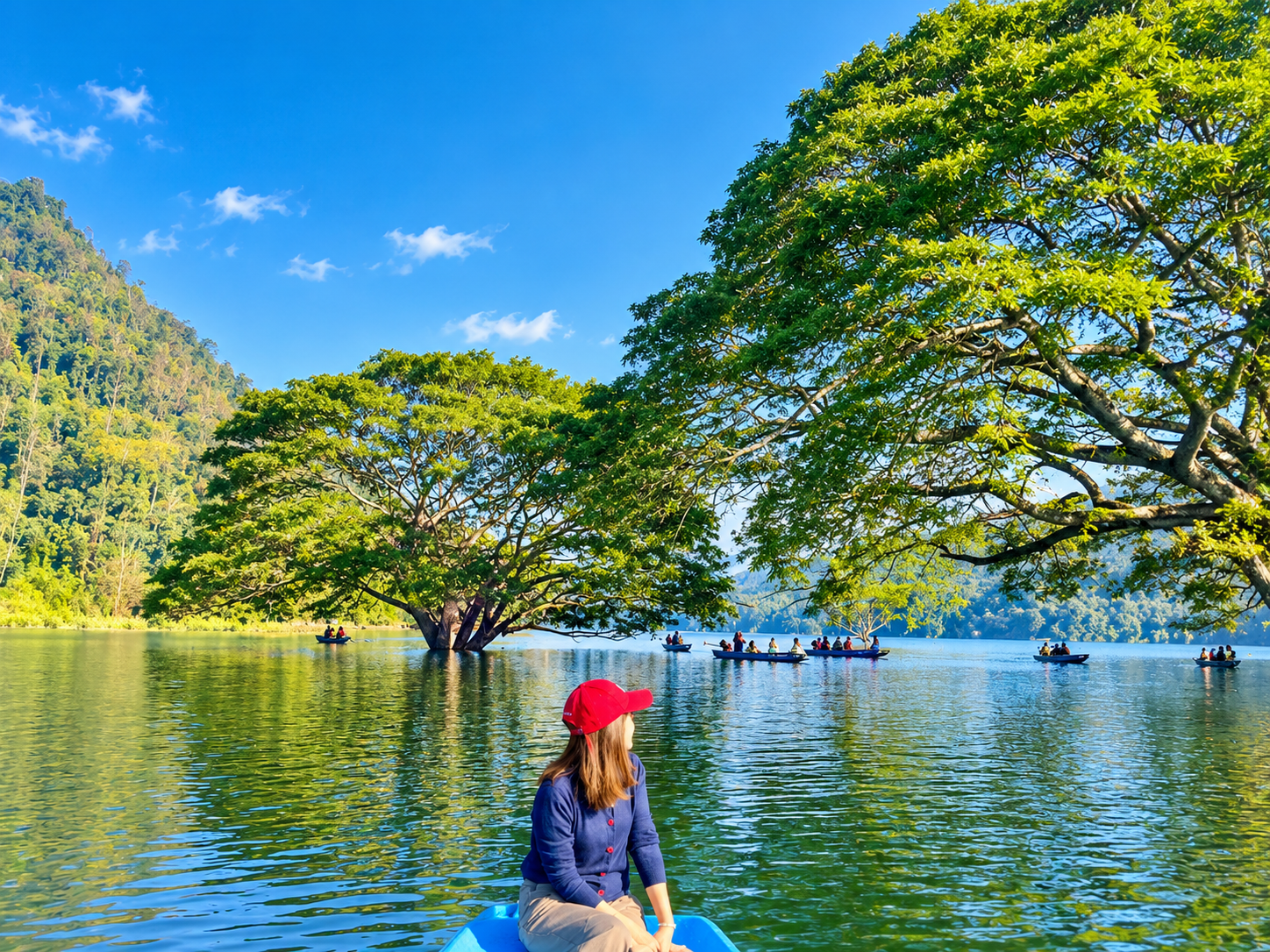
Photographs make it look staged. It is not. A chamcha, or rain tree, grows into a wide low dome rather than a tall trunk, and this one sits alone in open water with hills behind it. On a still morning the reflection doubles it into a near-perfect circle, which is why Thai photographers treat it as a destination in itself.
The reason it stays quiet is simple logistics. There is no road to it. The tree sits in a reservoir in Mae Taeng district, in the hills about an hour north of the city, you reach it by boat, and the turnoffs are not signposted in English. That one barrier has kept it off the standard Chiang Mai circuit while Doi Suthep and the night markets fill up.
Two things change what you actually see, and neither is obvious from photographs. The first is the water level, which rises and falls with the season on a working reservoir, so the tree sits deeper in the water some months and stands clear of it in others. The second is wind. The mirror reflection everyone comes for needs a genuinely still surface, which in practice means early morning or a calm evening, not the middle of a breezy afternoon. Neither ruins a visit, but both explain why two people can photograph the same tree a month apart and come away with completely different pictures.
Option one: the full day with a temple and a waterfall
The longer version wraps the tree into a ten-hour day that starts with a hotel pickup between 8 and 8.30am and ends back at your hotel around 6.30pm. Three stops, in this order.
Wat Ban Den
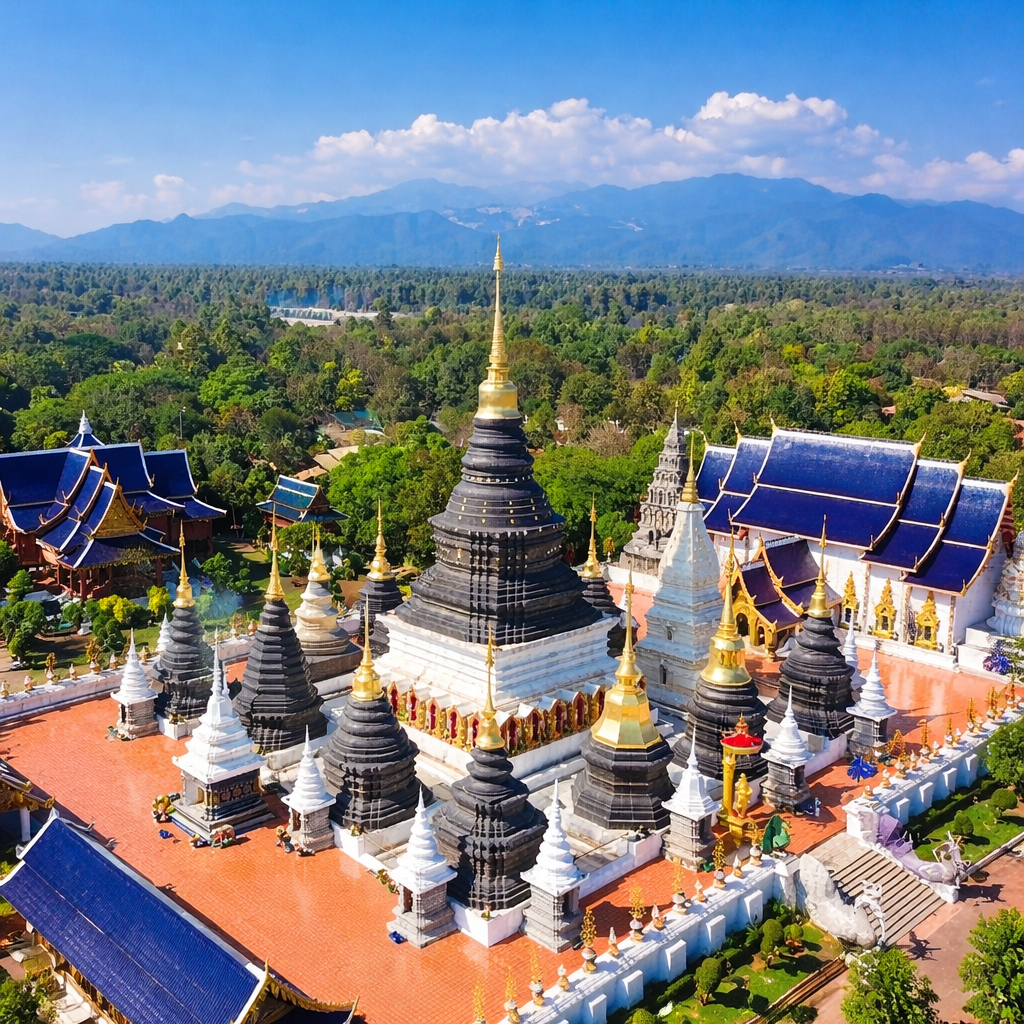
First, an hour at Wat Ban Den in Mae Taeng district. It is a Lanna temple, but the scale is the surprise: not one hall but a whole compound of gilded naga staircases, carved teak gables, white stupas and a row of pavilions, one for each animal of the Thai zodiac. Thai visitors come specifically to find the pavilion for their birth year and leave an offering there, which is worth asking your guide about, since it turns a row of pretty buildings into something you take part in.
Dress code applies, and it is enforced: shoulders and knees covered.
Bua Tong, the Sticky Waterfall
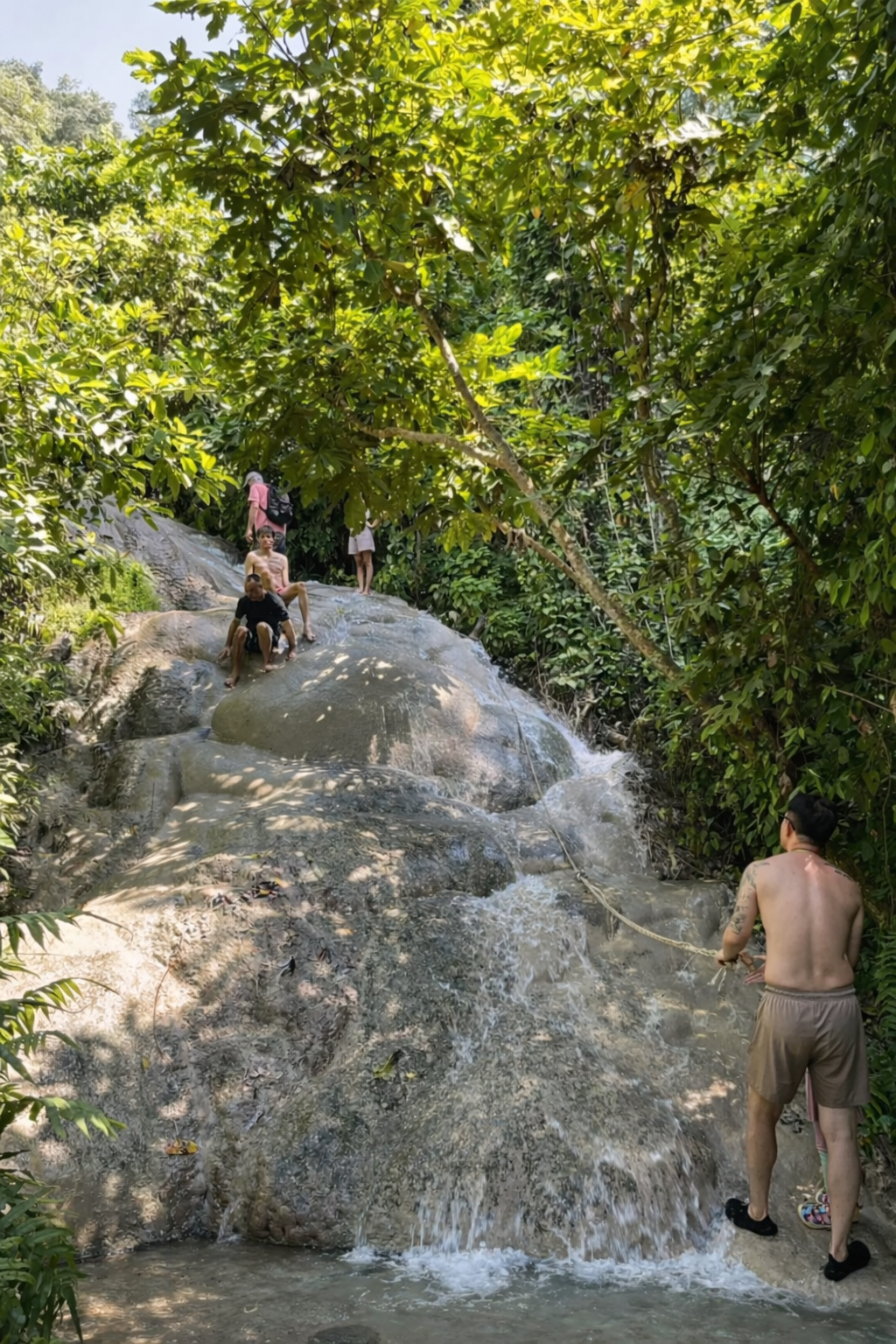
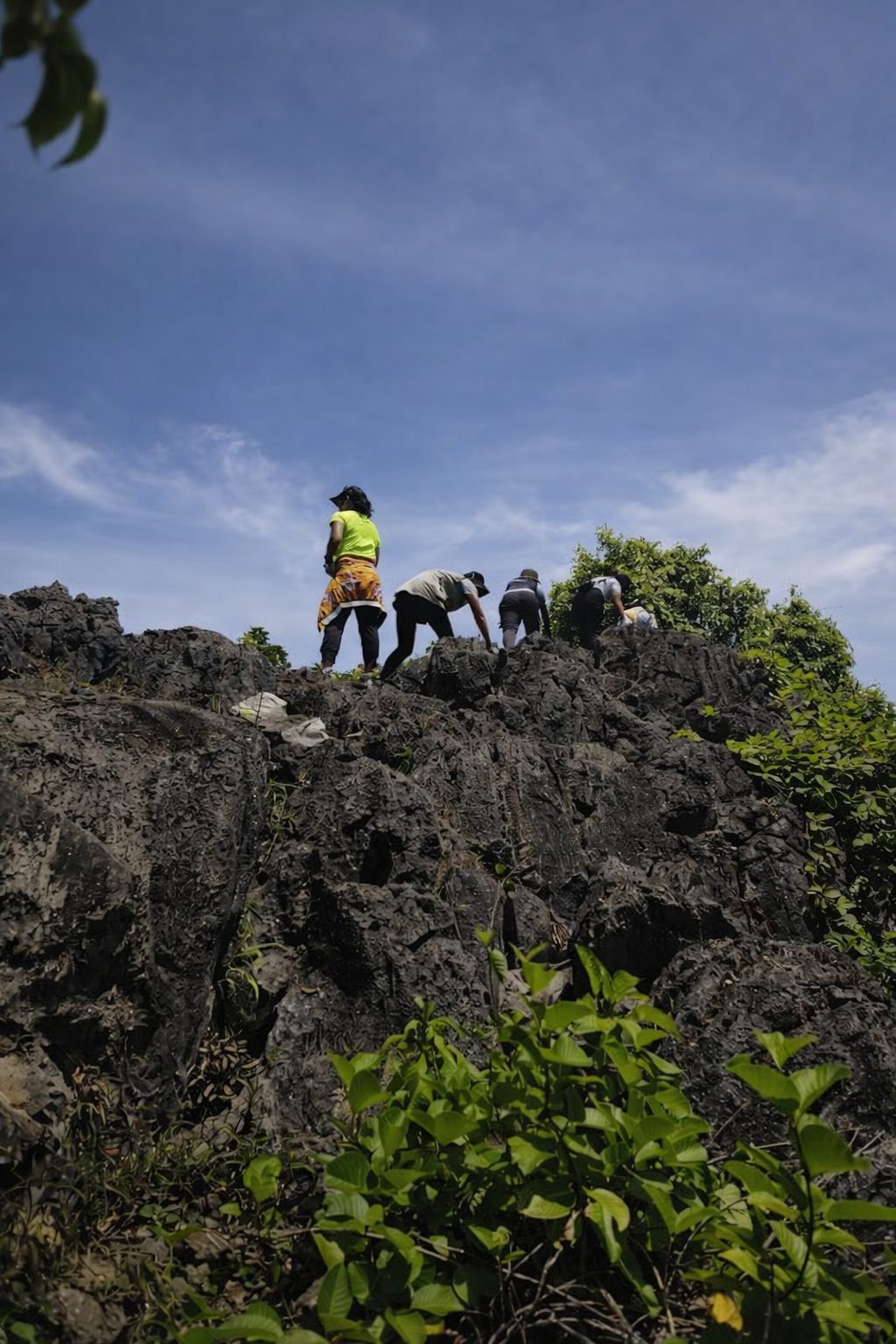
Then two hours at Nam Tok Bua Tong, around 60 kilometres north of the old city inside Si Lanna National Park. The name is literal. You climb up the waterfall, against the current, barefoot, and you do not slip.
The grip is chemistry rather than luck. Water from the Chet Si spring carries a heavy load of calcium bicarbonate, and as it meets the air the calcium crystallises onto the limestone. The resulting crust feels closer to coarse coral than to wet stone, and algae cannot get a hold on it. It takes about a minute of climbing before people stop clutching the rope handrails and simply walk up. For a tier-by-tier rundown of the falls, The Thaiger's guide to Bua Tong is the most detailed one out there.
Two practical notes. Go barefoot, since sandals and trainers both slide on the crust. And the spring at the top is a sacred site, so you can look but not swim in it.
The rain tree, by boat
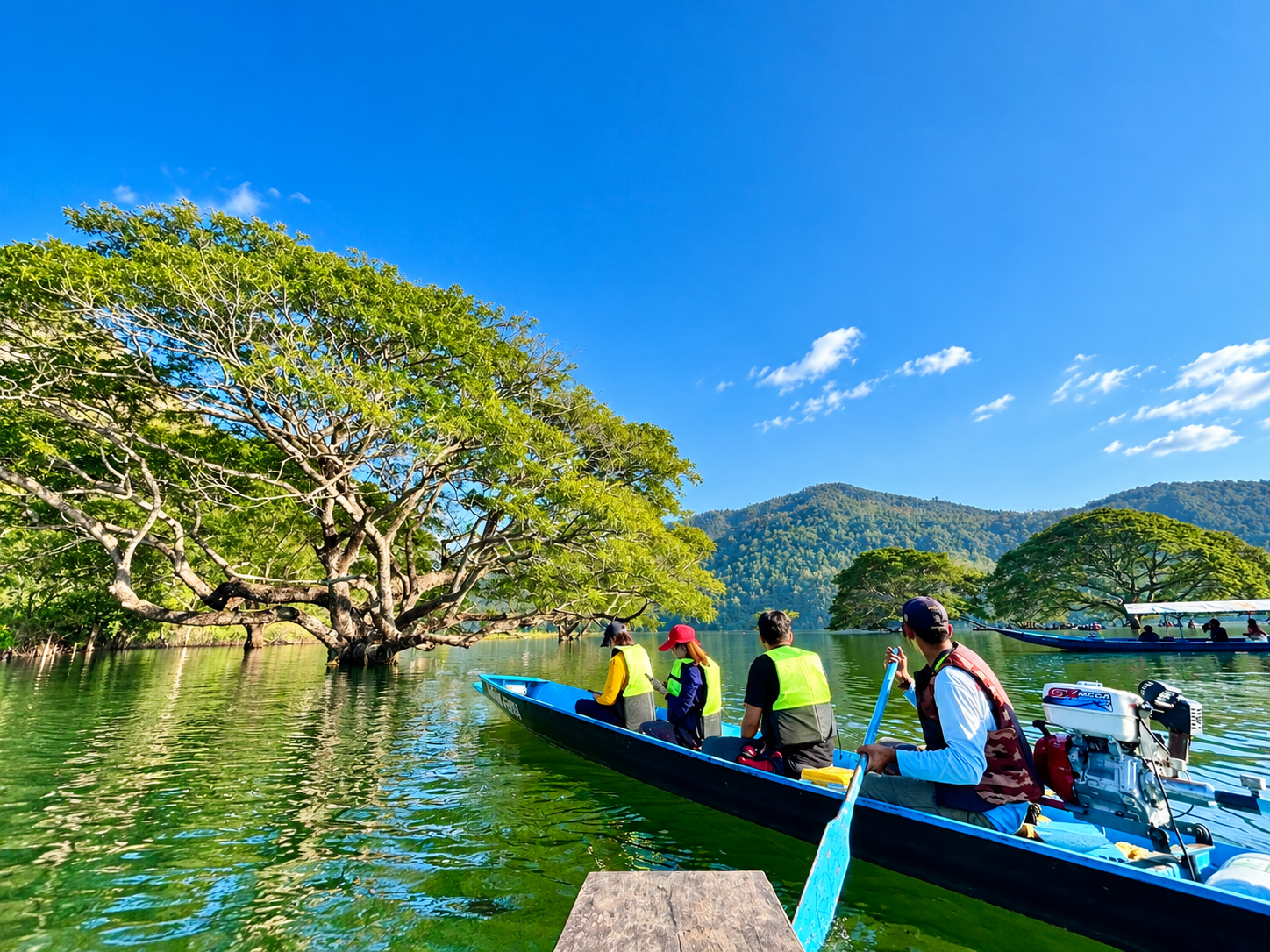
After a Thai lunch, the day finishes with an hour to an hour and a half out on the water to the tree itself, admission and boat ticket included.
Seeing it in daylight is the straightforward version: clear water, green hills, the tree photographed from the boat and from the bank. The whole day runs about $87 per adult at the time of writing, with reduced rates for children aged four to seven and infants free, and it includes transport, an English-speaking guide, admission, boat ticket, lunch and insurance. Group sizes top out at twelve, and the physical demand is low enough that the operator accepts ages three to eighty.
If you only have one free day and you want contrast in it, a temple, a waterfall and a lake in one run is hard to beat, and doing the three in a single guided day removes the part that usually kills this itinerary: negotiating with a red truck driver at three separate stops.
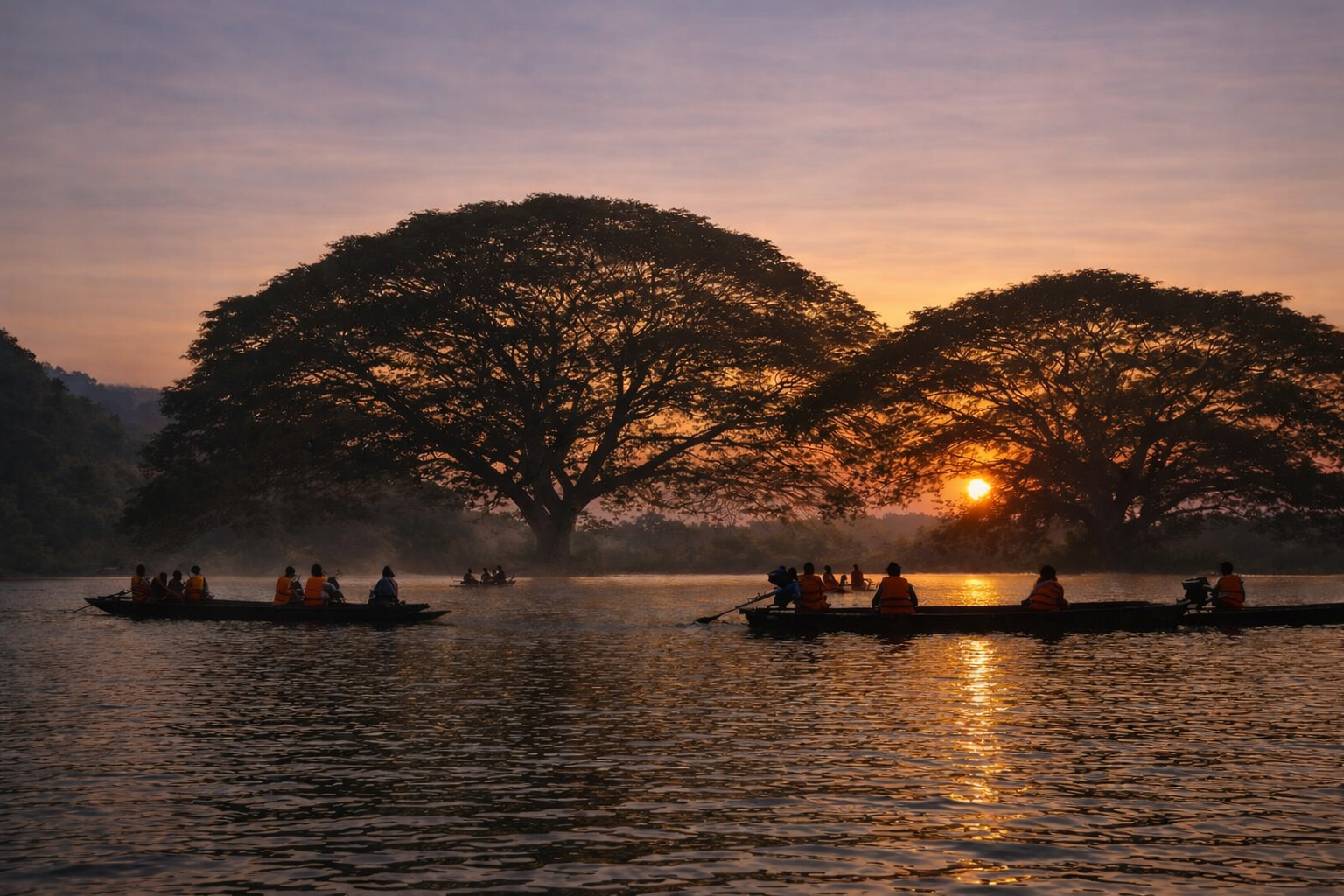
Option two: the sunset version
The second approach ignores the temple and the waterfall entirely and gives the lake the whole afternoon. It runs about seven hours, starting at 1pm and getting back around 8pm.
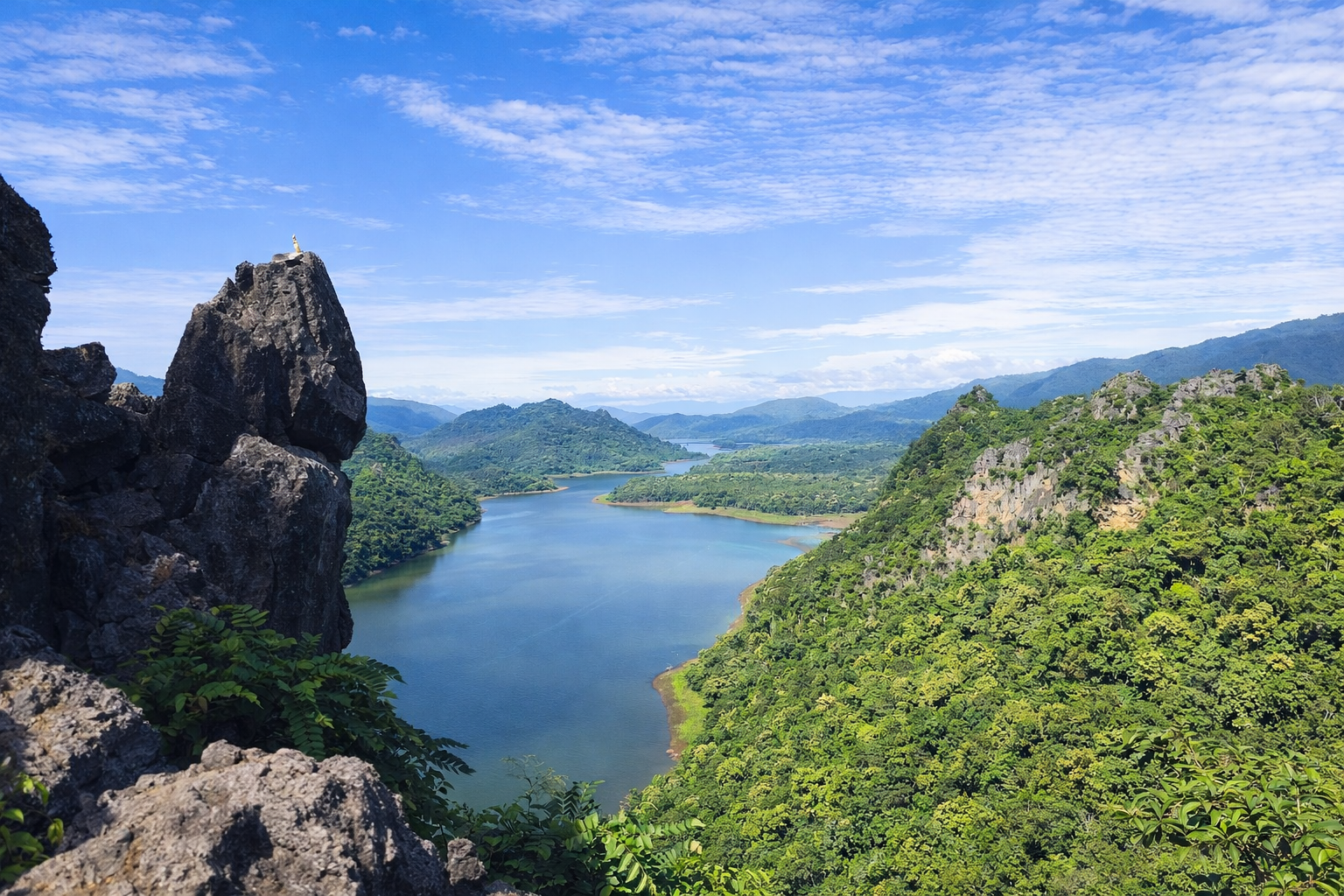
The shape of it is a scenic drive out of the city, then a three-kilometre trek that ends at a viewpoint over the water, then a break at a local café, and then an hour on the lake at sunset with a kayak, life jacket and guide provided. Groups cap at ten.
The difference is not just the light, though the light is the headline. Paddling yourself under a tree that size is a different experience from photographing it from a longtail, and the viewpoint trek beforehand gives you the shape of the whole valley before you drop down to water level. At around ฿2,357 per adult, with transport, hotel pickup, food and drinks at the café, kayak equipment and a private guide included, it is the version to pick if you have already done the standard Chiang Mai sights and want one thing done properly rather than three things in a row.
Worth knowing: the trek is short but it is still three kilometres on uneven ground, and the timing means you finish in the dark. Both are fine for most people and both are worth knowing in advance.
Which one should you book
| Full day (temple, waterfall, tree) | Sunset lake (trek and kayak) | |
|---|---|---|
| Duration | About 10 hours, 8am to 6.30pm | About 7 hours, 1pm to 8pm |
| Price per adult | Around $87 | Around ฿2,357 |
| Best for | First-timers who want variety | Repeat visitors, photographers |
| On the water | Boat ride, 1 to 1.5 hours | Kayaking, 1 hour at sunset |
| Walking | Easy, plus climbing the falls | 3 km trek to a viewpoint |
| Group size | Up to 12 | Up to 10 |
| Ages | 3 to 80 | No stated limit |
| Light | Midday | Golden hour |
Prices shift with promotions, so treat those as indicative rather than fixed.
The honest summary: if this is your first trip out of the city, take the full day. Three distinct places, lunch included, and you are home for dinner. If you have already ticked off Doi Suthep and the Grand Canyon and what you actually want is one quiet afternoon and a photograph nobody else has, the sunset paddle under the tree is the better use of your time.
When to go
November to February is the clear window: dry, cool, and comfortable for both climbing a waterfall and sitting in a kayak. March and April bring burning season haze, which flattens the light and hides the hills behind the lake, so sunset photographs suffer most in those two months. The green season from June to October makes the waterfall fuller and the countryside greener, with afternoon rain you can usually dodge by going out early. If you are still picking your month, the month-by-month climate data for Chiang Mai is more useful than annual averages.
One detail in Bua Tong's favour: the mineral crust grips in the rain too. Wet weather does not close the falls, it just slows the drive.
What to bring
- Clothes you do not mind soaking, and a dry change left in the vehicle
- A temple-appropriate layer for Wat Ban Den, since the waterfall outfit will not pass
- A dry bag or pouch for your phone, which goes in the water at Bua Tong more often than anyone admits
- Sun cover for the lake, which has no shade at all
- Small notes for drinks and anything outside the inclusions
- A light layer for the sunset trip, since it cools quickly once the sun drops behind the hills
Frequently asked questions
Is the Sticky Waterfall really safe to climb? Yes, for anyone reasonably mobile. The mineral crust gives genuine grip and there are rope handrails on the steeper tiers. Climb barefoot, take the first few metres slowly, and stay off the smooth dark patches, which are the only places algae manages to grow.
Can I see the rain tree without booking a tour? Not easily. The tree sits out in open water, so it needs a boat, and the access points are not signposted in English. Both trips include the boat and the admission, which is most of the reason people book rather than ride out themselves.
Which trip is better for photographs? The sunset one, by a wide margin, if you want the tree lit from behind with colour in the sky. The full day gives you clearer detail and the reflection in daylight, plus the temple and the waterfall as subjects.
Are these suitable for children? The full day takes ages three to eighty and the physical demand is low, and Thai families treat Bua Tong as a normal day out, so children usually take to the climbing immediately. The sunset trip involves a three-kilometre trek and a kayak, which suits older children better than toddlers.
Do I need to arrange my own transport? No. Both include round-trip transport from Chiang Mai with hotel pickup, which matters more than it sounds: the three stops on the full day are spread across Mae Taeng, and getting between them independently is where most self-planned versions fall apart.
One landmark, two different days
The same tree, two completely different trips. One wraps it into a full day of contrast, a gilded temple in the morning and a barefoot waterfall climb after it. The other saves it for last light and hands you a paddle. Both are quiet for the same reason: they take an hour's drive and a boat to reach, and that is still enough to keep the crowds in the old city. If you want a third day out in the same spirit, the mountain village of Mae Kampong sits an hour east and our Mae Kampong day trip guide covers it.
Sources: The Thaiger, WeatherSpark Chiang Mai