
Reading time : 9 min | Updated : April 2026
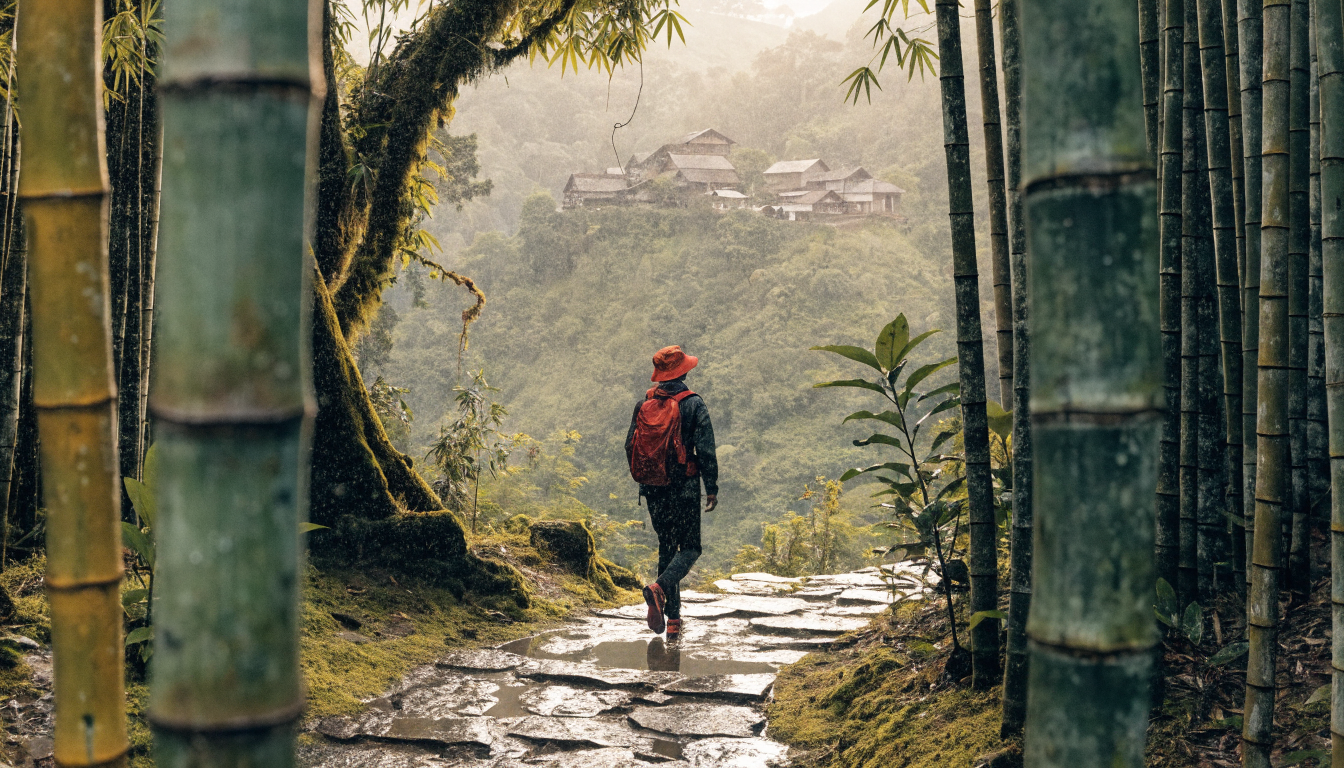
There is a moment on the second day of a jungle trek north of Chiang Mai when you realise the last paved road was hours behind you. The village you slept in last night has no electricity. The food was cooked on a wood fire by someone whose grandmother cooked on the same fire. The mountain in front of you has no trail markers, only the guide walking ahead in flip-flops, pointing occasionally at a plant and explaining what it cures.
This is not the Chiang Mai that most visitors see. It requires walking to get there, sleeping somewhere basic, and accepting that your phone will not be much use for a day or two. For the people who do it, it tends to be the part of the trip they talk about for years.
Why Northern Thailand Is the Best Trekking in Southeast Asia
The geography around Chiang Mai is unusual. The city sits in a broad valley at roughly 300 metres above sea level, surrounded by a ring of mountains that rise to over 2,500 metres at Doi Inthanon, the highest peak in Thailand. Between the valley floor and those summits lies an enormous and mostly undeveloped landscape of jungle, rice terraces, rivers, and highland villages that have been inhabited by Karen, Lahu, Akha, and Hmong communities for generations.
The mountainous province in northern Thailand offers spectacular outdoor activities for adventure seekers. Whether hiking on lush trails, visiting local Thailand hill tribe villages, rafting on scenic rivers or encountering majestic elephants, Chiang Mai offers unforgettable experiences for all. Chiang Mai is known for its verdant jungles, massive waterfalls and winding rivers, making it an ideal destination for outdoor enthusiasts. Bon Voyage Thailand
What makes the trekking here different from most adventure tourism is the density of genuinely inhabited landscape you pass through. You are not walking through a nature reserve with occasional viewpoints. You are walking through places where people live, farm, cook, and raise children, where the trail between two villages is the same trail that has been used for a hundred years.
One Day, Two Days or Three : How to Choose
The right length depends entirely on what you want from the experience.
A one-day trek covers a reasonable amount of ground, typically five to eight kilometres through jungle and along rivers, with a waterfall and a village lunch included. You return to Chiang Mai the same evening. The experience is real but necessarily compressed. You get a sense of the landscape and a brief encounter with village life, but not the particular feeling that comes from waking up in the mountains having slept there.
Mae Wang National Park, an hour south of Chiang Mai, is known for its green rolling hills, waterfalls, rice paddies, and Karen tribal villages. Most one-day treks head in this direction, and the combination of forest, farmland, and river scenery is genuinely beautiful even in a single day.
The two-day, one-night version changes the experience substantially. You spend the night in a Karen village in a wooden house, wake to roosters and wood smoke, and eat breakfast prepared by your hosts before continuing deeper into the forest. The overnight does something to the quality of the experience that is difficult to reproduce in a single day. You stop being a visitor passing through and start being, briefly, a guest.
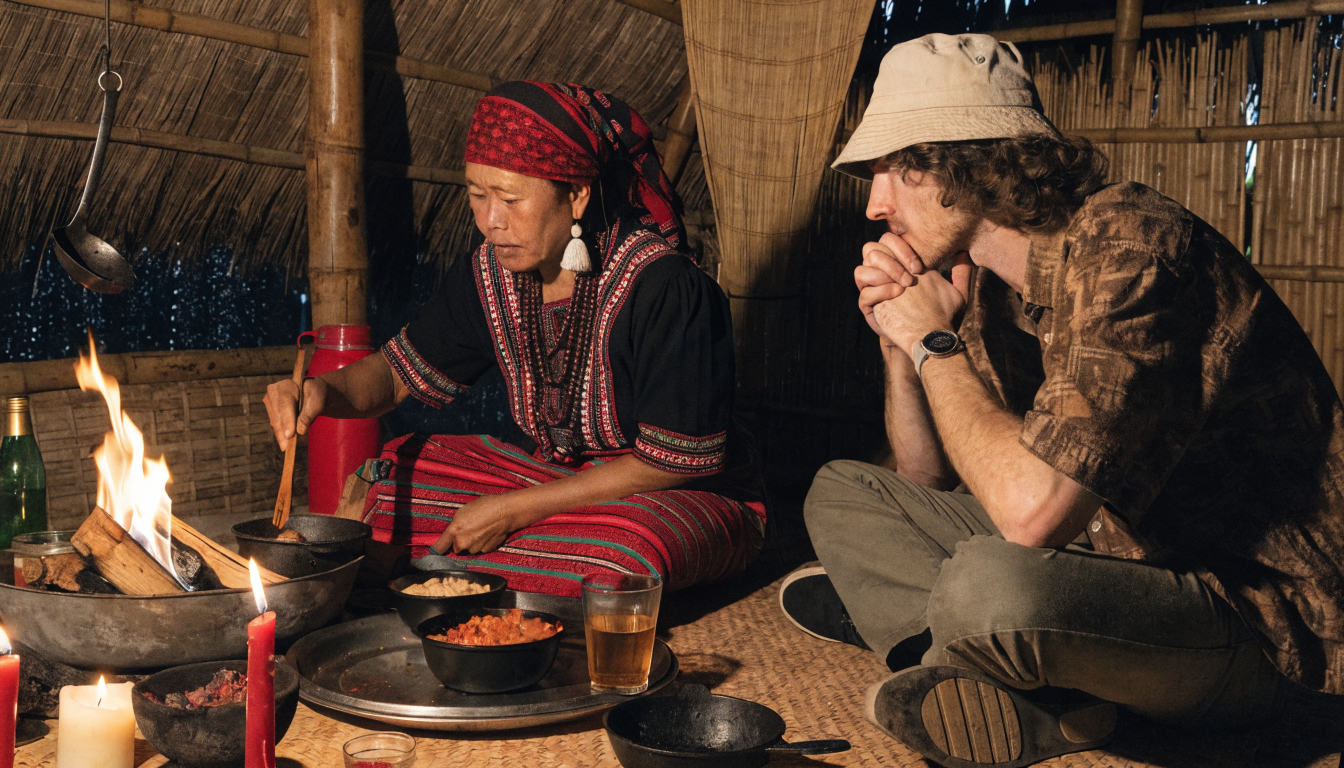
The hilltop homestay is a delight : bamboo huts, shared toilet and cold shower, and a coal and wood-fire kitchen. No electricity. From start to finish, the guides share knowledge about local plant species and cook an amazing dinner under the stars. Tripadvisor
The three-day version is for people who want to go further and get genuinely lost in the good sense. The first night in a Karen village, the second in a Lahu community, each with its own language and traditions. By the third morning, the city feels very far away.
What You Actually Walk Through
The landscape changes as you gain elevation. The valley floors have rice paddies and cassava fields, the terraces cut into the hillsides with a precision that represents generations of agricultural knowledge. At mid-elevation the forest is dense and mixed, bamboo groves giving way to teak and hardwood, the canopy thick enough to filter the light into something green and diffused.
Trekking through teak forests, learning about medicinal plants, and helping cook a traditional Lahu dinner are among the most memorable parts of the multi-day experience. Gino The guides, many of whom grew up in the villages you pass through, identify plants by their uses rather than their names : this one for fever, this one for cuts, this one the Karen people add to the water when making a traditional sauna. The knowledge is practical and specific and was not learned from a book.
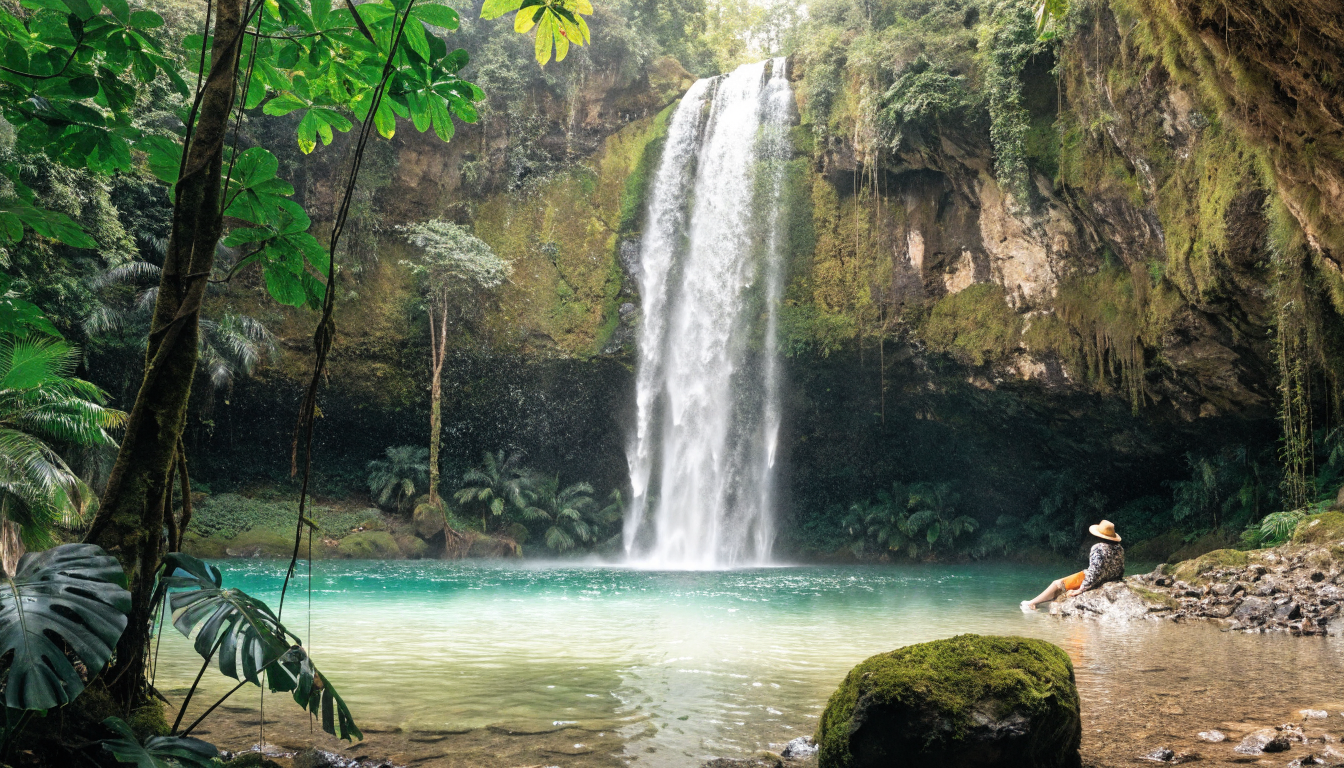
The waterfalls punctuate the route. Some are well-known and have names on signs. Others are places where the trail crosses a river and the guide steps off the path and pushes through undergrowth for two minutes to reach a pool where the water falls into a basin of mossy rock and the sound is the only sound for some distance in every direction.
The Villages
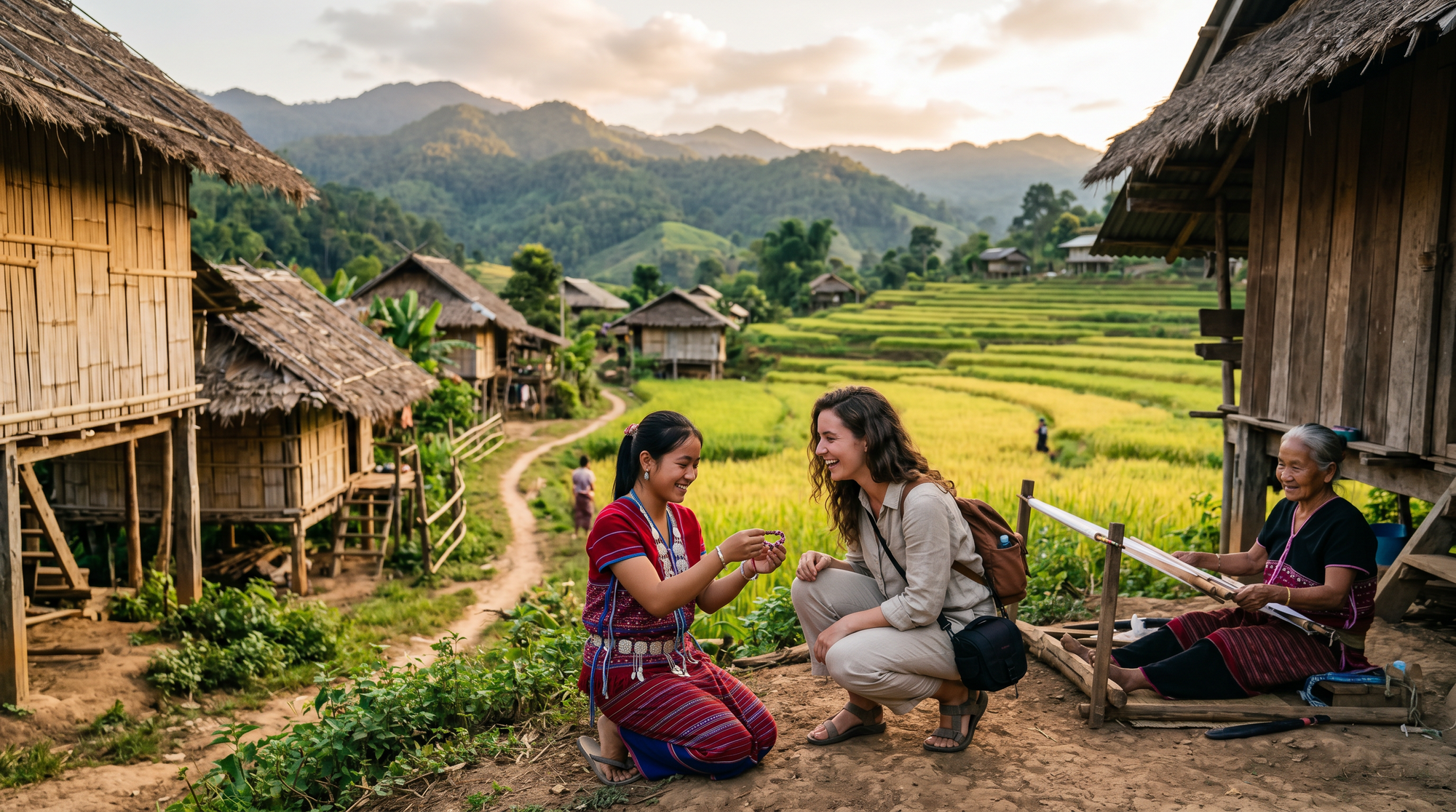
The highland communities around Chiang Mai are not a backdrop for trekking tourism. They are communities with their own economies, their own political concerns, their own relationships with the Thai state, and their own internal debates about how to engage with the outside world.
Each tribe has its own distinct language, style of dress and religion. Walking through this remote region where tribes maintain their own distinct customs, travellers can learn the secrets of jungle survival from those who know it best.
The Karen communities closest to Chiang Mai have the longest history of contact with lowland Thai culture and tend to be the most accessible and comfortable with visitors. The Lahu villages further north are more remote and the cultural gap is wider, which makes the encounters more demanding but also more significant.
What these communities share is an approach to hospitality that feels different from service. You are not a customer in a village. You are a guest in someone's home, which comes with different obligations on both sides. The food is what the family eats. The sleeping arrangements are what is available. The conversation, filtered through a guide, is genuine rather than scripted.
The jungle trekking and community immersion experiences available through Guidestination include overnight stays with Karen communities south of Chiang Mai, with local guides who are themselves from the villages on the route. The guides' knowledge of the forest and the people is not something that can be replicated by someone who learned the route from a map.
What to Expect and What to Bring
The physical demand varies by route but a reasonable baseline is five to seven hours of walking per day on uneven terrain, sometimes steep, sometimes muddy. Good boots or trail shoes matter. A daypack with water, a change of clothes, and a rain layer is sufficient for most routes. Your guide carries the rest, or the overnight gear is waiting at the village.
Authentic villages where families live and farm with no staged shows, fair tourism that supports guides, cooks, and homestays directly, small groups on quiet trails with no crowds, and local guides who are hill tribe members sharing their own stories and traditions.
The phone question comes up often. The villages have no reliable signal and no electricity to charge anything. This is, for most people who have done the trek, one of the things they remember most positively. Twenty-four hours without a screen in a bamboo house in the mountains tends to produce a quality of rest that is genuinely different from anything available in the city.
The Best Time to Go
The cool season from November to February offers the most comfortable temperatures for walking and the clearest skies. The trails are dry and the views from high points are sharp.
The rainy season from June to October is more challenging but produces a landscape that is startlingly green. The waterfalls are at their most powerful. The rice terraces are flooded and vivid. The trails are muddy and the river crossings are more interesting. People who trek in the rainy season tend to describe it as the more beautiful option, if you are comfortable with wet boots and unpredictable afternoons.
March to May is hot and the air quality in March is poor due to agricultural burning. The forests are drier and dustier. This is the least recommended window for trekking in the highlands.
A Note on Ethics
The highland communities around Chiang Mai have been used as tourism attractions for decades in ways that have not always benefited them. The worst versions of this look like villages where people dress in traditional costume for photographs and sell handicrafts to tourists who stay for forty-five minutes.
The better versions look like what the best trekking guides have always offered : routes designed in consultation with communities, overnight stays that generate income for host families directly, guides who are community members themselves, and a pace that allows genuine exchange rather than observation.
The difference is usually visible in the first thirty minutes. If the guide knows the names of the people in the village, you are probably in the right place.
FAQ
How fit do I need to be to trek near Chiang Mai ? One-day treks are accessible to most people with reasonable health. Two and three-day routes involve five to seven hours of walking on uneven terrain per day and require a moderate level of fitness. If you can walk comfortably for two to three hours in normal conditions, a one-day trek is within reach. Build up to overnight routes if you have any doubts.
Is it safe to trek in the jungle near Chiang Mai ? Yes, with a reputable guide. Guides who know the routes and the communities are essential, both for navigation and for meaningful cultural encounter. Solo trekking in unfamiliar highland terrain is not recommended.
What do I sleep on in a hill tribe village ? Typically a mattress on the floor of a wooden or bamboo house, with a blanket and mosquito net provided. The facilities are basic but sufficient. Cold shower, shared toilet, no electricity.
Can I trek during the rainy season ? Yes. The trails are muddy and the river crossings are higher, but the landscape is at its most vivid and the waterfalls are strongest. Pack a rain jacket and accept that your boots will get wet. Most guides consider the rainy season one of the more beautiful times to be in the mountains.
How do I make sure my trekking money benefits the communities I visit ? Choose operators whose guides are from the communities on the route, who pay homestay fees directly to host families, and who keep group sizes small. Ask directly who benefits from the fees you pay. A good operator will have a clear answer.