
Reading time : 9 min | Updated : April 2026
An hour from Chiang Mai, the road narrows, the houses change shape, and the language you hear through the window is not Thai. By the time you reach the village, the city feels like something from another country. Which, in a sense, it is.
The highland communities of northern Thailand did not come from Thailand. Most arrived from Tibet, southern China, or Myanmar over the past two centuries, pushed south by war, famine, and political pressure. They settled in the mountains because the lowlands were already occupied. They kept their languages, their customs, their ways of building and farming and celebrating because the mountains were remote enough that nobody stopped them.
That remoteness is shrinking. But the culture has not yet disappeared with it. What you find in the villages around Chiang Mai, approached with the right attitude and the right guide, is something genuinely different from anything available in the city below.
Who They Are
The term hill tribe encompasses ethnic groups who mostly inhabit the high mountainous northern and western regions of Thailand, including both sides of the border areas between northern Thailand, Laos and Burma. In Thai official documents, the term began to appear in the 1960s. Wikipedia
As many as 20 different indigenous communities, totalling one million people according to some estimates, live in Thailand and include, among the more numerous, Akha, Karen, Lahu, Lisu, Hmong and Mien. They are all distinct cultural and linguistic groups : some have been established in this part of Thailand for centuries and live at lower altitudes, like the Karen, while others such as Hmong and Akha are newer arrivals, having come from Burma, China and Laos from about the nineteenth century. Minority Rights Group
The differences between these groups are not cosmetic. Each has its own language, its own agricultural system, its own spiritual practice, its own architecture, its own relationship to the Thai state. A Karen village and an Akha village thirty kilometres apart are not variations of the same thing. They are separate civilisations that happen to occupy the same mountain range.
The Karen are the group most visitors encounter first, because their villages are closest to Chiang Mai. They are the largest community, with approximately one million people living primarily along the Thailand-Myanmar border in Mae Hong Son and Chiang Mai provinces. Their stilt houses, weaving traditions, and deep connection to elephant culture are among the most recognisable expressions of highland life in northern Thailand.
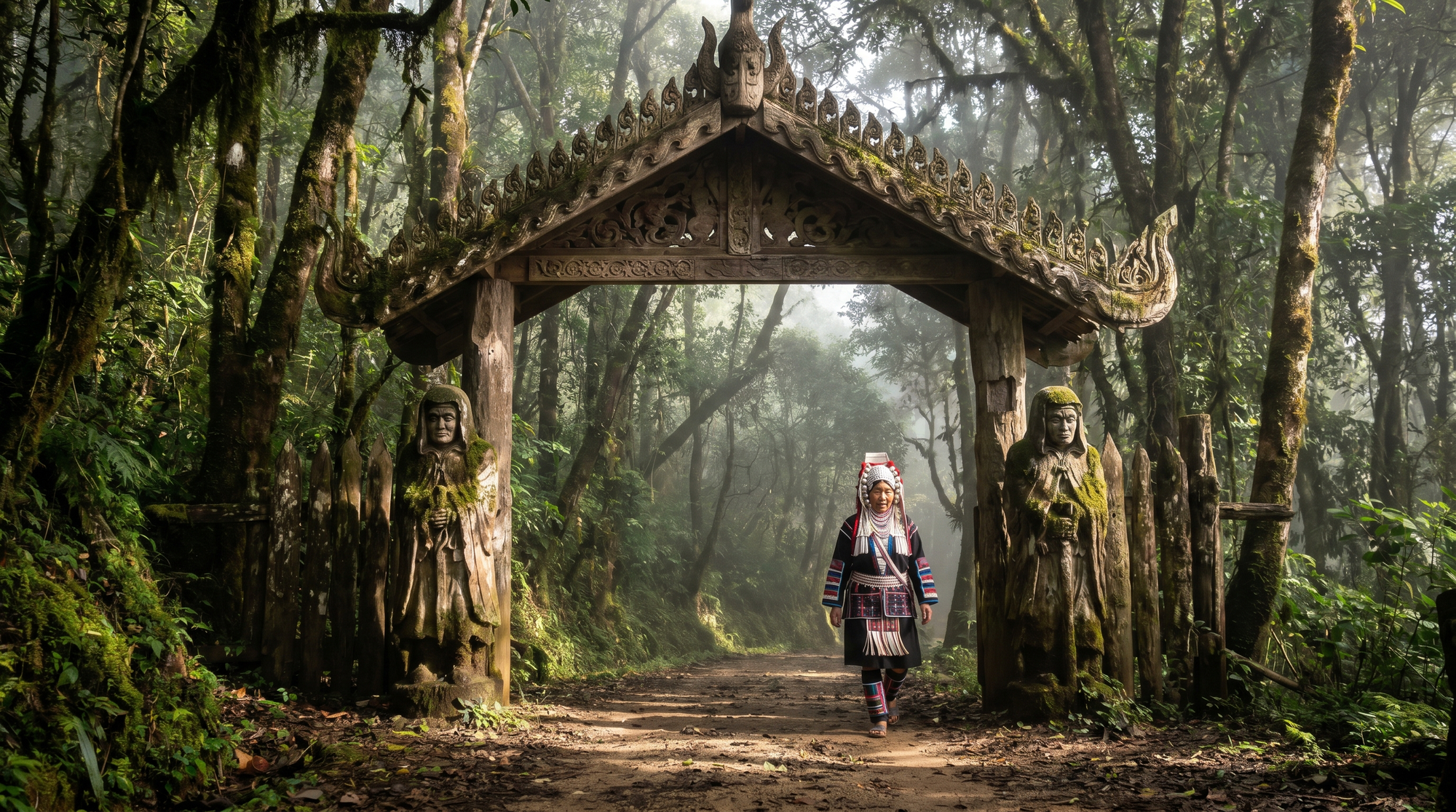
The Akha live higher in the mountains and are immediately identifiable by the elaborate silver coin headdresses worn by women. Their villages are marked at the entrance by spirit gates, wooden structures that demarcate the boundary between the human and spirit worlds. These gates are not decorative and should not be touched.
The Hmong are among the most commercially active of the highland communities and their markets, selling textiles, coffee, and locally grown produce, are accessible at several points around Chiang Mai and Doi Inthanon. Their ground-level wooden houses and intricately embroidered hemp clothing are distinctive from the other groups.
The Question Nobody Can Avoid
Any honest account of visiting hill tribe villages has to address the ethical dimension directly. Increased tourism has had an ambiguous effect on highland indigenous peoples : while this form of development has brought much-needed money and job opportunities to the mountainous northern region, it has also had an intrusive impact on their cultures. Minority Rights Group
The history of highland community tourism in northern Thailand includes genuinely exploitative models : villages staged as exhibitions, communities paid to perform their culture for bus tours that stopped for forty-five minutes and left without any meaningful exchange. People photographed as spectacle rather than engaged as individuals.
The difference between that kind of visit and a meaningful one comes down to a small number of practical factors. Who is guiding you, and where are they from ? Is the money staying in the village, or flowing to a city-based intermediary ? Are you passing through for an hour, or sleeping there, eating what the family eats, and waking up in the morning in someone else's world ?
The guide question is not a bureaucratic detail. A guide who grew up in the village you are visiting can explain what you are seeing in a way that transforms it from spectacle into knowledge. Someone who learned the route from a map cannot do the same thing.
What a Good Village Visit Looks Like
The best village experiences near Chiang Mai share certain characteristics worth knowing before you book anything.
The group is small. You are not on a bus with forty people. The interaction with villagers is proportionate rather than overwhelming.
The guide is from the community. Not someone trained to interpret the community for outsiders, but someone whose family lives in one of the houses you are walking past.
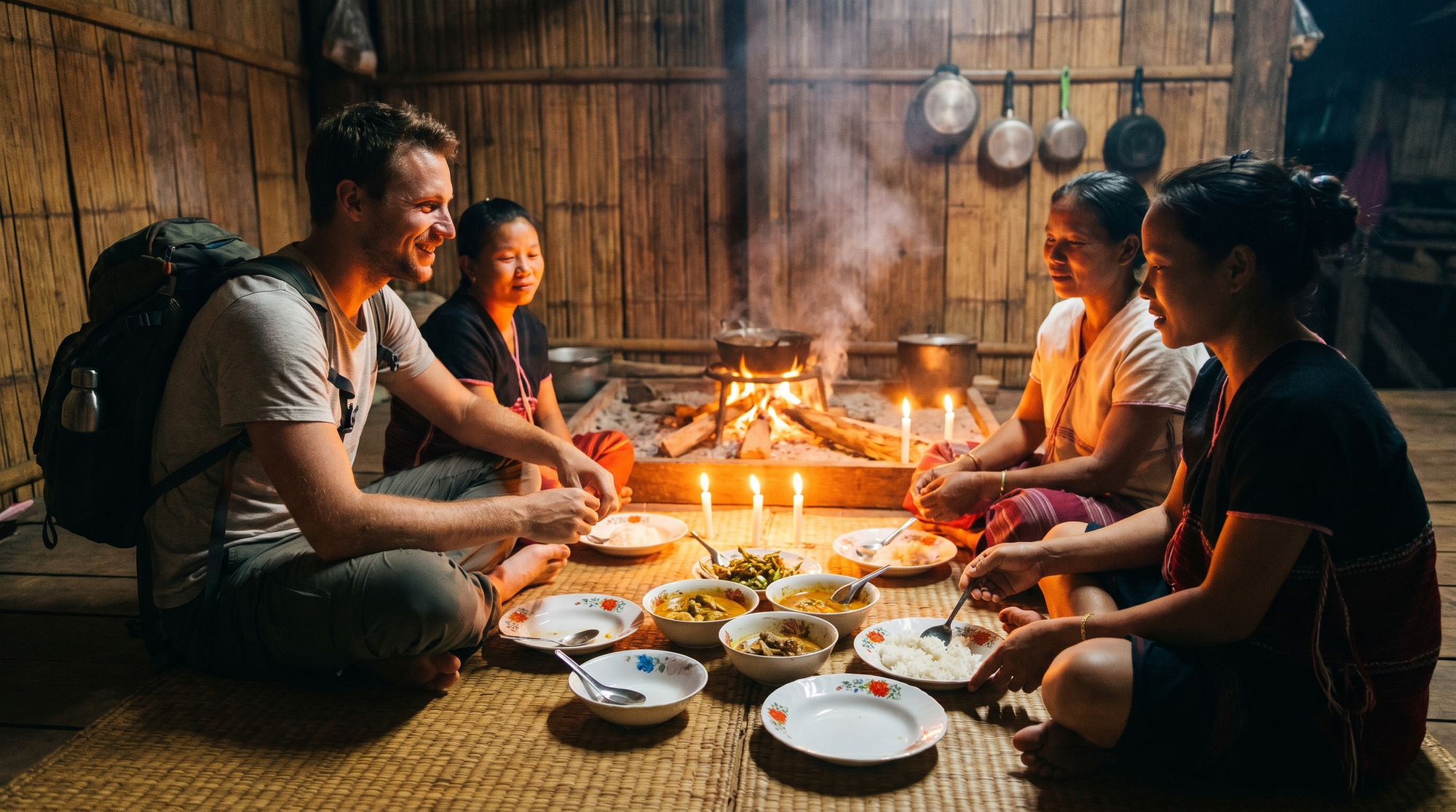
You sleep there. A night in a bamboo house changes the quality of the experience entirely. You are not a visitor passing through. You are a guest, with everything that implies on both sides.
The money stays. The homestay fee goes directly to the family hosting you. The textiles you buy come from the person who wove them. The food is cooked by local women who are paid directly.
The 2-day Doi Inthanon eco-trek with Karen homestay is built around exactly these principles. The guides are Karen community members from Mae Klang Luang village inside Doi Inthanon National Park. The overnight stay is with a host family in the village. Day two involves climbing the highest mountain in Thailand with the same guides who showed you their village the evening before. The combination of genuine cultural encounter and physical adventure in a single two-day experience is unusual and well-designed.
What You Will Actually See
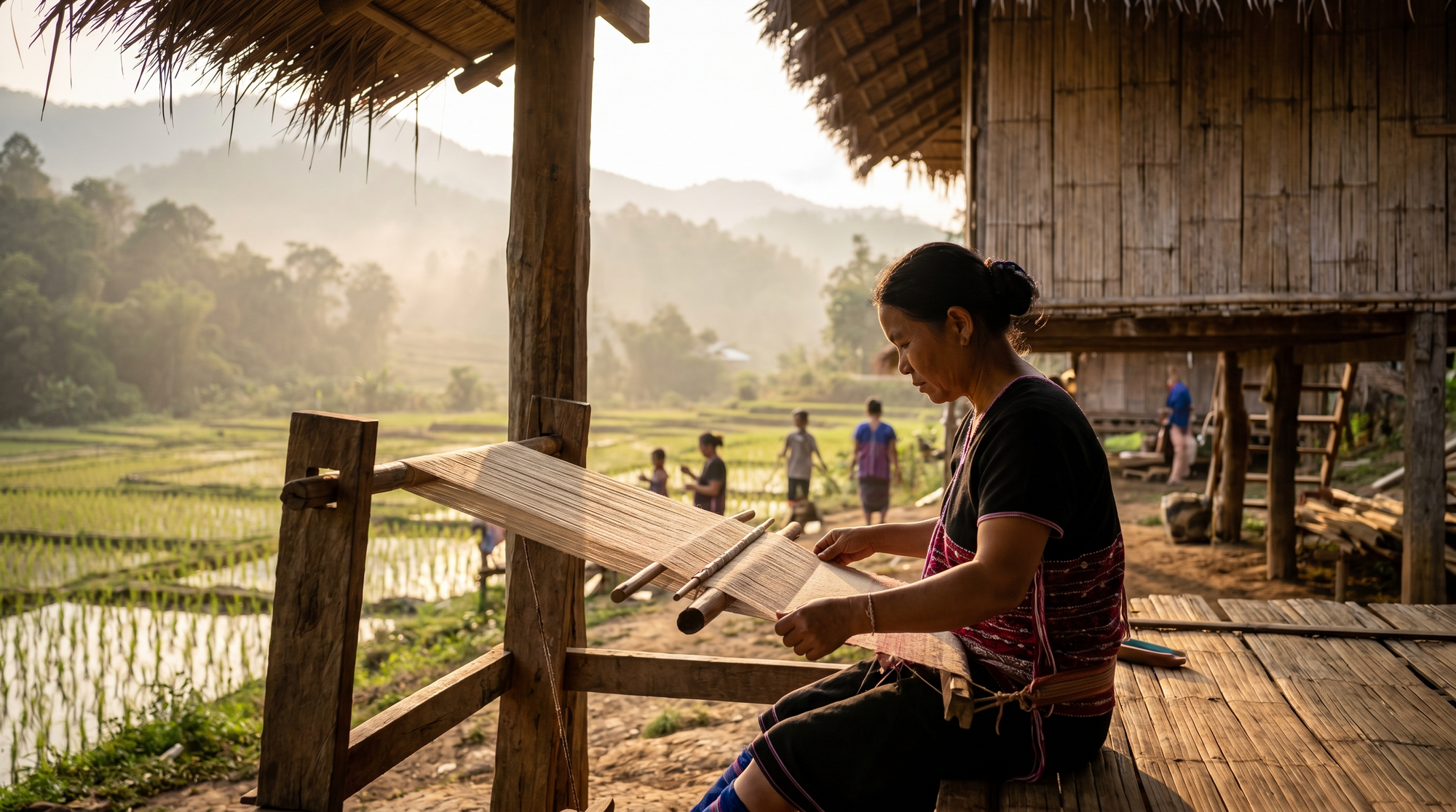
The first thing most people notice is the quiet. The highland villages near Chiang Mai operate on a different rhythm from the city. Mornings begin with the sounds of cooking and animals and water being carried from a stream. The work of the day is agricultural, tied to seasons rather than clocks.
The houses are built from bamboo and raised on stilts in Karen villages, allowing families to store tools and grain beneath. The materials are local. The construction reflects generations of knowledge about how to build in this specific landscape.
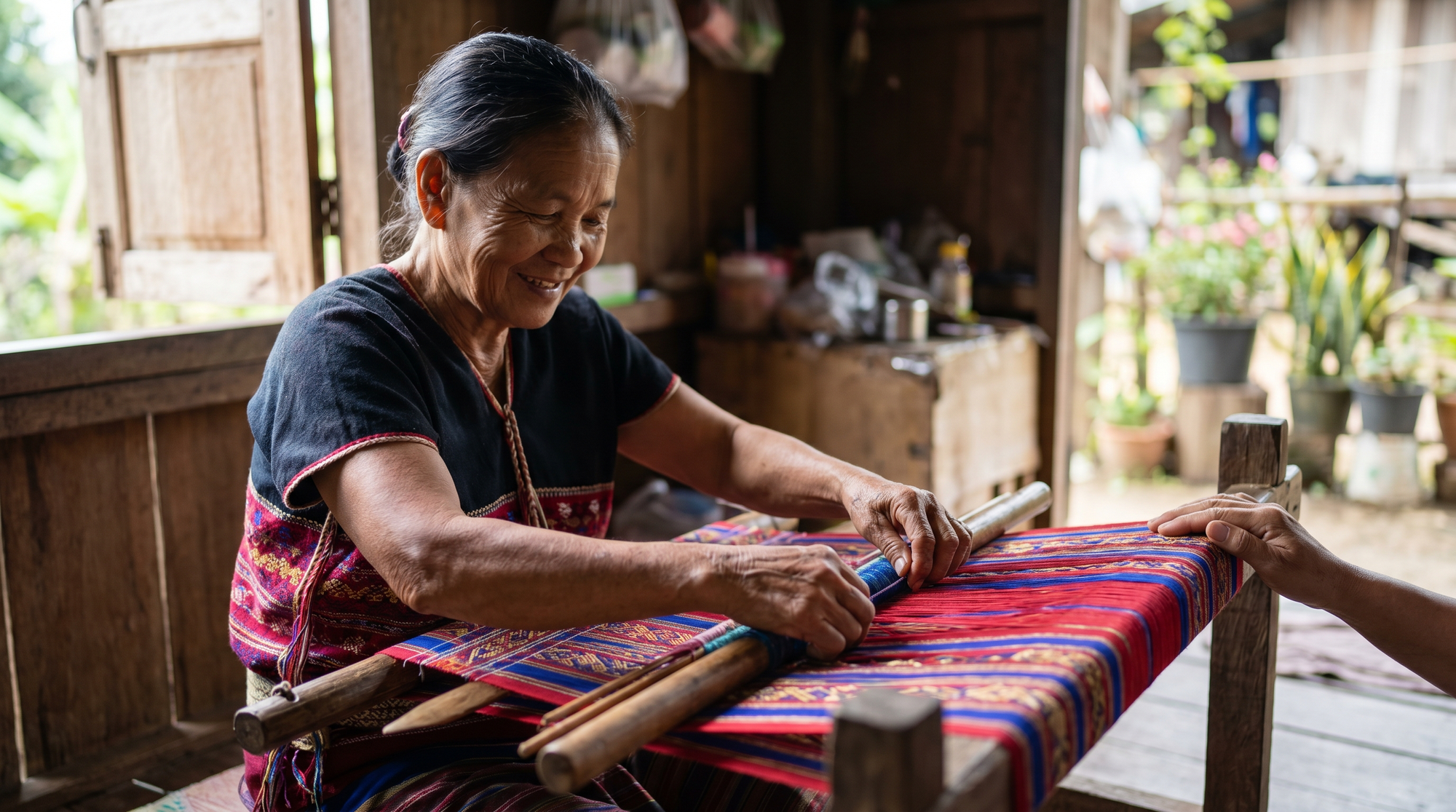
The textiles are everywhere and worth more attention than most visitors give them. Women in Karen communities pass down weaving and natural dyeing from mother to daughter, with patterns that encode information about lineage and community. Buying a piece of cloth directly from the woman who wove it is one of the most economically direct acts of support available to a visitor. The same piece sold in a Chiang Mai night market has already passed through several intermediaries.
The children are the most reliable bridge across the language gap. They are curious rather than performing, and a few minutes of genuine play with a child produces more actual human connection than an hour of guided explanation.
Practical Matters
The Karen villages most accessible from Chiang Mai are in the Mae Wang district, roughly one to two hours south of the city. Hmong communities can be reached via the highlands around Doi Inthanon. Akha villages are primarily further north in Chiang Rai province and typically require an overnight trip to reach properly.
The cool season from November to February offers the most comfortable temperatures and clearest skies. The rainy season produces the most dramatic landscapes, with terraced fields flooded and vivid green and the mountains frequently wrapped in cloud. March brings poor air quality due to agricultural burning and is the least recommended period for highland travel.
Dress modestly. Remove shoes when asked. Ask permission before photographing anyone. Buy from artisans directly. These are simple instructions that make a significant difference to how your presence is received.
As of June 2025, the Thai government launched an initiative dramatically speeding up the citizenship process for stateless ethnic minority groups, with nearly half a million stateless individuals targeted across Thailand. Wikipedia This is relevant context for visitors : the highland communities exist in a complex political and legal relationship with the Thai state that shapes their daily lives in ways that a brief visit does not reveal. Understanding even the outline of that context changes how you engage.
FAQ
Is it ethical to visit hill tribe villages near Chiang Mai ? It depends on how you approach it. Short visits with no direct economic exchange and no genuine engagement are generally not beneficial to communities. Visits with local guides from the community, overnight homestays, direct purchases from artisans, and genuine exchange of time and attention are a different matter entirely. The question is not whether to go but how.
How do I get to hill tribe villages from Chiang Mai ? Independent access is difficult and generally produces a lesser experience. The villages worth visiting are not on standard roads and require guides with knowledge of the specific communities. Community-based trekking with local guides is the most practical and most ethical approach.
Can I stay overnight in a hill tribe village ? Yes, and it is strongly recommended over day visits. The overnight experience changes the quality of the encounter significantly. The 2-day Karen homestay near Doi Inthanon includes a night with a host family, with fees going directly to the community.
What should I buy in a hill tribe village ? Hand-woven textiles are the most significant and most direct purchase. The patterns carry cultural meaning and buying from the weaver rather than from a city market ensures the economic benefit reaches the right person.
How many different communities can I visit in a single trip ? A two-day trek typically covers one community in depth. Multi-day routes covering Karen and Lahu villages are available and allow a comparison between two genuinely different cultures within a single trip.