
Reading time : 8 min | Updated : April 2026
Chiang Mai has over 300 temples. Most visitors see three or four. The ones they see are genuinely worth seeing, Wat Phra Singh, Wat Chedi Luang, Doi Suthep, these are important places and the crowds are not wrong to go there. But they are also the places where you are most aware that you are a tourist, where the photography lines form and the songthaews arrive in convoys and the moment of quiet you were looking for keeps not arriving.
The temples on this list are different. Some require a short hike to reach. Some are in neighbourhoods that tour buses never pass through. Some are simply overlooked because they do not appear in the standard itinerary, and nobody has told you they exist.
All of them are active religious sites. All of them are worth your time. And none of them will require you to wait in a queue.
Wat Pha Lat : The Temple You Have to Walk To
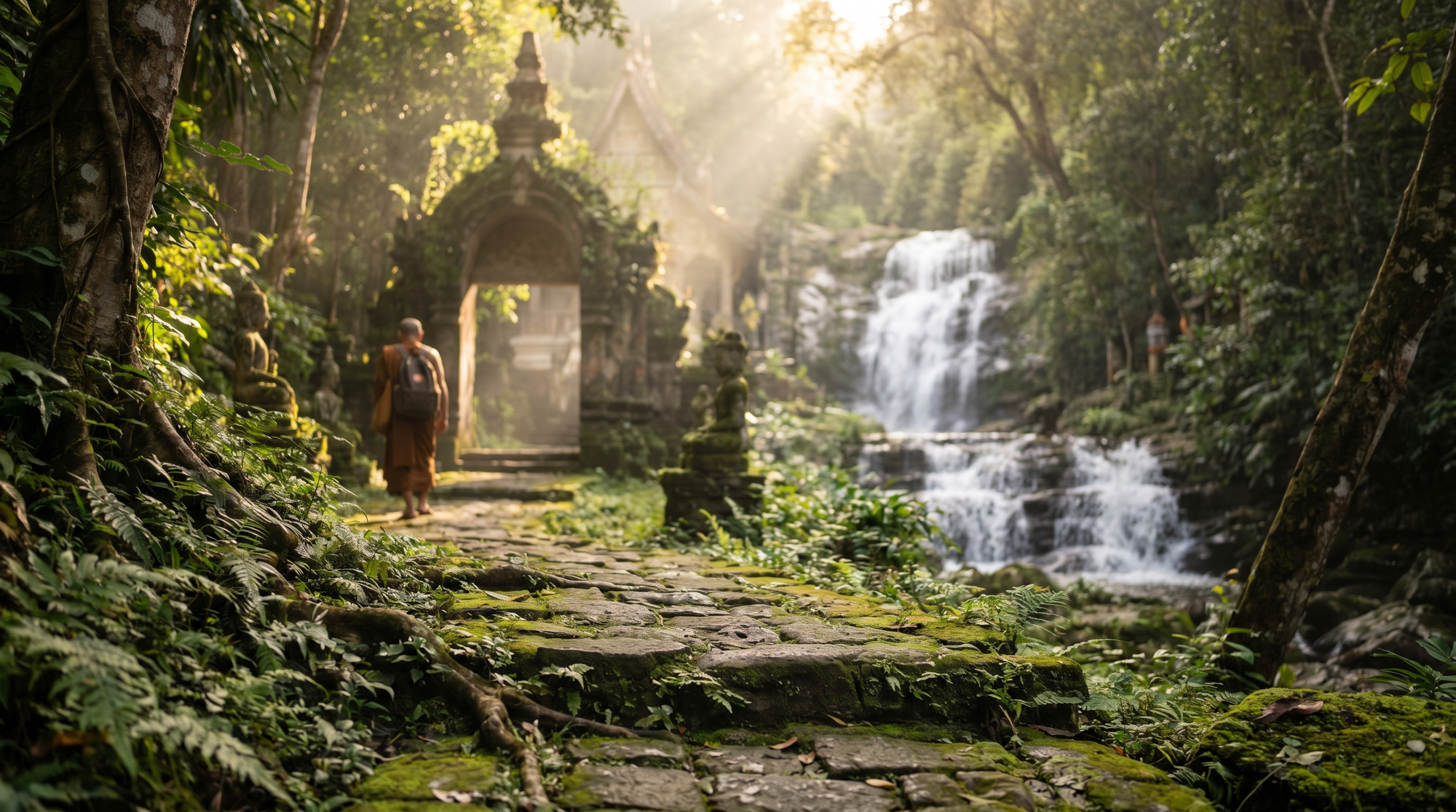
Wat Pha Lat does not appear on most guided tours because it cannot be reached by road. It sits on the forested slope of Doi Suthep mountain, accessible only via the Monk's Trail, a path that begins near Chiang Mai University and winds upward through bamboo groves and teak forest for about 30 to 40 minutes before the first stone structure appears through the trees.
Wat Pha Lat is surrounded by jungle, so it has a completely different feel than the temples within the old city. It can only be reached by hiking, which eliminates many tourists. The crowds are far fewer than at many other temples in Chiang Mai, so it feels really special. After the hike, you are rewarded with bamboo forests, the sound of chirping birds, a trickling waterfall, and monks completing their daily chores. Two Wandering Soles
The temple is a 14th century forest monastery, built in stages into the mountainside rather than on a cleared plot of flat ground. The structures follow the natural contours of the slope. Water runs through the complex from a stream above, past carved nagas and mossy stone chedis, creating the particular sound of a place that has been quietly present for a very long time.
The best approach is to take the Monk's Trail up and continue to Doi Suthep from the top, making a morning of the ascent. You arrive at Wat Pha Lat after about 30 minutes of walking, spend time there, then continue another 90 minutes up to the main temple at the summit. The descent is by songthaew. Going early, before 8am, means the forest is cool and quiet and the light is doing exactly what light is supposed to do when it comes through a canopy of tropical trees.
The temple walking tour with a former monk covers temples in the old city with someone who can explain what you are actually seeing. For Wat Pha Lat specifically, going alone in the early morning is the right choice. The walk is the point.
Wat Umong : The Temple With Tunnels
Wat Umong occupies a forested area about two kilometres west of the old city, close enough to cycle to and far enough from the tourist circuit to feel genuinely separate from it.
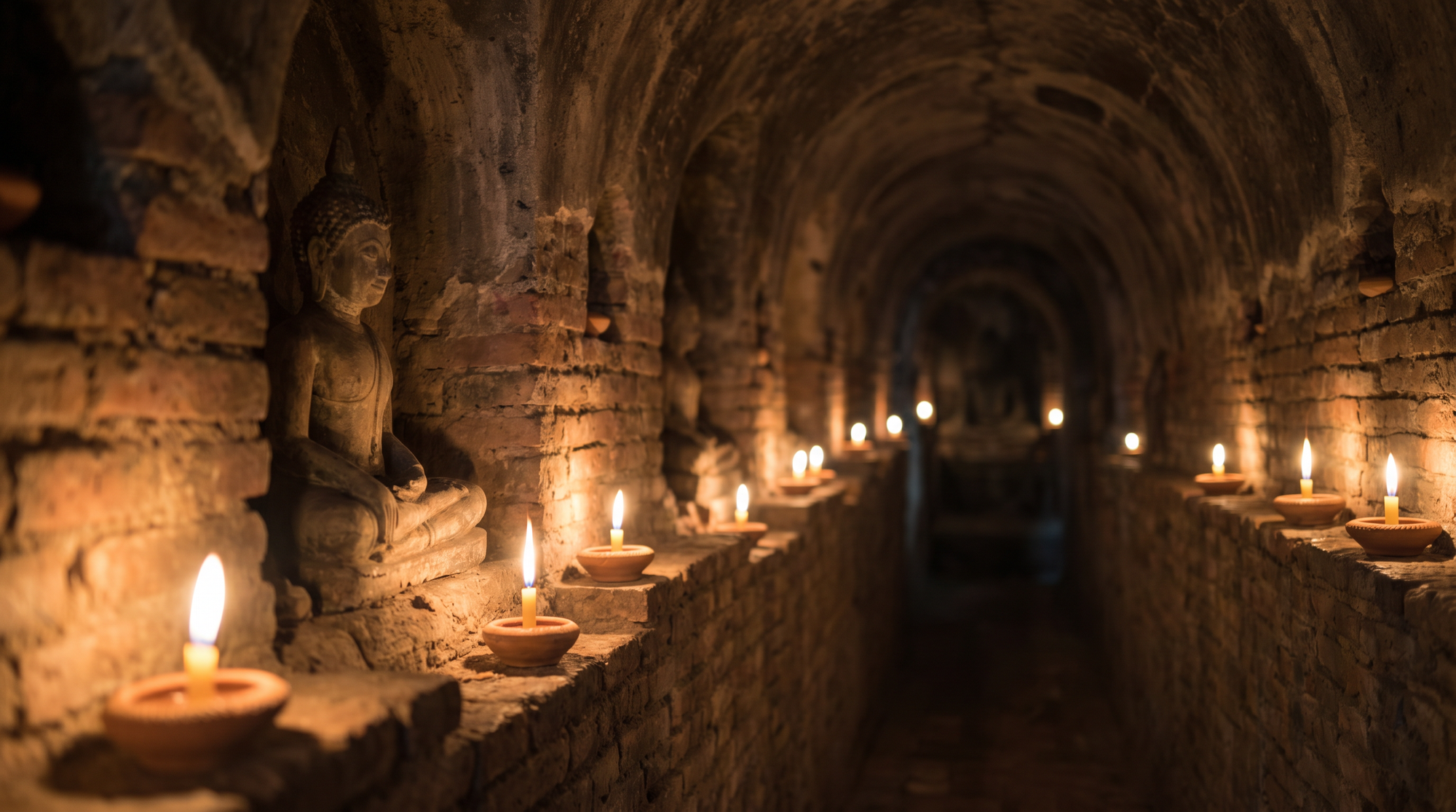
Wat Umong is unlike any other temple in Chiang Mai. Built over 700 years ago, it is famous for its moss-covered chedis and underground meditation tunnels, where flickering candles illuminate Buddhist murals and inscriptions. The temple's rustic setting emphasises simplicity and introspection, making it a favourite among those seeking a contemplative retreat away from the city's bustle. Thrillark Blog
The tunnels are the defining feature. A series of vaulted brick passageways, built in the 14th century so that monks could meditate without being disturbed by the heat and noise of the outside world, run beneath a large earthen chedi. The passages are dark and cool and very quiet. Niches in the walls hold Buddha images. The overall effect is of entering a different register of attention: slower, more internal, less concerned with appearances.
The grounds above and around the chedi are extensive and largely uncommercialized. There is a large pond where turtles and fish live. Meditation spots are scattered throughout the forest. Monks still practise here. The temple opens at 4am and closes at 8pm, and the very early morning, when the grounds are lit by candles and the first light is beginning to filter through the trees, is an experience that is difficult to describe and impossible to replicate anywhere else in the city.
Entrance costs 20 baht. Getting there by bicycle from the old city takes about 20 minutes and passes through residential neighbourhoods that give you a sense of how Chiang Mai actually functions away from the tourist zones.
Wat Phan Tao : The Teak Temple Next to the Famous One
Wat Phan Tao stands immediately adjacent to Wat Chedi Luang, one of the most visited temples in the old city. Most people walk past Wat Phan Tao on their way to the larger temple and do not stop.
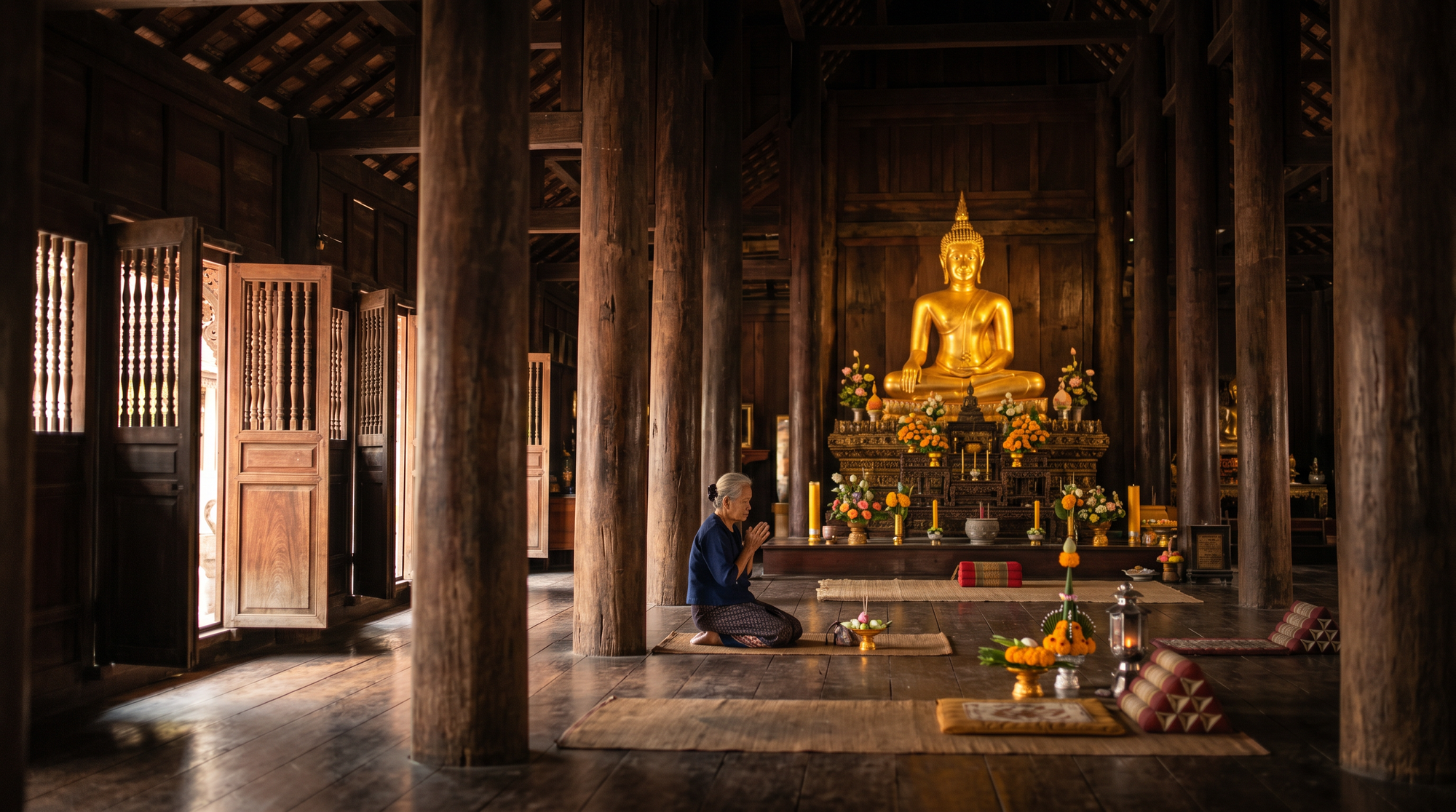
Wat Phan Tao's standout feature is a teak prayer hall that feels simple and human-scaled. Beauty here does not need to shout. The best time is mid-morning when the wood tones read best. Chiang Rai Times
The viharn is constructed almost entirely from teak, 28 gigantic teak pillars supporting a roof that creates the particular warm darkness of old wood in tropical light. The interior is simple and very beautiful. A large gilded Buddha image sits at the far end. The murals are more restrained than those in the grander temples. The whole space feels proportionate to a human being in a way that some of the more monumental Chiang Mai temples do not.
The temple is at its best in the morning, when the wood absorbs the early light and the few people inside are locals rather than tour groups. During the Yi Peng lantern festival in November, Wat Phan Tao is one of the most dramatic settings in the city as thousands of paper lanterns are released from the temple grounds into the night sky.
Wat Lok Moli : Outside the Walls, Away from the Crowds
Wat Lok Moli sits just outside the north gate of the old city, a five-minute walk from the moat, but on the wrong side of it for most tourist circuits. It is one of the oldest temples associated with the Lanna royal family and one of the most architecturally striking in the city.
Wat Lok Moli's standout is a bold chedi silhouette and a quieter courtyard feel. The best time is golden hour, especially on weekdays. Keep voices low as sound carries here. Chiang Rai Times
The main chedi is large, dark, and somewhat brooding, built in the Lanna style with a particularly dramatic silhouette against the sky at dusk. The surrounding courtyard is spacious and usually quiet. A row of smaller chedis along the northern wall contains the ashes of members of the Lanna royal family. The craftsmanship throughout the complex is exceptional, but the absence of crowds means you can actually stop and look at things.
Wat Suan Dok : The Cemetery of the Royal Family
Wat Suan Dok is not entirely hidden, it appears on some itineraries, but it is consistently less visited than its importance warrants. The name means Flower Garden Temple, and the complex was built in the late 14th century on land that was a royal pleasure garden.
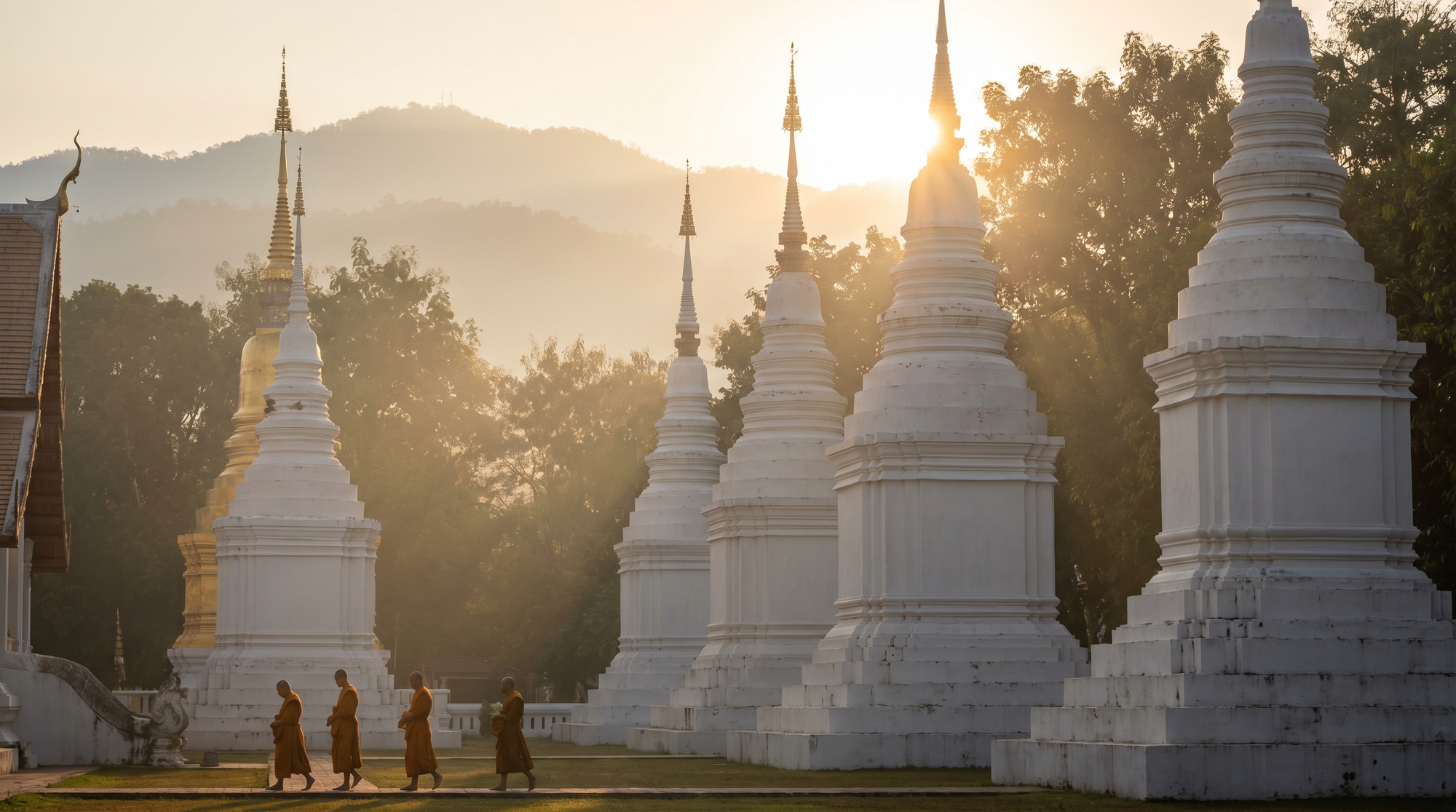
The most striking feature is not the main buildings but the collection of white chedis in the western section of the grounds, each containing the ashes of members of the Chiang Mai royal family. The chedis are white and shaped like bells, arranged across a broad open space with Doi Suthep mountain rising behind them. At sunrise, the light on the white chedis against the dark green of the mountain is one of the most quietly beautiful sights in the city.
Wat Suan Dok also hosts one of the better monk chat programmes in Chiang Mai, on selected evenings when English-speaking monks are available to talk with visitors about Buddhism and monastic life. The conversations are informal and worth an hour of any schedule.
How to Build Your Own Hidden Temple Morning
The most satisfying version of a Chiang Mai temple visit that most people never do :
Wake at 5.30am. Walk or cycle to Wat Suan Dok for the sunrise over the white chedis. Spend 30 minutes there. Continue to Wat Umong, ten minutes away by bicycle, for the tunnels and the quiet pond. From Wat Umong, take a songthaew or Grab to the start of the Monk's Trail. Walk up to Wat Pha Lat, arriving by mid-morning. Sit for a while. Either continue to Doi Suthep or descend the same way you came.
By noon you have visited four temples, walked through a forest, and seen almost nobody else doing the same thing.
FAQ
How do I get to Wat Pha Lat ? The starting point for the Monk's Trail is near Chiang Mai University, west of the old city. Search for "Monk's Trail Chiang Mai" in Google Maps. The walk to Wat Pha Lat takes 30 to 40 minutes on a well-marked path. Wear shoes you do not mind getting dirty and bring water.
Is Wat Umong worth visiting ? Yes, particularly for the underground tunnels and the peaceful forest setting. It is one of the most atmospherically distinct temples in Chiang Mai and takes about 90 minutes to explore properly.
What is the best time to visit hidden temples in Chiang Mai ? Early morning, before 9am. The light is better, the temperature is lower, and most tour groups have not yet arrived. Wat Suan Dok at sunrise and Wat Pha Lat in the morning forest light are particularly recommended.
Can I visit these temples without a guide ? Yes. All of the temples on this list are accessible independently. The Monk's Trail to Wat Pha Lat is clearly marked. Wat Umong and Wat Phan Tao have signs in English. For deeper cultural context on Lanna temple architecture and Buddhist practice, the former monk temple tour covers four old city temples with someone who spent years inside the monastic tradition.
Is there an entrance fee for these temples ? Wat Umong charges 20 baht. Wat Pha Lat, Wat Phan Tao, Wat Lok Moli, and Wat Suan Dok are free to enter. Dress modestly and remove shoes before entering any building.