

Reading time : 8 min | Updated : April 2026
There is a moment in most creative processes that nobody warns you about. It comes somewhere in the middle, after the excitement of starting and before the satisfaction of finishing. Your hands are doing something unfamiliar. The material is not behaving the way you expected. You have no idea yet whether what you are making will look like anything at all.
And then, without quite noticing when it happened, you realise that you have stopped thinking about everything else.
The emails. The flight home. The thing you said last week that you wish you had said differently. The low background hum of everything that is waiting for you when life resumes its normal shape. None of it is there anymore. There is only the moon forming between your hands, and the question of whether this particular texture feels right, and the quiet concentration of someone who is, for once, entirely inside the present moment.
This is not a workshop guide. It is an invitation to try something you probably have not done before, in a city that has been quietly becoming one of the best places in the world to do exactly that.
Chiang Mai Has Always Been a City That Makes Things
Before it became a destination, Chiang Mai was a capital. The capital of the Lanna Kingdom, a civilisation that built its identity around craft. Silversmithing, woodcarving, textile weaving, lacquerwork. The northern Thai relationship with making things by hand is not a tourism product. It is the foundation the city was built on.
That tradition has a way of attracting people who want to be around it. Over the past decade, a new generation of creative studios has taken root in Chiang Mai <alongside the ancient craft workshops. Not in spite of the tradition but because of it. The city already knows how to hold space for people who make things. It has been doing it for seven centuries.
What has changed is the vocabulary. Alongside the teak woodcarvers and the silversmiths of Wua Lai Road, you now find workshops offering experiences that exist nowhere else in Thailand. Rooms where you can sculpt your own glowing moon. Studios where the rhythmic sound of a tufting gun fills the afternoon while rugs grow loop by loop beneath your hands. Spaces that are not about learning a traditional craft but about learning what it feels like to make something, which turns out to be the more important lesson.
Why Learning Something New Feels Like Coming Home
There is a particular kind of satisfaction that only comes from learning something your body did not know before. Not intellectual learning, the kind that happens in your head when you read or listen. Physical learning. The kind where your hands have to figure something out, make mistakes, adjust, try again, and slowly build a memory that lives in the muscle rather than in the mind.
Children experience this constantly. Adults mostly stop letting themselves.
We develop competencies and stick to them. We learn what we are good at and spend our time there, because being good at something feels safe and being bad at something feels uncomfortable. What gets lost in that arrangement is the specific pleasure of the beginner: the openness, the surprise, the absence of expectation, the willingness to not know what comes next.
Walking into a workshop where you have never done what the workshop offers is one of the most reliable ways to access that state as an adult. You sit down. You are given tools you have never held before. And for the next two hours, you are, without apology, a beginner. It is one of the most quietly liberating things you can do.
Chiang Mai, more than almost any other city in Southeast Asia, makes this easy. The density of creative workshops here means that on any given afternoon, you can walk into a room and learn something your hands did not know that morning.
The Moon
The first and only moon lamp workshop in Thailand is here, in Chiang Mai.
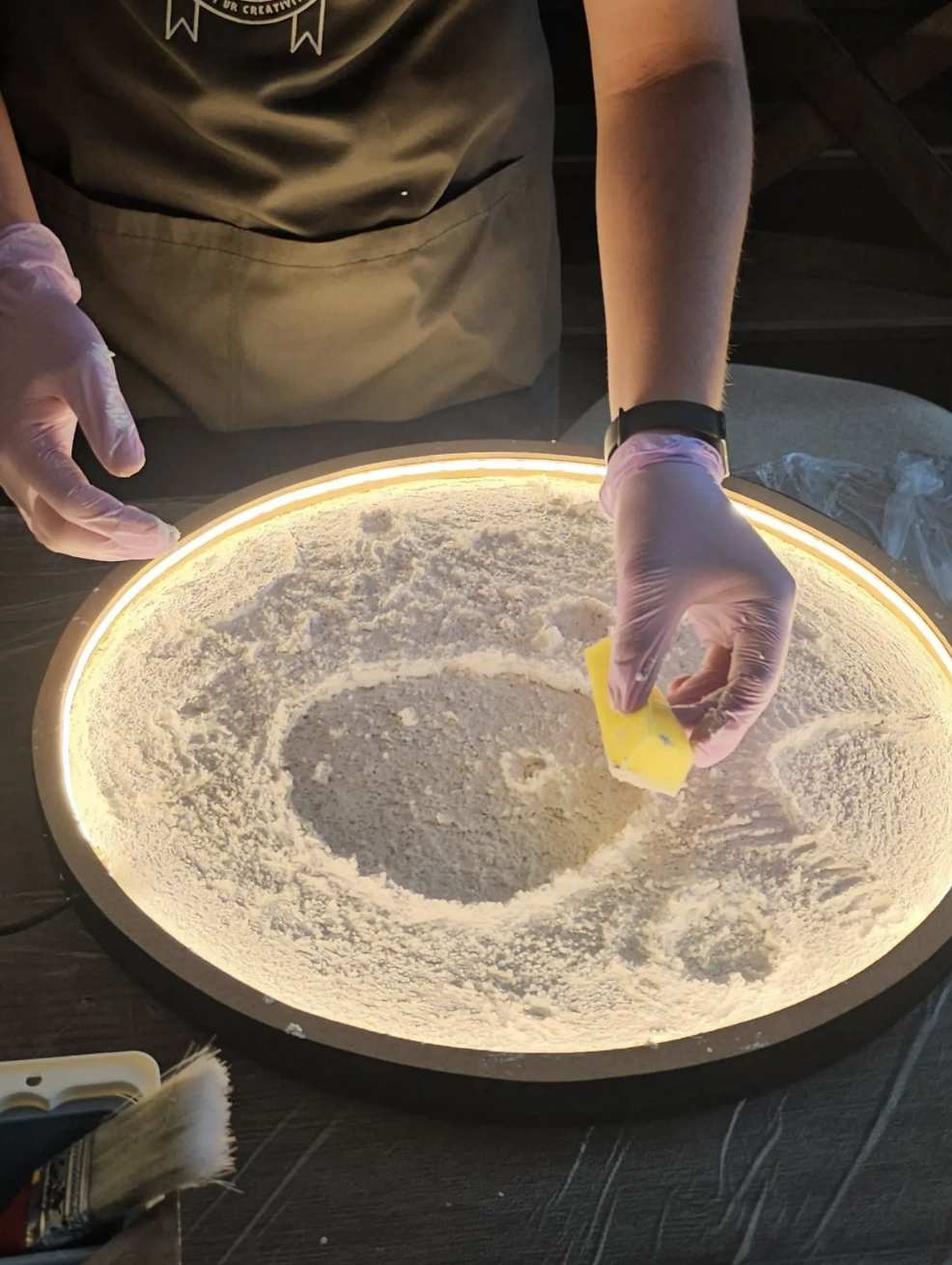
You begin with a sphere. You sculpt its surface using non-toxic paste, building the texture of a real moon: the craters, the ridges, the uneven topography of something that has been circling the earth for four and a half billion years.
Then you paint it.
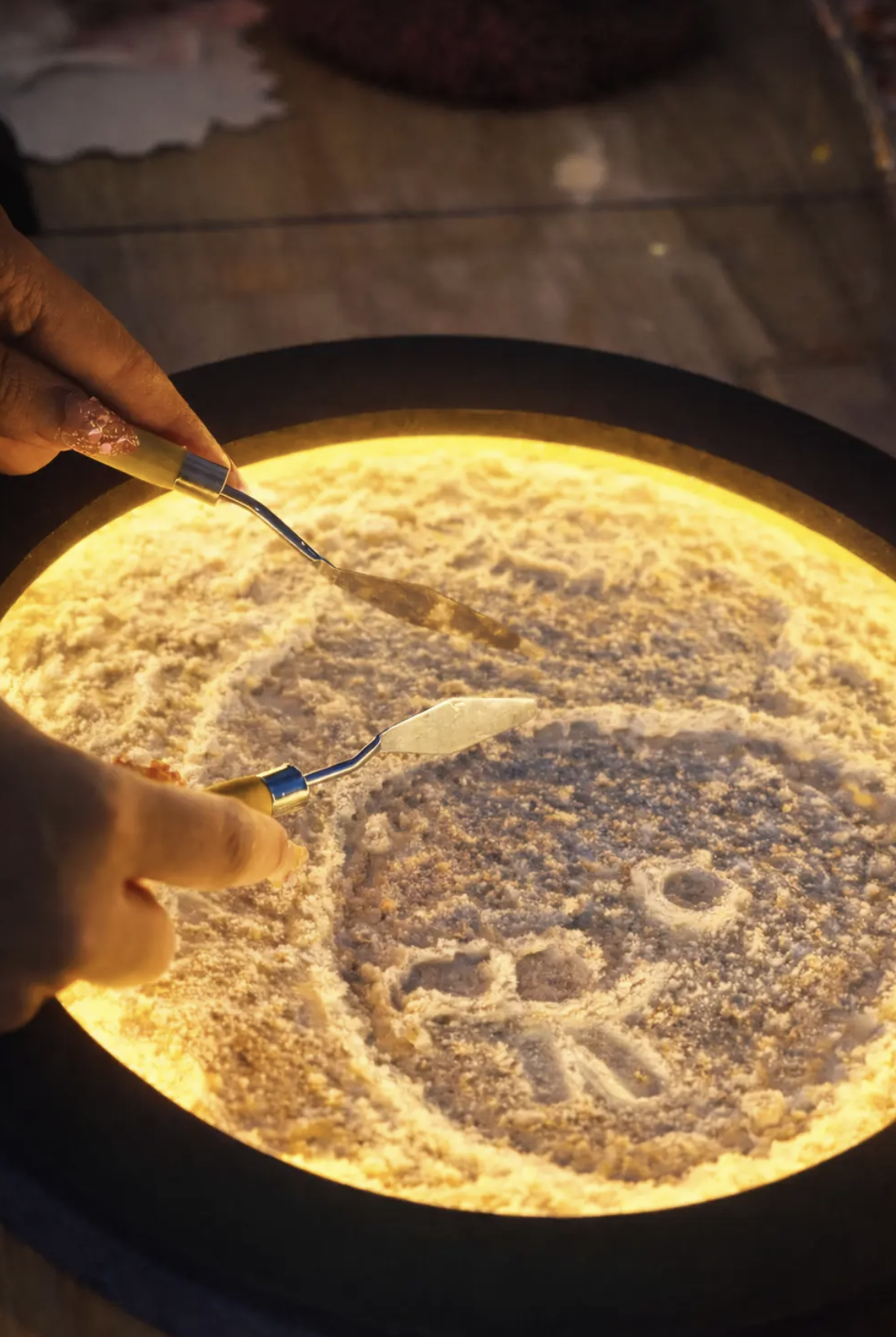
This is where the workshop becomes something more than a craft experience. The moon you are painting does not have to look like anyone else's moon. It does not have to look like the moon you see in photographs. It can be the moon as you feel it tonight: calm, or strange, or luminous, or dark at the edges with a single bright centre. The instruction is essentially to paint with emotion, and to carve with intention, and to let the object become a record of something that was true for you in this room at this moment.
When it is finished, it glows.
You pack it carefully and carry it home, and when you put it on your desk or your bedside table and turn it on, the light it gives off is light that you made. Not bought. Made. With your own hands, on a day when you decided to sit down and try something you had never tried before.
The Moonlight Maker Workshop runs for roughly two hours. No experience is needed. The materials are provided. What you bring is attention, and a willingness to let the work take you somewhere you did not plan to go.
The Rug
Tufting is a different kind of making entirely.
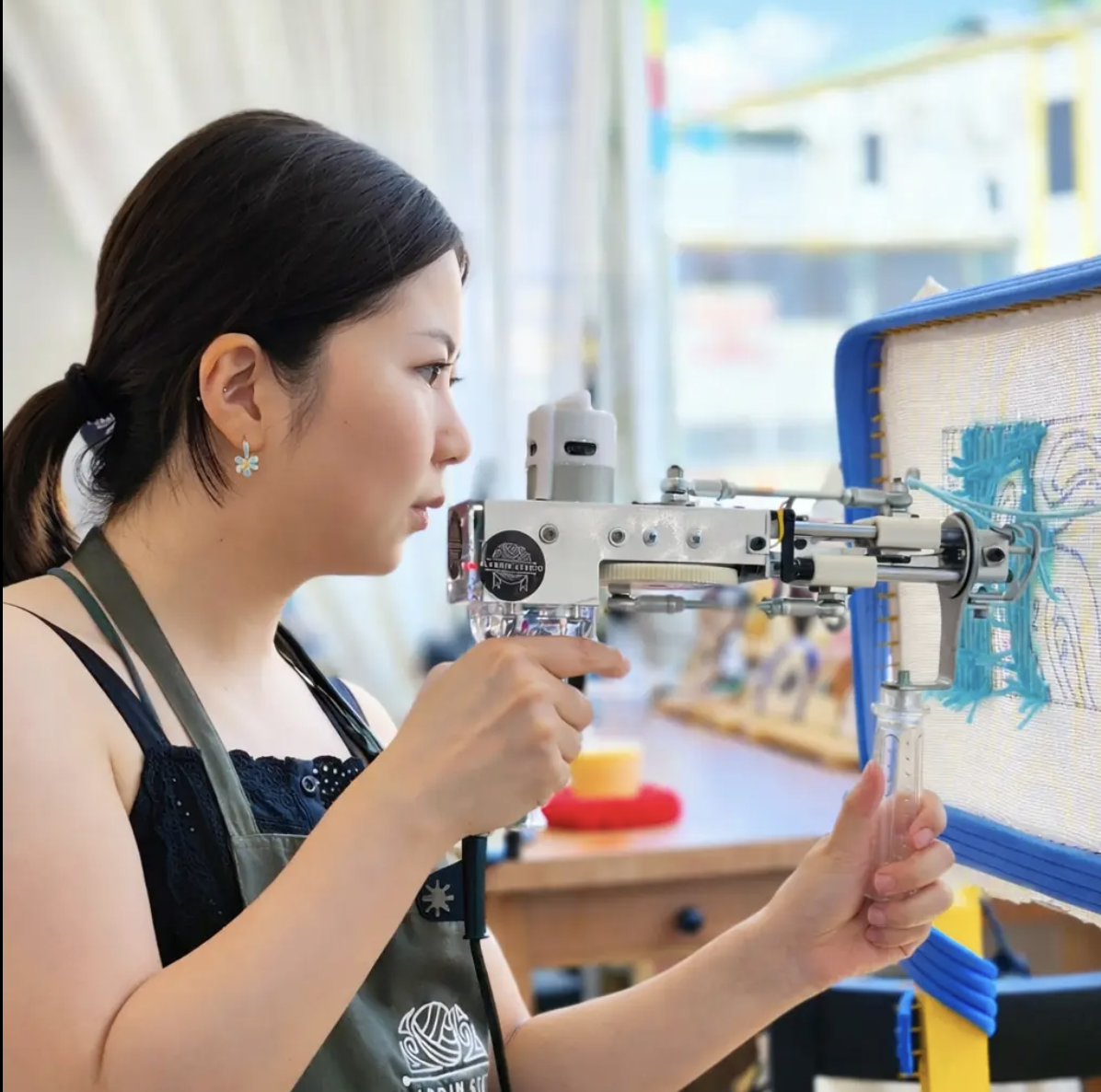
Where sculpting a moon is slow and meditative, tufting is rhythmic and almost hypnotic. You hold a gun loaded with wool, press it against a stretched fabric frame, and pull the trigger. The needle drives the wool through the backing in a small loop. You move it a centimetre. You pull the trigger again. Loop by loop, centimetre by centimetre, your design appears.
The sound of the gun is part of it. The repetition is part of it. The way the pattern builds so slowly that you cannot see it changing moment to moment, and then you step back and it is there, and it is yours, and it is made of a thousand small decisions that your hands made without consulting your head.
There is something specifically satisfying about the scale of tufting. Each individual loop is tiny. The finished object is something you can hold, hang, or put on the floor. The gap between the unit of effort and the scale of the result creates a particular feeling: the sense of having done something that required sustained, patient attention, and of having been rewarded for it not all at once but gradually.
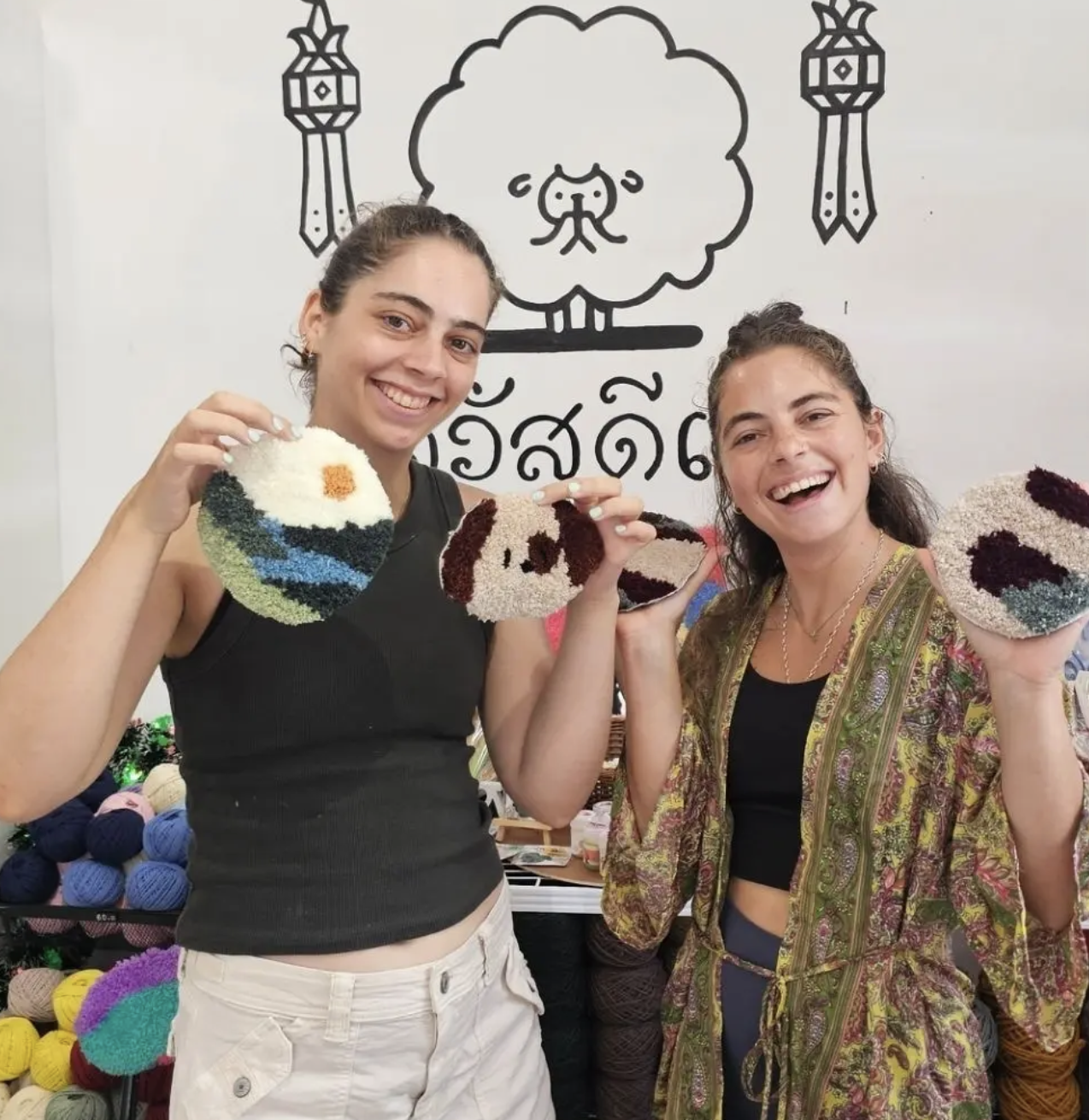
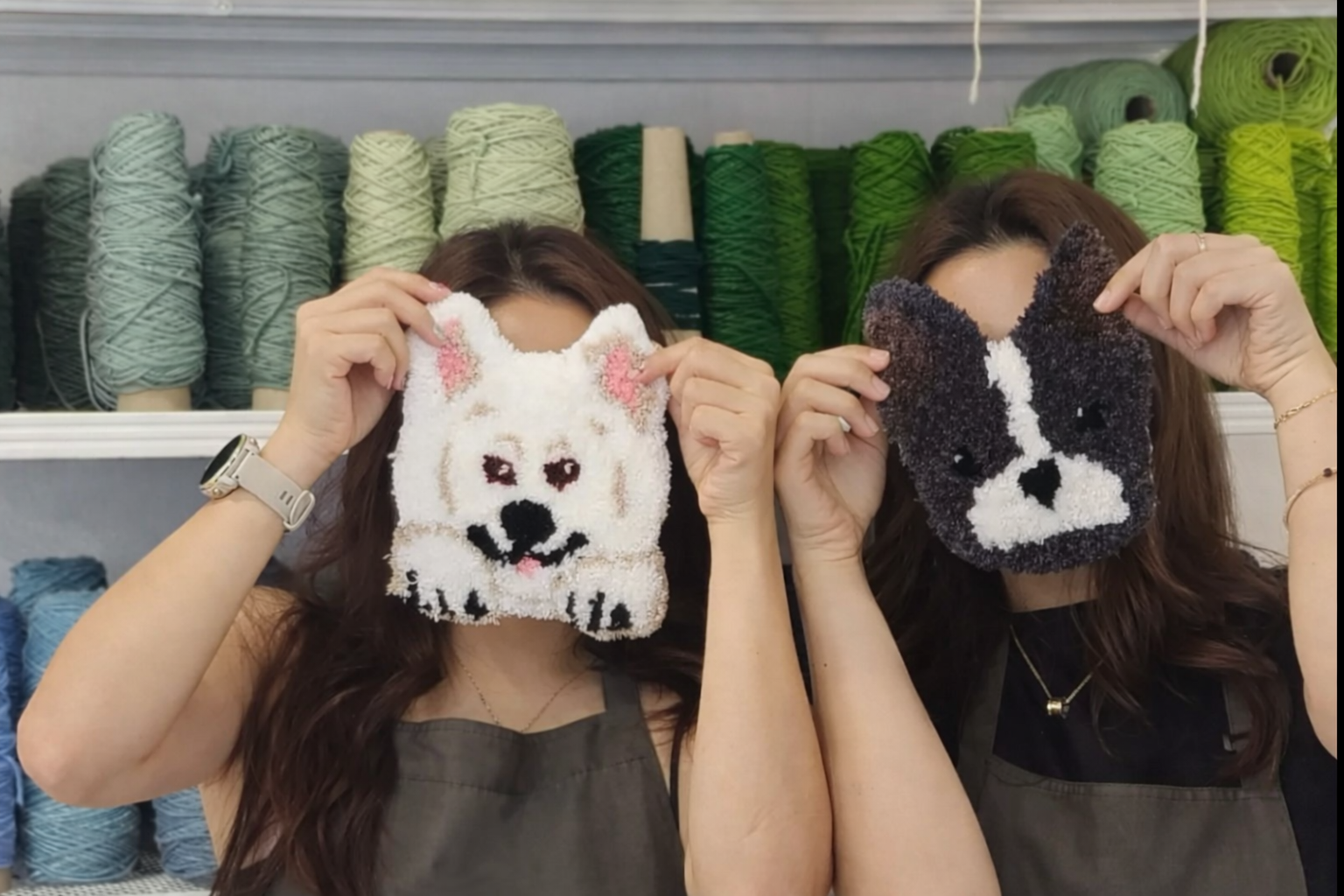
The workshops come in two formats. The tufting coaster and keyboard rug workshop is the smaller, more accessible entry point: a coaster or a compact keyboard-sized rug that fits into any afternoon and any luggage. The travel and standard size tufting workshop goes further, producing a larger piece that becomes a real object in your home, something you step on every morning or hang on a wall and touch when you walk past it.
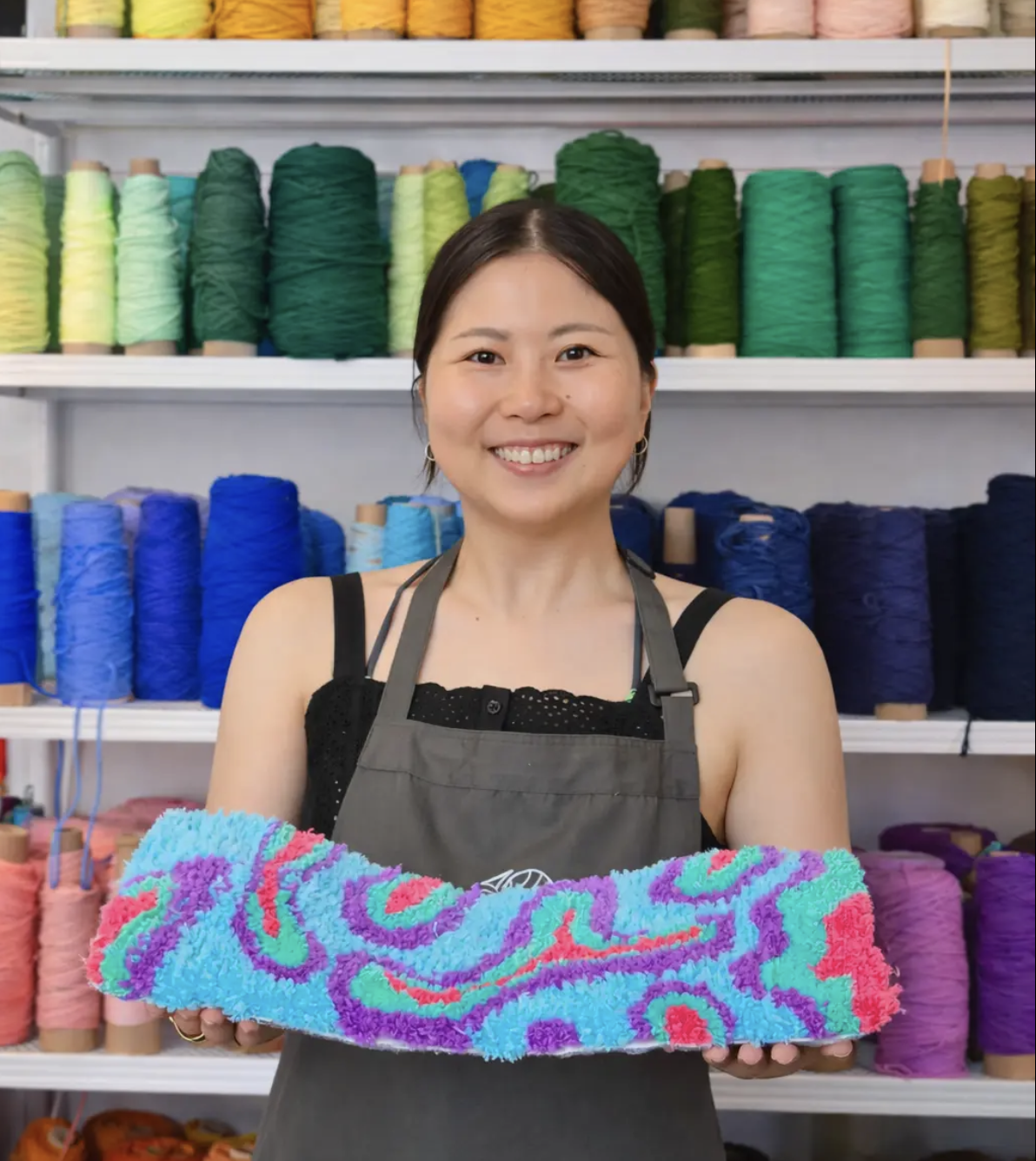
Both produce the same specific satisfaction of having made something that will outlast the trip by years.
What Happens to the Mind When the Hands Are Busy
People who travel to Chiang Mai looking for quiet often expect to find it in the temples, or in meditation, or in the early morning walk through the old city before the heat arrives. And they do find it there, sometimes.
But there is another kind of quiet that is harder to find and in some ways more useful. The quiet that comes from focused making. The quiet that is not the absence of activity but the presence of one very specific activity that fills the available space and leaves no room for the noise that usually occupies it.
When your hands are sculpting a moon, the mind does not go blank. It does not need to. What happens is something more interesting: it settles. The churning slows. The thoughts that come are slower and often more honest than the thoughts that arrive during ordinary activity. The things you have been meaning to think about find a way through, not urgently, but gently, in the way that important things surface when the surface is still enough to see them.
Many people who try these workshops describe a feeling afterwards that is hard to name precisely. Not tired. Not energised. Something between the two: clear. A particular kind of clearness that comes from having spent time with yourself in a way that did not require you to perform, to be productive, to be anywhere other than exactly where you were.
Chiang Mai is one of the few cities in Asia where you can feel this permission clearly. The pace of the city, the weight of its craft tradition, the presence of mountains on every horizon. Something here says: you do not have to be in a hurry. You are allowed to sit down and make something. You are allowed to not know what it will look like until you are finished.
The Thing That Goes Home With You
Most souvenirs are objects that witnessed a trip. They sat in a shop while you were having the experiences, and then you bought them on the way to the airport as a way of marking that the trip happened.
What you make in these workshops is different. The moon you sculpted and painted was not in a shop. It was not made by someone else's hands and placed on a shelf to wait for you. It was made by you, in a state of concentration and presence and creative uncertainty, on a specific afternoon in Chiang Mai when you decided to try something you had never tried before.
When you see it on your desk six months later, it does not remind you of a place. It reminds you of a state of mind. The way your hands felt when the texture started to work. The moment you chose that particular blue for the edge of the crater. The quiet in the studio and the slow appearance of something that was, until that afternoon, nowhere in the world.
That is what these workshops are really offering. Not a product. A memory that is embedded in an object. A proof that for a few hours in northern Thailand, you were entirely, unhurriedly, creatively alive.
FAQ
Do I need any creative experience ? None. These workshops are designed specifically for people who have not done this before. The instruction is there to get you started and then to leave you alone to find your own way into the work.
Can I take the finished piece home in my luggage ? Yes. The moon lamp is designed to travel. The tufting pieces, depending on size, can be rolled or folded for packing.
How long do the workshops take ? The moon lamp workshop runs around two hours. The tufting coaster session is roughly ninety minutes to two hours. The travel and standard size tufting workshop takes longer depending on the complexity of your design.
Is this suitable for someone travelling alone ? Particularly so. These workshops are self-directed enough that solo travellers do not need to negotiate their creative choices with anyone else. You make exactly what you want, at exactly the pace that feels right.
Which workshop should I start with if I have never done any of these before ? The tufting coaster is the lowest barrier entry. The moon lamp is the most emotionally rewarding. If you have an afternoon and you are not sure which to choose, go with the one that frightens you slightly more. That is usually the right answer.